Nursing as a Profession
Complete Study Notes for Nursing Students
Study Time: 45-60 minutes
Level: Foundational
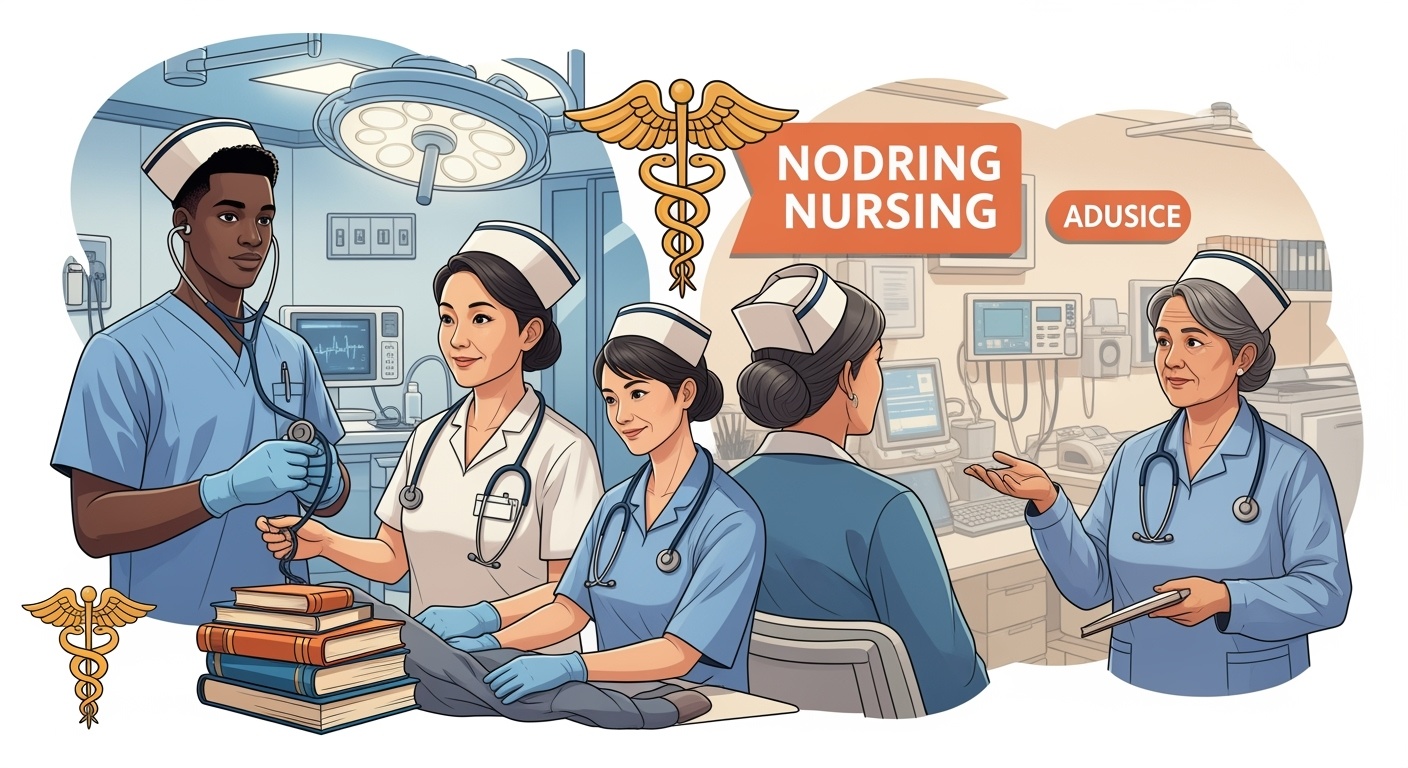
The nursing profession encompasses diverse roles across multiple healthcare settings, unified by core values and ethical principles.
Learning Objectives
After studying this chapter, you will be able to:
- Define nursing as a profession
- Identify characteristics of professions
- Explain professional criteria in nursing
Advanced Learning Goals:
- Analyze nursing values and their importance
- Understand ethical codes and conduct
- Apply professional concepts in practice
Memory Aid: P.R.O.F.E.S.S.I.O.N
P – Professional Knowledge Base
R – Responsibility & Accountability
O – Organized Body of Knowledge
F – Formal Education Required
E – Ethical Code of Conduct
S – Service to Society
S – Self-Regulation
I – Independent Practice
O – Ongoing Professional Development
N – Noble Purpose & Values
Chapter 1: Definition of Nursing as a Profession
Official Definition
“Nursing is a profession within the healthcare sector focused on the care of individuals, families, and communities so they may attain, maintain, or recover optimal health and quality of life. Nursing may be distinguished from other healthcare professions by its approach to patient care, training, and scope of practice.” – World Health Organization (WHO)
American Nurses Association (ANA) Definition
“Nursing is the protection, promotion, and optimization of health and abilities, prevention of illness and injury, facilitation of healing, alleviation of suffering through the diagnosis and treatment of human response, and advocacy in the care of individuals, families, groups, communities, and populations.”
Core Elements
- Caring for individuals, families, communities
- Health promotion and disease prevention
- Holistic approach to patient care
- Evidence-based practice
Key Distinctions
- Autonomous professional practice
- Unique scope of practice
- Specialized body of knowledge
- Legal and ethical accountability
Implementation in Nursing Practice
Clinical Settings
- • Hospitals and medical centers
- • Outpatient clinics
- • Emergency departments
- • Intensive care units
Community Health
- • Public health departments
- • Home healthcare
- • School nursing
- • Occupational health
Specialized Areas
- • Mental health nursing
- • Pediatric nursing
- • Geriatric nursing
- • Nurse practitioner roles
Chapter 2: Characteristics and Criteria of Profession
What Makes a Profession?
A profession is distinguished from an occupation by specific characteristics that demonstrate advanced knowledge, specialized skills, ethical standards, and service to society. Nursing meets all these criteria, establishing it as a true profession rather than merely a job or trade.
| Characteristic | Description | Nursing Application |
|---|---|---|
| Specialized Knowledge | Requires extensive, specialized education and training | Bachelor’s, Master’s, and Doctoral nursing programs |
| Intellectual Skills | Involves complex decision-making and critical thinking | Clinical reasoning, care planning, patient assessment |
| Service Orientation | Primary focus on serving others and society | Patient advocacy, health promotion, community service |
| Autonomy | Independent judgment and self-regulation | Nursing process, independent nursing interventions |
| Code of Ethics | Formal ethical standards and guidelines | ANA Code of Ethics for Nurses |
| Professional Organization | Strong professional associations | ANA, ICN, specialty nursing organizations |
Flexner’s Six Criteria for Professions (1915)
1. Intellectual Activity
Based on large body of knowledge
2. Scientific Method
Evidence-based practice
3. Practical Application
Real-world problem solving
4. Educational Process
Formal training programs
5. Professional Organization
Self-governing bodies
6. Altruistic Service
Service above self-interest
Modern Professional Criteria
-
Licensure and Certification: Legal requirements for practice
-
Continuing Education: Ongoing professional development
-
Legal Accountability: Professional liability and responsibility
-
Peer Review: Professional standards maintenance
Nursing as a Full Profession
-
Research Base: Growing body of nursing research and evidence
-
Theory Development: Unique nursing theories and frameworks
-
Scope of Practice: Clearly defined professional boundaries
-
Public Recognition: Society acknowledges nursing expertise
Chapter 3: Values in Nursing – Meaning and Importance
What Are Professional Values?
Professional values are fundamental beliefs and principles that guide behavior, decision-making, and professional practice. In nursing, these values form the foundation of patient care and professional identity, influencing how nurses interact with patients, families, colleagues, and society.
Core Nursing Values: The CARING Framework
Memory Device: C.A.R.I.N.G
Compassion – Empathy and understanding
Accountability – Professional responsibility
Respect – Dignity for all individuals
Integrity – Honest and ethical behavior
Nurturing – Promoting growth and healing
Grace – Professional demeanor and competence
Compassion
Deep awareness of suffering with the desire to relieve it.
- • Active listening to patients
- • Emotional support during difficult times
- • Understanding patient perspectives
Accountability
Taking responsibility for actions and decisions in patient care.
- • Owning mistakes and learning from them
- • Maintaining professional competence
- • Following through on commitments
Respect
Recognizing the inherent worth and dignity of every person.
- • Cultural sensitivity and awareness
- • Patient autonomy and choice
- • Professional courtesy to colleagues
Integrity
Adherence to moral and ethical principles in all situations.
- • Honesty in documentation and reporting
- • Maintaining confidentiality
- • Consistent ethical behavior
Nurturing
Fostering growth, healing, and positive development.
- • Patient education and empowerment
- • Supporting family involvement
- • Mentoring new nurses
Grace
Professional competence combined with dignity and poise.
- • Skilled clinical performance
- • Calm under pressure
- • Professional appearance and behavior
Why Are Values Important in Nursing?
For Patient Care:
-
Guide clinical decision-making and prioritization
-
Ensure ethical and safe patient care
-
Build trust and therapeutic relationships
-
Promote patient satisfaction and outcomes
For Professional Development:
-
Shape professional identity and role clarity
-
Provide framework for ethical reasoning
-
Enhance job satisfaction and meaning
-
Guide professional behavior and conduct
Implementing Values in Nursing Practice
Daily Practice Applications:
- Patient advocacy in care planning
- Ethical decision-making in complex situations
- Cultural competence in diverse populations
- Professional communication with healthcare team
- Quality improvement initiatives
Value-Based Interventions:
- Shared decision-making with patients
- Holistic assessment and care planning
- Family-centered care approaches
- Evidence-based practice implementation
- Interprofessional collaboration
Chapter 4: Code of Ethics and Professional Conduct for Nurses
Introduction to Nursing Ethics
The Code of Ethics for Nurses serves as a guide for carrying out nursing responsibilities in a manner consistent with quality nursing care and the ethical obligations of the profession. It provides a framework for making ethical decisions and understanding the moral obligations inherent in nursing practice.
“The nurse’s primary commitment is to the patient, whether an individual, family, group, community, or population.” – ANA Code of Ethics, Provision 2
American Nurses Association Code of Ethics: Nine Provisions
Memory Aid: “NURSES CARE” for Ethics
Nurse-Patient Relationship (1-3)
Unity and Professional Integrity (4-6)
Responsibility to Society (7-9)
Safety and Advocacy
Ethical Standards
Competence and Growth
Accountability
Responsible Practice
Environmental Health
Provisions 1-3: The Nurse-Patient Relationship
Provision 1
Respect for human dignity and unique attributes of every person
Provision 2
Primary commitment to patient, family, group, community, or population
Provision 3
Advocate for and protect rights, health, and safety of patients
Provisions 4-6: Professional Integrity and Growth
Provision 4
Authority, accountability, and responsibility for nursing practice
Provision 5
Duty to self – personal and professional integrity
Provision 6
Improve healthcare environment and conditions of employment
Provisions 7-9: Social and Professional Responsibility
Provision 7
Participate in advancement of the nursing profession
Provision 8
Collaborate to meet health needs of public
Provision 9
Integrate social justice into nursing and health policy
Professional Conduct Standards
Professional Appearance
- • Appropriate attire
- • Personal hygiene
- • Professional demeanor
Communication
- • Respectful language
- • Active listening
- • Clear documentation
Confidentiality
- • HIPAA compliance
- • Privacy protection
- • Secure information
Safety Standards
- • Error reporting
- • Risk management
- • Quality assurance
Ethical Decision-Making Framework
Step-by-Step Process:
-
1
Identify the ethical issue or dilemma
-
2
Gather relevant information and facts
-
3
Identify stakeholders and their perspectives
-
4
Consider alternative actions and outcomes
-
5
Apply ethical principles and professional codes
-
6
Choose and implement the most ethical action
-
7
Evaluate outcomes and learn from experience
Ethical Principles:
-
Autonomy: Respect for patient self-determination
-
Beneficence: Duty to do good and benefit others
-
Non-maleficence: “Do no harm” principle
-
Justice: Fair distribution of benefits and burdens
Implementing Ethics in Nursing Practice
Clinical Practice:
- Informed consent processes
- End-of-life care decisions
- Pain management ethics
- Resource allocation decisions
- Cultural sensitivity in care
Professional Relations:
- Reporting unsafe practices
- Peer accountability and support
- Interdisciplinary collaboration
- Mentoring and education
- Professional boundaries
Social Responsibility:
- Healthcare advocacy
- Policy development participation
- Community health promotion
- Social justice initiatives
- Environmental health awareness
Summary and Key Takeaways
Essential Points to Remember
Nursing as a Profession:
- Meets all criteria of a true profession
- Based on specialized knowledge and skills
- Governed by ethical codes and standards
- Focused on service to society
Values and Ethics:
- Guide all aspects of nursing practice
- Essential for professional identity
- Protect patients and promote quality care
- Require ongoing reflection and development
Study Tips for Success
Review Strategies:
- • Use the P.R.O.F.E.S.S.I.O.N mnemonic
- • Practice with the C.A.R.I.N.G framework
- • Review ANA Code provisions regularly
- • Connect theory to clinical examples
Application Focus:
- • Think about real patient scenarios
- • Consider ethical dilemmas you might face
- • Reflect on your own values and beliefs
- • Practice ethical decision-making steps
Exam Preparation:
- • Memorize key definitions and criteria
- • Understand relationships between concepts
- • Practice scenario-based questions
- • Review professional conduct standards
Next Steps in Your Nursing Journey
Continue Learning About:
- Nursing theories and frameworks
- Research and evidence-based practice
- Healthcare policy and advocacy
- Leadership and management in nursing
Professional Development:
- Join professional nursing organizations
- Attend conferences and workshops
- Pursue specialty certifications
- Engage in continuing education
References and Further Reading
Primary Sources:
- • American Nurses Association. (2015). Code of Ethics for Nurses with Interpretive Statements. Silver Spring, MD: ANA.
- • International Council of Nurses. (2021). The ICN Code of Ethics for Nurses. Geneva: ICN.
- • World Health Organization. (2020). State of the World’s Nursing Report. Geneva: WHO.
Professional Organizations:
- • American Nurses Association (ANA) – www.nursingworld.org
- • International Council of Nurses (ICN) – www.icn.ch
- • National League for Nursing (NLN) – www.nln.org
- • American Organization for Nursing Leadership (AONL) – www.aonl.org
Additional Learning Resources:
- • Nursing journals and peer-reviewed articles
- • Professional development courses and webinars
- • Ethics committees and consultation services
- • Mentorship programs and professional networks