
Fundamentals of Nursing
Complete Study Guide for Nursing Students
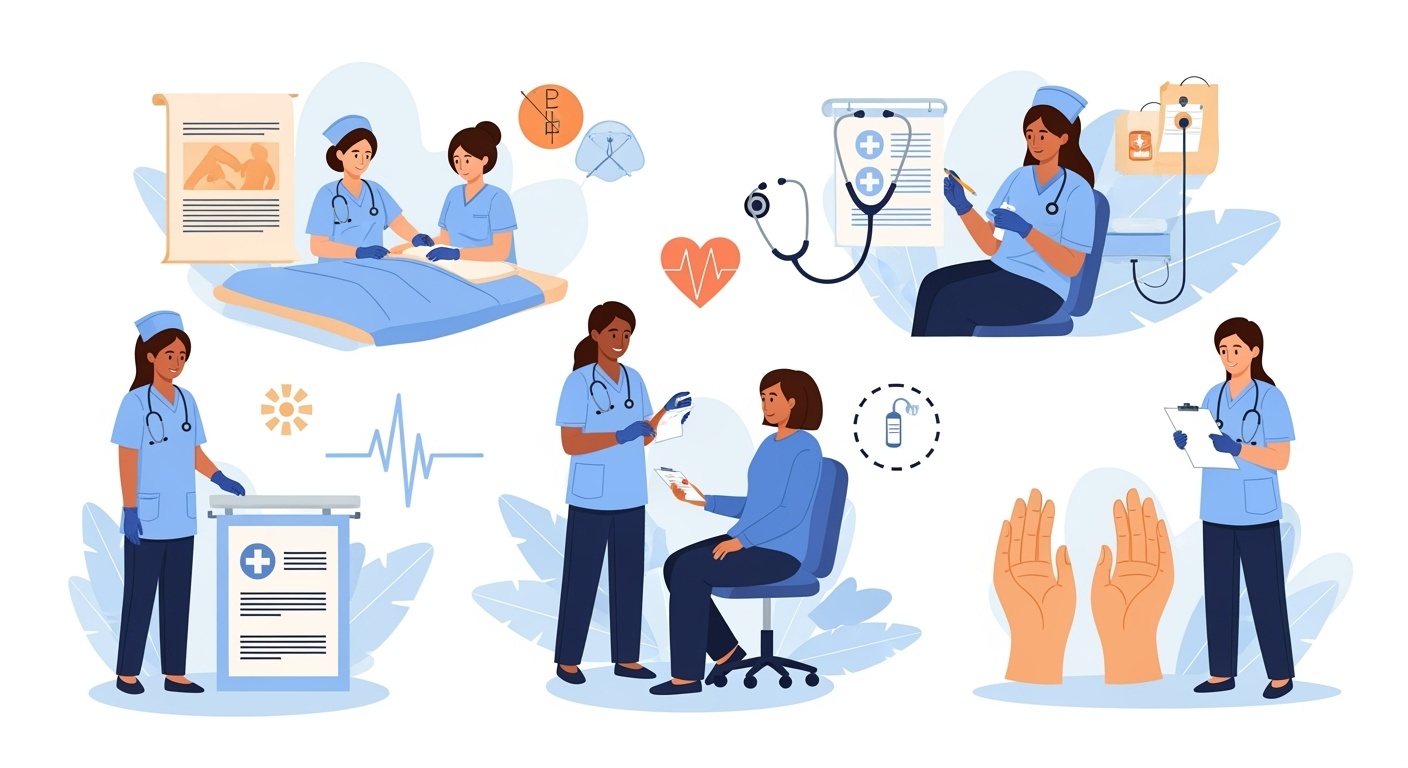
The Holistic Nature of Nursing Practice
Study Guide Contents
1. Definitions: Understanding Nurse and Nursing
What is a Nurse?
A nurse is a healthcare professional who is licensed to practice nursing, having acquired the necessary knowledge, skills, and competencies through completion of an approved nursing education program. Nurses are authorized to provide comprehensive healthcare services including assessment, diagnosis, planning, implementation, and evaluation of care across the health-illness continuum.
Key Characteristics of a Nurse:
- Licensed healthcare professional
- Educated in nursing science and practice
- Committed to promoting health and preventing illness
- Advocates for patients and families
- Collaborative member of healthcare team
What is Nursing?
Nursing is both an art and a science that focuses on promoting health, preventing illness, and caring for individuals, families, and communities across all ages and backgrounds. It encompasses autonomous and collaborative care provided to people of all ages, families, groups, and communities, sick or well, in all settings.
Memory Aid: CARING Framework for Nursing
C – Compassionate care
A – Advocacy for patients
R – Respect for dignity
I – Integrity in practice
N – Nurturing environment
G – Growth-focused approach
Implementation in Nursing Practice
These definitions form the foundation of professional nursing practice by:
- Establishing Professional Identity: Clear understanding of role boundaries and responsibilities
- Guiding Practice Standards: Framework for evidence-based, ethical nursing care
- Legal Protection: Defines scope of practice and professional accountability
- Quality Assurance: Ensures consistent, safe, and effective patient care
- Professional Development: Foundation for continuing education and specialization
2. Nursing Concepts and Philosophy
Core Nursing Concepts
1. Person (Patient/Client)
The recipient of nursing care – individuals, families, groups, or communities with unique physical, psychological, social, and spiritual needs.
2. Environment
All internal and external factors that influence the person’s health, including physical, social, cultural, and spiritual surroundings.
3. Health
A dynamic state of well-being that includes physical, mental, social, and spiritual dimensions along the health-illness continuum.
4. Nursing
The professional practice focused on promoting health, preventing illness, and providing care across all healthcare settings.
Nursing Philosophy
Philosophical Foundations
Treating the whole person, not just symptoms
Respecting individual needs and preferences
Integrating research with clinical expertise
Key Philosophical Principles
- Respect for human dignity and rights
- Commitment to social justice and equity
- Ethical decision-making and moral reasoning
- Cultural competence and sensitivity
- Lifelong learning and professional growth
Implementation in Practice
Nursing concepts and philosophy guide practice through:
Assessment & Care Planning:
- Holistic assessment of all four metaparadigm concepts
- Individualized care plans based on patient needs
- Environmental modifications for optimal healing
Professional Practice:
- Ethical decision-making frameworks
- Cultural competency in care delivery
- Evidence-based interventions and outcomes
3. Objectives of Nursing
Memory Aid: PROMOTE for Nursing Objectives
Promote health and wellness
Restore optimal health
Optimize patient outcomes
Maintain health status
Organize comprehensive care
Teach health promotion
Ensure patient safety
Primary Objectives
- Health Promotion: Educating individuals and communities about healthy lifestyle choices
- Disease Prevention: Implementing strategies to prevent illness occurrence
- Health Restoration: Assisting patients in recovery from illness or injury
- Health Maintenance: Supporting ongoing wellness and preventing deterioration
Patient Safety Objectives
- Risk Assessment: Identifying potential hazards and vulnerabilities
- Error Prevention: Implementing safety protocols and checklists
- Infection Control: Maintaining aseptic techniques and hygiene standards
- Fall Prevention: Assessing and mitigating fall risks
Educational Objectives
- Patient Education: Teaching self-care and disease management
- Family Teaching: Preparing caregivers for home care
- Community Health: Promoting population health initiatives
- Professional Development: Advancing nursing knowledge and skills
Nursing Process Objectives Flow
ASSESS
Collect comprehensive dataDIAGNOSE
Identify health problemsPLAN
Develop care strategiesIMPLEMENT
Execute interventionsEVALUATE
Assess outcomesImplementation in Clinical Settings
Hospital Setting:
- Acute care management and monitoring
- Medication administration and safety
- Discharge planning and patient education
- Collaboration with interdisciplinary team
Community Setting:
- Health promotion programs and screenings
- Chronic disease management support
- Home health assessments and care
- Public health education and advocacy
4. Characteristics and Nature of Nursing
Essential Characteristics
Scientific Foundation
Nursing is grounded in scientific principles, evidence-based research, and systematic knowledge from biological, physical, behavioral, and social sciences.
Artistic Expression
The art of nursing involves creativity, intuition, and skillful application of knowledge in providing compassionate, individualized care.
Humanistic Approach
Focus on human dignity, respect for persons, and recognition of the unique worth and potential of every individual.
Holistic Perspective
Addresses the whole person – physical, emotional, social, and spiritual dimensions of health and illness.
Nature of Nursing Practice
Dynamic Nature Framework
Independent nursing judgments and decisions
Working with healthcare team members
Evolving knowledge and skills
Moral principles guiding practice
Adaptive Characteristics
- Flexibility in diverse healthcare settings
- Responsiveness to changing patient needs
- Integration of new technologies and treatments
- Cultural adaptability and sensitivity
- Continuous quality improvement focus
Memory Aid: PROFESSIONAL Characteristics
Patient-centered focus
Responsible and accountable
Organized and systematic
Flexible and adaptive
Ethically grounded
Scientifically based
Supportive and caring
Independent thinking
Outcome-oriented
Nurturing environment
Advocacy focused
Lifelong learning
Implementation in Professional Practice
Clinical Decision Making:
- Critical thinking and analysis
- Evidence-based interventions
- Risk assessment and management
Patient Interaction:
- Therapeutic communication
- Cultural competency
- Emotional support and counseling
Professional Growth:
- Continuing education
- Reflective practice
- Quality improvement initiatives
5. Scope of Nursing Practice
What is Scope of Practice?
The scope of nursing practice defines the range of activities, responsibilities, and accountabilities that registered nurses are legally authorized to perform based on their education, experience, and competency level. It varies by jurisdiction, setting, and level of nursing preparation.
Core Practice Areas
Assessment & Diagnosis
- Comprehensive health assessments
- Nursing diagnosis formulation
- Risk identification and screening
- Physical examination techniques
Planning & Implementation
- Care plan development
- Nursing interventions execution
- Medication administration
- Therapeutic procedures
Evaluation & Documentation
- Outcome assessment
- Progress monitoring
- Care plan modifications
- Accurate documentation
Practice Settings
Healthcare Settings Spectrum
Acute Care
Hospitals, ICUs, ERsCommunity
Home health, clinicsLong-term Care
Nursing homes, rehabEducation
Schools, researchLegal Considerations
- State nursing practice acts
- Professional licensing requirements
- Institutional policies and procedures
- Continuing education mandates
- Scope expansion through certification
Memory Aid: SCOPE Framework
Safety and quality assurance
Comprehensive patient care
Outcome-focused interventions
Professional accountability
Ethical practice standards
Implementation Across Practice Levels
Entry-Level RN:
- Direct patient care
- Basic assessment skills
- Routine procedures
- Patient education
Experienced RN:
- Complex care coordination
- Mentoring new nurses
- Quality improvement
- Specialized procedures
Advanced Practice:
- Diagnosis and treatment
- Prescriptive authority
- Independent practice
- Research and education
6. Functions of a Nurse
Memory Aid: CARE-GIVER Functions
Caregiver – Direct patient care
Advocate – Patient rights protection
Researcher – Evidence-based practice
Educator – Teaching and learning
Guardian – Safety and protection
Innovator – Quality improvement
Visionary – Future-focused thinking
Empowerer – Patient self-efficacy
Role model – Professional behavior
Primary Functions
Direct Caregiver
Provides direct, hands-on nursing care to individuals, families, and communities.
- Physical care and comfort measures
- Medication administration
- Wound care and treatments
- Monitoring vital signs and status
Patient Advocate
Protects and promotes patient rights and interests.
- Ensuring informed consent
- Speaking up for patient needs
- Protecting patient dignity
- Facilitating communication
Educator
Teaches patients, families, and healthcare team members.
- Patient and family education
- Health promotion teaching
- Staff development
- Community health education
Leadership Functions
Leadership Hierarchy
Unit operations, staff supervision, resource allocation
Care coordination, team collaboration
Guidance, support, professional development
Researcher
- Evidence-based practice implementation
- Quality improvement studies
- Clinical research participation
- Data collection and analysis
Collaborator
- Interdisciplinary team participation
- Care plan coordination
- Communication facilitation
- Conflict resolution
Function Implementation by Setting
Medical-Surgical Unit
- Medication management
- Patient assessment
- Discharge planning
- Family education
Critical Care
- Advanced monitoring
- Life-support management
- Crisis intervention
- Family support
Community Health
- Health screening
- Prevention programs
- Population assessment
- Policy advocacy
Emergency Department
- Triage assessment
- Rapid intervention
- Crisis management
- Patient stabilization
7. Essential Qualities of a Nurse
Memory Aid: COMPASSIONATE Nurse Qualities
Caring and empathetic
Organized and detail-oriented
Motivated and dedicated
Patient and understanding
Adaptable and flexible
Strong communication skills
Self-aware and reflective
Integrity and honesty
Optimistic outlook
Nonjudgmental attitude
Accountable and responsible
Trustworthy and reliable
Ethically grounded
Personal Qualities
Compassion & Empathy
Ability to understand and share patients’ feelings while maintaining professional boundaries.
Critical Thinking
Analytical skills to assess situations, make sound judgments, and solve complex problems.
Emotional Stability
Ability to remain calm and composed in stressful situations while providing quality care.
Resilience
Capacity to recover from difficult situations and adapt to challenging circumstances.
Professional Qualities
Competence
Clinical expertise and skill proficiency
- Evidence-based practice
- Continuous learning
- Skill development
Integrity
Moral and ethical principles
- Honesty and transparency
- Professional boundaries
- Ethical decision-making
Teamwork
Collaborative approach
- Effective communication
- Conflict resolution
- Mutual respect
Physical & Mental Qualities
Wellness Triangle
Physical Stamina
Endurance for long shiftsMental Clarity
Focus and concentrationEmotional Balance
Self-care and boundariesEssential Skills
- Time management
- Attention to detail
- Manual dexterity
- Physical endurance
- Stress management
- Cultural sensitivity
Developing Nursing Qualities in Practice
Self-Assessment Strategies:
- Regular reflection on practice experiences
- Seeking feedback from colleagues and supervisors
- Participating in peer review processes
- Setting personal and professional goals
- Engaging in continuing education activities
Professional Development:
- Mentorship programs and relationships
- Professional organization membership
- Certification in specialty areas
- Leadership training and opportunities
- Research and evidence-based practice projects
8. Categories of Nursing Personnel
Memory Aid: ADVANCE Nursing Levels
Aide – Certified Nursing Assistant
Diploma – Diploma Nurse
Vocational – Licensed Practical Nurse
Associate – Associate Degree RN
Nursing – Bachelor’s Degree RN
Clinical – Master’s Prepared Nurse
Expert – Doctoral Prepared Nurse
Unlicensed Personnel
Certified Nursing Assistant (CNA)
Provides basic patient care under RN supervision.
Responsibilities:
- Activities of daily living assistance
- Vital signs measurement
- Patient mobility and positioning
- Basic hygiene care
Medical Assistant (MA)
Supports healthcare providers in clinical and administrative tasks.
Responsibilities:
- Administrative duties
- Basic clinical procedures
- Patient preparation
- Equipment maintenance
Patient Care Technician (PCT)
Provides technical support and direct patient care.
Responsibilities:
- EKG and phlebotomy
- Specimen collection
- Patient transport
- Basic life support
Licensed Personnel
Licensed Practical Nurse (LPN/LVN)
Provides basic nursing care under RN supervision.
Education: 1-year certificate program
Scope:
- Medication administration
- Wound care and dressings
- Patient monitoring
- Data collection
Registered Nurse (RN)
Professional nurse with full nursing practice authority.
Education Levels:
- ADN: Associate Degree (2-3 years)
- BSN: Bachelor’s Degree (4 years)
- Diploma: Hospital-based program
Advanced Practice Nursing Hierarchy
Nurse Practitioner
Primary care provider
Master’s/DoctoralNurse Anesthetist
Anesthesia administration
Master’s/DoctoralNurse Midwife
Women’s health care
Master’s/DoctoralClinical Specialist
Specialized expertise
Master’s/DoctoralPersonnel Implementation in Healthcare Teams
Acute Care Setting:
- RN: Patient assessment, care planning
- LPN: Medication administration, treatments
- CNA: Basic care, vital signs
- PCT: Technical procedures, transport
Long-term Care:
- RN: Assessment, care coordination
- LPN: Daily care management
- CNA: Personal care assistance
- Activities Staff: Recreation therapy
Outpatient Clinic:
- NP/PA: Primary care provider
- RN: Triage, patient education
- MA: Vital signs, procedures
- Receptionist: Administrative support
Key Takeaways and Summary
Essential Concepts to Remember
- Nursing is both art and science – combining evidence-based practice with compassionate care
- Holistic approach – addressing physical, emotional, social, and spiritual needs
- Professional accountability – maintaining ethical standards and competent practice
- Lifelong learning – continuous professional development and growth
Study Tips for Success
- Use memory aids and mnemonics for complex concepts
- Connect theoretical knowledge to clinical practice
- Practice critical thinking through case studies
- Engage with peers for collaborative learning
Final Memory Aid: NURSING Excellence
N
Navigate with compassion
U
Understand patient needs
R
Respond with expertise
S
Support healing process
I
Inspire hope and wellness
N
Nurture professional growth
G
Guard ethical standards
!
Excellence in practice