
Mental Health and Mental Hygiene
Comprehensive Nursing Notes
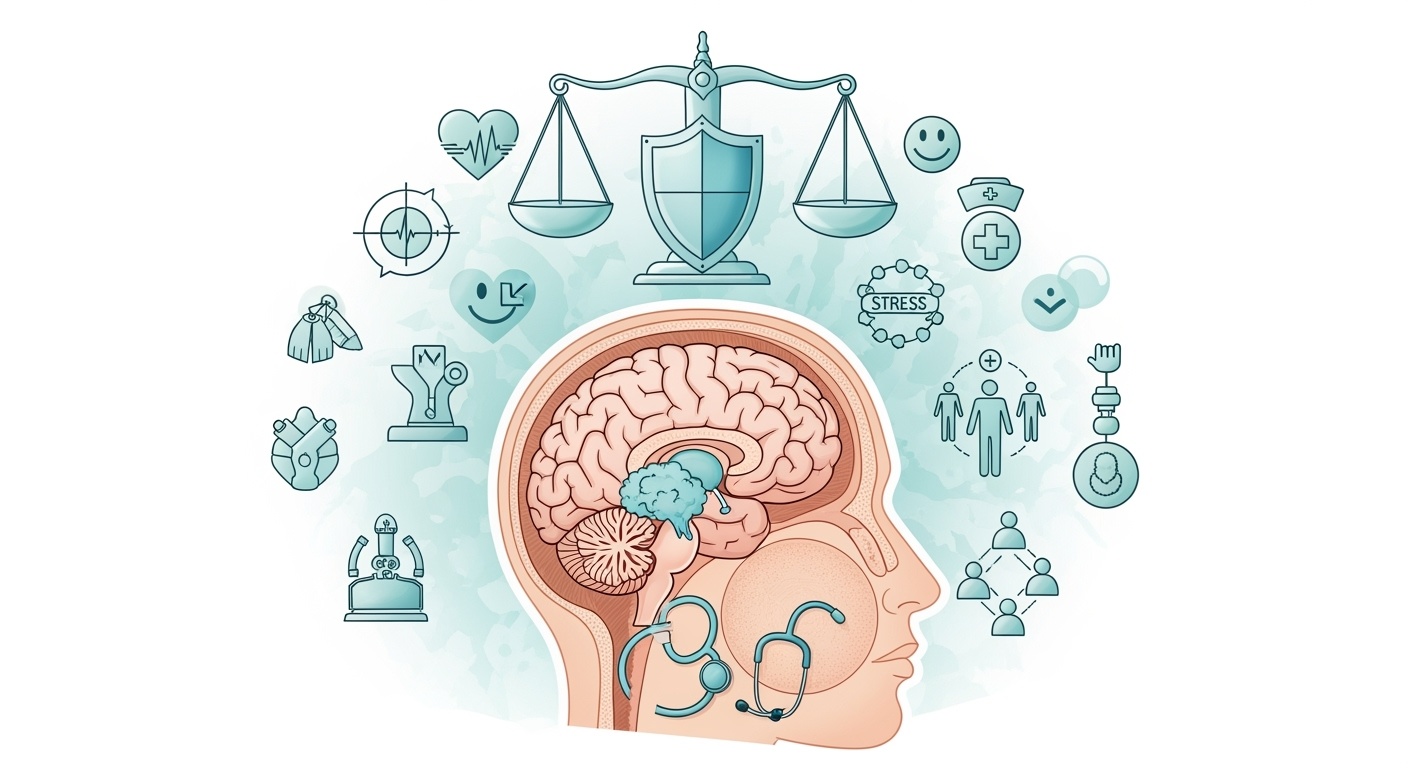
Visual representation of mental health concepts and protective factors
Table of Contents
1. Concept of Mental Health and Mental Hygiene
WHO Definition
“Mental health is a state of well-being in which every individual realizes his or her own potential, can cope with the normal stresses of life, can work productively and fruitfully, and is able to make a contribution to her or his community.”
Mental Health Components
-
Emotional Well-being: Ability to manage emotions effectively
-
Psychological Resilience: Capacity to bounce back from adversity
-
Social Functioning: Maintaining healthy relationships
-
Cognitive Function: Clear thinking and decision-making
Mental Hygiene Principles
-
Prevention Focus: Preventing mental illness before it occurs
-
Lifestyle Optimization: Promoting healthy habits and routines
-
Stress Management: Developing coping mechanisms
-
Environmental Health: Creating supportive surroundings
Memory Aid: CALM Method
Nursing Implementation: Mental Health Assessment
Assessment Tools
- • Mental Status Examination
- • Beck Depression Inventory
- • GAD-7 Anxiety Scale
- • Mini-Mental State Exam
Documentation
- • Mood and affect
- • Thought processes
- • Coping mechanisms
- • Support systems
Interventions
- • Therapeutic communication
- • Crisis intervention
- • Patient education
- • Referral coordination
2. Characteristics of a Mentally Healthy Person
Emotional Stability
- • Appropriate emotional responses
- • Emotional regulation skills
- • Resilience to stress
- • Self-awareness of feelings
- • Ability to express emotions healthily
Social Competence
- • Maintains healthy relationships
- • Effective communication skills
- • Empathy and compassion
- • Appropriate social boundaries
- • Conflict resolution abilities
Cognitive Function
- • Clear and logical thinking
- • Good problem-solving skills
- • Realistic perception of reality
- • Adequate memory function
- • Ability to learn and adapt
Personal Growth
- • Self-acceptance and self-esteem
- • Personal autonomy
- • Goal-oriented behavior
- • Continuous self-improvement
- • Sense of purpose and meaning
Coping Abilities
- • Effective stress management
- • Adaptive coping strategies
- • Problem-focused approach
- • Seeks support when needed
- • Maintains hope and optimism
Lifestyle Balance
- • Work-life balance
- • Healthy sleep patterns
- • Regular physical activity
- • Nutritious eating habits
- • Meaningful leisure activities
Memory Aid: HEALTHY Person
Mental Health Assessment Flowchart
Nursing Implementation: Promoting Mental Health
Patient Education Topics
- Stress management techniques and mindfulness practices
- Importance of sleep hygiene and regular sleep schedules
- Nutritional impact on mental health and mood regulation
- Building and maintaining healthy relationships
- Recognizing personal triggers and warning signs
Nursing Interventions
- Establish therapeutic nurse-patient relationships
- Conduct regular mental status assessments
- Facilitate support group participation
- Coordinate with multidisciplinary team members
- Monitor medication compliance and side effects
3. Warning Signs of Poor Mental Health
Critical Recognition
Early identification of mental health warning signs is crucial for timely intervention and prevention of severe mental health crises. Nurses play a vital role in recognizing these signs across various healthcare settings.
Emotional Signs
- • Persistent sadness or hopelessness
- • Excessive anxiety or worry
- • Irritability and mood swings
- • Loss of interest in activities
- • Overwhelming feelings of guilt
- • Emotional numbness or emptiness
Behavioral Changes
- • Social withdrawal and isolation
- • Changes in eating patterns
- • Sleep disturbances (insomnia/hypersomnia)
- • Decreased productivity at work/school
- • Increased substance use
- • Neglecting personal hygiene
Cognitive Signs
- • Difficulty concentrating
- • Memory problems
- • Indecisiveness
- • Negative thought patterns
- • Confused thinking
- • Poor judgment
Physical Symptoms
- • Chronic fatigue or low energy
- • Frequent headaches
- • Gastrointestinal problems
- • Muscle tension and aches
- • Changes in appetite
- • Unexplained physical complaints
Social/Interpersonal
- • Relationship conflicts
- • Avoiding family and friends
- • Inability to maintain responsibilities
- • Communication difficulties
- • Loss of empathy
- • Increased arguments or aggression
Crisis Indicators
- • Suicidal thoughts or statements
- • Self-harm behaviors
- • Extreme mood swings
- • Hallucinations or delusions
- • Severe agitation or panic
- • Complete social withdrawal
Memory Aid: WARNING Signs
Mental Health Crisis Response Pathway
Nursing Implementation: Crisis Recognition & Response
Assessment Priorities
Immediate Safety
Assess for suicidal/homicidal ideation, self-harm risk, substance use
Functional Status
Evaluate ability to perform daily activities, work/school function
Support Systems
Identify available family, friends, professional support
Documentation Requirements
- Objective behavioral observations and direct quotes
- Risk assessment findings and safety measures implemented
- Patient response to interventions and teaching
- Referrals made and follow-up plans established
- Family/caregiver involvement and education provided
4. Promotive and Preventive Mental Health Strategies
Prevention Framework
Mental health promotion and prevention strategies operate across three levels: primary prevention (preventing occurrence), secondary prevention (early detection and intervention), and tertiary prevention (reducing impact and preventing recurrence).
Primary Prevention
Preventing mental health problems before they occur
- • Health education and awareness programs
- • Stress management training
- • Life skills development
- • Community support building
- • Environmental modifications
- • Promotion of protective factors
Secondary Prevention
Early detection and prompt intervention
- • Regular mental health screening
- • Crisis intervention services
- • Early treatment programs
- • Risk assessment protocols
- • Rapid response teams
- • Brief intervention techniques
Tertiary Prevention
Reducing impact and preventing recurrence
- • Rehabilitation programs
- • Relapse prevention strategies
- • Long-term support services
- • Vocational rehabilitation
- • Family support and education
- • Medication compliance programs
Comprehensive Prevention Model
Individual Level
- Personal coping skills
- Self-care practices
- Healthy lifestyle choices
Family Level
- Family therapy
- Communication skills
- Support systems
Community Level
- Public awareness
- Resource development
- Stigma reduction
System Level
- Policy development
- Service integration
- Quality improvement
Wellness Promotion Strategies
Physical Wellness
- • Regular exercise and physical activity programs
- • Nutrition education and healthy eating initiatives
- • Sleep hygiene education and support
Emotional Wellness
- • Emotional intelligence training
- • Mindfulness and meditation programs
- • Stress reduction workshops
Social Wellness
- • Social skills training
- • Support group facilitation
- • Community engagement activities
Healthcare System Strategies
Service Integration
- • Collaborative care models
- • Integrated behavioral health services
- • Multidisciplinary team approaches
Access Enhancement
- • Telehealth mental health services
- • Mobile crisis intervention units
- • Walk-in mental health clinics
Quality Improvement
- • Evidence-based practice implementation
- • Outcome measurement and monitoring
- • Staff training and development
Memory Aid: PREVENT Mental Health Problems
Nursing Implementation: Prevention & Promotion Programs
Community Programs
- Mental health first aid training for community members
- School-based mental health screening and education
- Workplace wellness and stress management programs
- Support groups for high-risk populations
Clinical Programs
- Routine mental health screening in primary care
- Brief intervention protocols for at-risk patients
- Medication adherence support programs
- Discharge planning and follow-up coordination
Evaluation Metrics
- Reduction in mental health crisis episodes
- Increased help-seeking behaviors
- Improved quality of life scores
- Enhanced community mental health literacy
Key Takeaways for Nursing Practice
Clinical Competencies
- Conduct comprehensive mental health assessments using validated tools
- Recognize early warning signs and implement appropriate interventions
- Develop therapeutic relationships and communication skills
- Coordinate care with multidisciplinary teams
Professional Development
- Pursue specialized mental health nursing certifications
- Engage in continuing education on evidence-based practices
- Participate in quality improvement initiatives
- Advocate for mental health policy and resources
Final Reflection
“Mental health is not a destination, but a process. It’s about how you drive, not where you’re going. As nurses, we have the privilege and responsibility to support individuals on their mental health journey, promoting wellness, preventing illness, and providing compassionate care during times of crisis. Our role extends beyond clinical skills to include advocacy, education, and community engagement in creating a world where mental health is valued and supported.”
References and Further Reading
Professional Organizations
- • American Psychiatric Nurses Association (APNA)
- • International Society of Psychiatric-Mental Health Nurses
- • National Alliance on Mental Illness (NAMI)
- • World Health Organization – Mental Health
Assessment Tools
- • PHQ-9 (Patient Health Questionnaire)
- • GAD-7 (Generalized Anxiety Disorder Scale)
- • MMSE (Mini-Mental State Examination)
- • Columbia Suicide Severity Rating Scale