
Care of Vulnerable Patients & Prevention of Iatrogenic Injury
Comprehensive Nursing Notes
Evidence-Based Practice for Nursing Students
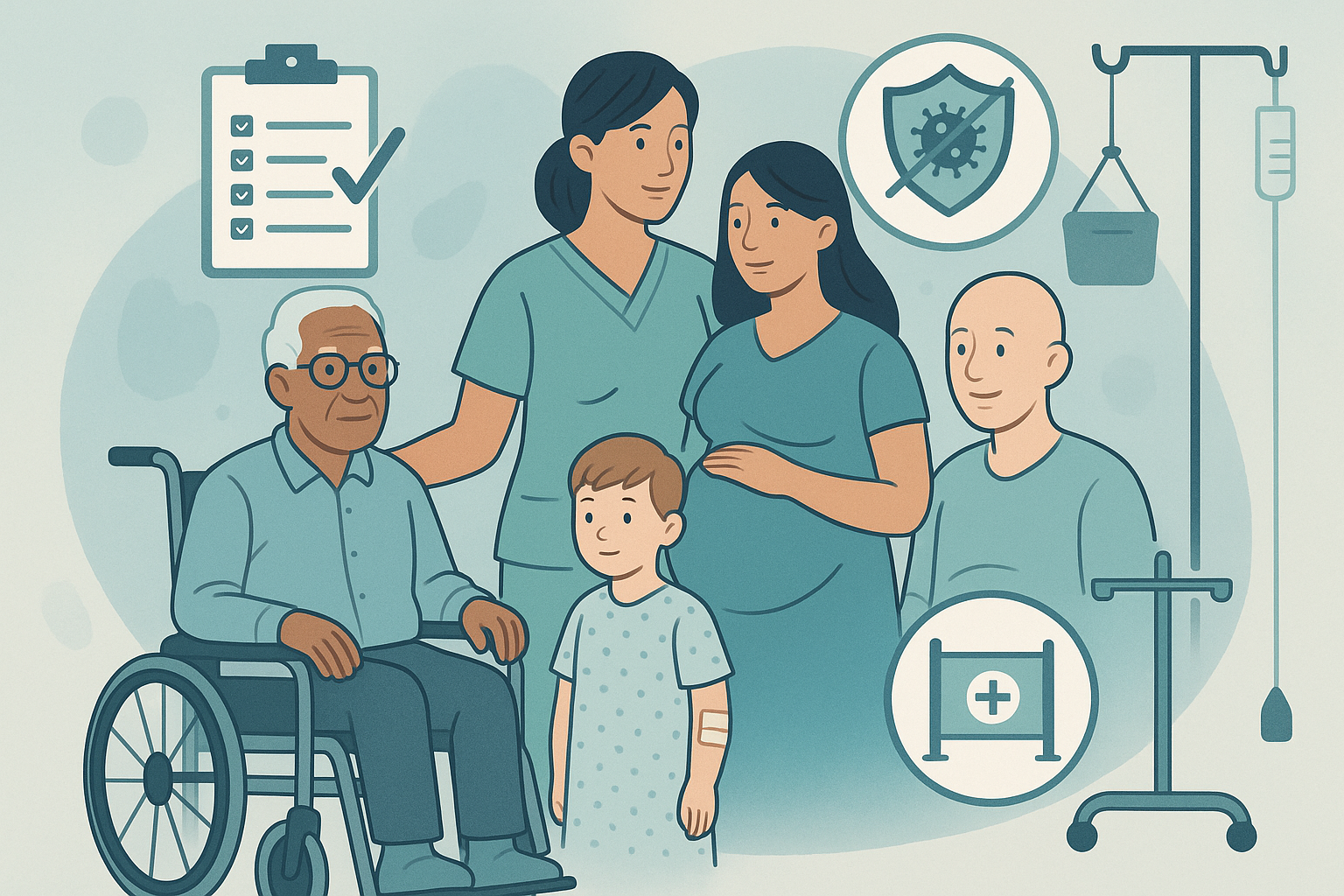
Comprehensive approach to vulnerable patient care and safety
Table of Contents
Introduction
Vulnerable patients represent a critical population in healthcare who require specialized attention and care due to their increased susceptibility to harm, complications, and adverse outcomes. These patients face heightened risks not only from their underlying conditions but also from iatrogenic injuries—harm caused unintentionally by medical treatment or healthcare interventions.
As healthcare providers, nurses play a pivotal role in identifying, protecting, and advocating for vulnerable patients while implementing evidence-based strategies to prevent iatrogenic injuries. This comprehensive guide provides nursing students and practitioners with the knowledge, tools, and strategies necessary to deliver safe, effective care to vulnerable populations.
Learning Objectives
- Identify vulnerable patient populations and their unique risk factors
- Understand the concept and types of iatrogenic injuries
- Implement evidence-based prevention strategies
- Apply safety principles in clinical practice
- Develop competency in risk assessment and mitigation
Vulnerable Patient Populations
Vulnerability in healthcare refers to patients who have limited ability to protect their own interests due to physical, psychological, social, or economic factors. Understanding these populations is crucial for providing appropriate care and preventing harm.
High-Risk Populations
- Pediatric Patients: Developing organ systems, communication barriers
- Elderly Patients: Polypharmacy, cognitive decline, frailty
- Critically Ill Patients: Multiple organ dysfunction, complex treatments
- Immunocompromised Patients: Increased infection risk
- Pregnant Women: Fetal considerations, physiological changes
Special Considerations
- Mental Health Patients: Cognitive impairment, medication compliance
- Non-English Speaking: Communication barriers
- Socioeconomically Disadvantaged: Limited resources, health literacy
- Patients with Disabilities: Physical or cognitive limitations
- Emergency Patients: Time constraints, incomplete information
Memory Aid: “VULNERABLE” Populations
V – Very young (pediatric)
U – Unconscious/altered mental status
L – Language barriers
N – Neurologically impaired
E – Elderly/frail
R – Respiratory/cardiac compromise
A – Autoimmune/immunocompromised
B – Birthing mothers
L – Low socioeconomic status
E – Emergency situations
Understanding Iatrogenic Injury
Iatrogenic injury refers to harm, illness, or adverse effects caused by medical treatment, procedures, or healthcare interventions, rather than by the underlying disease or condition. The term “iatrogenic” comes from the Greek words “iatros” (physician) and “genesis” (origin), literally meaning “physician-caused.”
Key Statistics
- • Medical errors are the third leading cause of death in the United States
- • Approximately 250,000-440,000 deaths annually attributed to medical errors
- • Preventable adverse events occur in 3-4% of hospitalizations
- • Medication errors affect 1.5 million patients annually
Types of Iatrogenic Injuries
Medication-Related
- • Adverse drug reactions
- • Medication errors
- • Drug interactions
- • Overdose/underdose
- • Wrong medication administration
Procedure-Related
- • Surgical complications
- • Wrong-site surgery
- • Procedural errors
- • Equipment malfunctions
- • Anesthesia complications
System-Related
- • Communication failures
- • Diagnostic errors
- • Delayed treatment
- • Inadequate monitoring
- • Information system errors
Environment-Related
- • Healthcare-associated infections
- • Falls and injuries
- • Equipment-related injuries
- • Restraint-related harm
- • Pressure ulcers
Risk Factors & Assessment
Effective prevention of iatrogenic injuries begins with comprehensive risk assessment. Understanding and identifying risk factors allows healthcare providers to implement targeted interventions and safety measures.
Risk Assessment Framework
Patient Risk Factors
Physiological
- • Age extremes (<2 years, >65 years)
- • Cognitive impairment
- • Multiple comorbidities
- • Immunosuppression
- • Organ dysfunction
- • Nutritional deficits
Psychological
- • Depression/anxiety
- • Delirium
- • Substance abuse
- • Poor health literacy
- • Non-compliance history
- • Language barriers
Social
- • Limited support system
- • Financial constraints
- • Insurance limitations
- • Geographic isolation
- • Cultural barriers
- • Homeless/unstable housing
Memory Aid: “SAFER” Risk Assessment
S – Severity of illness
A – Age and development
F – Functional status
E – Environmental hazards
R – Resources and support
Prevention Strategies
Prevention of iatrogenic injuries requires a multi-layered approach incorporating evidence-based practices, system improvements, and cultural changes within healthcare organizations. The following strategies form the foundation of safe patient care.
The Swiss Cheese Model of Prevention
Prevention strategies work like layers of Swiss cheese – multiple barriers prevent errors from reaching patients. When holes align, errors can occur, but multiple layers reduce this risk significantly.
Training, competency, vigilance
Communication, collaboration, checks
Alerts, automation, decision support
Policies, culture, resources
Core Prevention Principles
1. Standardization and Protocols
- • Implement evidence-based clinical protocols
- • Use standardized communication tools (SBAR, ISBAR)
- • Establish consistent medication administration procedures
- • Create standardized handoff processes
- • Develop universal precaution protocols
2. Technology Integration
- • Electronic health records (EHR) with decision support
- • Computerized provider order entry (CPOE)
- • Barcode medication administration (BCMA)
- • Smart infusion pumps with dose error reduction
- • Clinical surveillance systems
3. Human Factors Engineering
- • Design error-resistant systems
- • Reduce reliance on memory
- • Implement forcing functions and constraints
- • Optimize workspace design
- • Minimize interruptions and distractions
4. Culture of Safety
- • Promote just culture and non-punitive reporting
- • Encourage questioning and speaking up
- • Implement safety rounds and huddles
- • Provide ongoing safety education
- • Recognize and reward safe practices
Medication Safety
Medication errors represent one of the most common types of preventable iatrogenic injuries. Implementing robust medication safety practices is essential for protecting vulnerable patients from adverse drug events.
Medication Error Statistics
- • Medication errors harm at least 1.5 million people annually in the US
- • Adverse drug events cost healthcare system $3.5 billion annually
- • 40% of medication errors occur during transitions of care
- • Elderly patients experience 2x higher rate of adverse drug events
The Five Rights of Medication Administration
Traditional Five Rights
- ✓ Right Patient
- ✓ Right Medication
- ✓ Right Dose
- ✓ Right Route
- ✓ Right Time
Extended Rights
- ✓ Right Documentation
- ✓ Right Reason
- ✓ Right Response
- ✓ Right to Refuse
- ✓ Right Education
Additional Considerations
- ✓ Right Assessment
- ✓ Right Evaluation
- ✓ Right to Monitor
- ✓ Right Form
- ✓ Right Approach
Memory Aid: “MEDICINE” Safety Checks
M – Match patient identity
E – Examine medication order
D – Double-check calculations
I – Investigate allergies
C – Confirm with patient
I – Inspect medication appearance
N – Note the time
E – Evaluate patient response
High-Alert Medications
High-alert medications bear a heightened risk of causing significant patient harm when used in error. These medications require special safeguards and additional verification steps.
Common High-Alert Medications
- • Insulin
- • Anticoagulants (heparin, warfarin)
- • Opioids
- • Chemotherapy agents
- • Electrolyte solutions (potassium, magnesium)
- • Sedatives
- • Neuromuscular blocking agents
Safety Strategies
- • Independent double verification
- • Standardized concentrations
- • Smart pump technology
- • Distinct labeling and storage
- • Enhanced monitoring protocols
- • Limit access and availability
- • Redundant safety checks
Infection Control
Healthcare-associated infections (HAIs) represent a significant source of iatrogenic injury, particularly for vulnerable patients with compromised immune systems. Effective infection prevention and control measures are essential for patient safety.
HAI Impact Statistics
- • 1.7 million HAIs occur annually in US hospitals
- • 99,000 deaths annually attributed to HAIs
- • $28-45 billion in excess healthcare costs
- • 5-10% of hospitalized patients develop HAIs
Standard Precautions
Standard precautions form the foundation of infection prevention and should be applied to the care of all patients, regardless of their diagnosis or presumed infection status.
Hand Hygiene
- • Most important infection prevention measure
- • Perform before and after patient contact
- • Use alcohol-based hand rub or soap and water
- • Minimum 15-20 seconds duration
- • Critical moments: WHO’s “Five Moments”
Personal Protective Equipment
- • Gloves for potential exposure to body fluids
- • Masks for respiratory droplet protection
- • Eye protection for splash risk
- • Gowns for extensive contact
- • Proper donning and doffing sequence
Memory Aid: “CLEAN HANDS” Protocol
C – Check for visible contamination
L – Lather with soap or use alcohol rub
E – Engage all surfaces (palms, backs, fingers)
A – Allow adequate contact time (15-20 seconds)
N – Never touch contaminated surfaces after cleaning
H – Hygiene before and after patient contact
A – After removing gloves
N – Near patient environment cleaning
D – During care if hands become contaminated
S – Sterilize equipment between patients
Transmission-Based Precautions
Contact Precautions
Use for: MRSA, VRE, C. difficile
- • Private room preferred
- • Gloves and gown required
- • Dedicated equipment
- • Hand hygiene critical
Droplet Precautions
Use for: Influenza, pneumonia, pertussis
- • Private room preferred
- • Surgical mask required
- • Patient mask during transport
- • 3-foot separation distance
Airborne Precautions
Use for: TB, measles, varicella
- • Negative pressure room
- • N95 respirator required
- • Door must remain closed
- • Minimize patient transport
Fall Prevention
Patient falls are among the most common adverse events in healthcare settings and represent a significant source of iatrogenic injury. Vulnerable patients, particularly the elderly, are at increased risk for falls and fall-related injuries.
Fall Statistics in Healthcare
- • 700,000-1 million falls occur annually in US hospitals
- • Falls are the most frequently reported patient safety event
- • 30-50% of falls result in injury
- • Fall rates: 3.56 falls per 1,000 patient days
- • Cost: $34 billion annually in healthcare system
Fall Risk Assessment Tools
Morse Fall Scale
Hendrich II Fall Risk Model
Memory Aid: “SAFE FROM FALLS” Prevention
S – Screen for fall risk regularly
A – Assess environment for hazards
F – Footwear and clothing appropriate
E – Educate patient and family
F – Frequent rounding and observation
R – Remove or minimize risk factors
O – Optimize lighting and visibility
M – Medication review and management
F – Fall prevention interventions
A – Assistive devices as needed
L – Low bed positioning
L – Lock wheels and secure equipment
S – Strengthen and mobilize safely
Fall Prevention Interventions
Environmental Modifications
- • Keep bed in lowest position with wheels locked
- • Ensure adequate lighting, especially at night
- • Remove or secure loose rugs and cords
- • Keep call light within reach
- • Clear pathways of obstacles
- • Install grab bars in bathrooms
- • Use non-slip mats and surfaces
Patient-Specific Interventions
- • Assist with ambulation and transfers
- • Provide appropriate assistive devices
- • Ensure proper footwear (non-slip, well-fitting)
- • Maintain toileting schedule to prevent urgency
- • Review and adjust medications as needed
- • Implement exercise and strengthening programs
- • Address vision and hearing impairments
Technology and Monitoring
- • Bed and chair alarms for high-risk patients
- • Video monitoring systems
- • Wearable fall detection devices
- • Floor mats with pressure sensors
- • Smart room technology integration
- • Mobile alert systems for staff
Communication & Handoffs
Effective communication is fundamental to patient safety and preventing iatrogenic injuries. Communication failures contribute to a significant percentage of adverse events, making standardized communication practices essential for vulnerable patient care.
Communication Failure Impact
- • 80% of serious medical errors involve miscommunication
- • Communication failures contribute to 70% of sentinel events
- • Poor handoffs lead to 65% of adverse events
- • Annual cost of communication failures: $12 billion
SBAR Communication Framework
SBAR (Situation, Background, Assessment, Recommendation) provides a standardized approach to clinical communication that ensures complete and accurate information transfer.
S – Situation
- • Identify yourself and patient
- • State the current situation
- • Describe the problem clearly
- • Include relevant vital signs
B – Background
- • Provide relevant history
- • Include admission diagnosis
- • Mention significant medical history
- • Note recent treatments/procedures
A – Assessment
- • Share your clinical assessment
- • Include objective findings
- • State level of concern
- • Provide clinical judgment
R – Recommendation
- • State what you need
- • Suggest specific actions
- • Include timeframe
- • Confirm understanding
Memory Aid: “CLEAR TALK” Communication
C – Confirm patient identity
L – Listen actively and attentively
E – Establish mutual understanding
A – Ask clarifying questions
T – Time-sensitive information first
A – Avoid medical jargon
L – Link information to patient outcomes
K – Keep documentation accurate
Handoff Best Practices
Shift Handoffs
- • Use bedside reporting
- • Include patient in communication
- • Verify critical information
- • Address questions immediately
- • Document handoff completion
Transfer Handoffs
- • Complete medication reconciliation
- • Transfer all equipment safely
- • Communicate ongoing needs
- • Ensure receiving staff preparedness
- • Follow-up on critical items
Interdisciplinary
- • Include all team members
- • Focus on patient goals
- • Clarify roles and responsibilities
- • Address care coordination
- • Plan follow-up actions
Nursing Implementation
Nurses are uniquely positioned to prevent iatrogenic injuries through direct patient care, assessment, advocacy, and coordination. This section outlines specific nursing interventions and implementation strategies for caring for vulnerable patients.
Core Nursing Competencies for Vulnerable Patient Care
Clinical Skills
- • Advanced assessment techniques
- • Critical thinking and clinical reasoning
- • Evidence-based practice integration
- • Technology proficiency
- • Emergency response capabilities
Professional Skills
- • Therapeutic communication
- • Cultural competency
- • Ethical decision-making
- • Interdisciplinary collaboration
- • Patient advocacy
Nursing Process Application
Assessment
Physical Assessment
- • Comprehensive head-to-toe examination
- • Focused assessments based on risk factors
- • Pain assessment using appropriate scales
- • Functional status evaluation
- • Skin integrity assessment
Psychosocial Assessment
- • Cognitive function screening
- • Mental health evaluation
- • Social support assessment
- • Cultural and spiritual needs
- • Health literacy evaluation
Nursing Diagnosis
Safety-Related Diagnoses
- • Risk for falls
- • Risk for infection
- • Risk for injury
- • Impaired skin integrity
- • Risk for adverse drug events
Vulnerability-Related Diagnoses
- • Deficient knowledge
- • Impaired communication
- • Social isolation
- • Powerlessness
- • Risk for compromised human dignity
Planning
Goal Setting
- • Patient-centered outcomes
- • SMART goals (Specific, Measurable, Achievable, Relevant, Time-bound)
- • Short-term and long-term objectives
- • Family involvement in goal setting
- • Realistic expectations
Care Coordination
- • Interdisciplinary team collaboration
- • Resource identification and allocation
- • Discharge planning initiation
- • Continuity of care planning
- • Quality indicator monitoring
Implementation
Direct Care Interventions
- • Medication administration with safety checks
- • Wound care and infection prevention
- • Mobility assistance and fall prevention
- • Pain management interventions
- • Patient education and coaching
Indirect Care Interventions
- • Documentation and communication
- • Care coordination and referrals
- • Quality improvement activities
- • Staff education and mentoring
- • Policy and procedure development
Evaluation
Outcome Measurement
- • Patient safety indicators
- • Quality of life measures
- • Functional status improvements
- • Patient satisfaction scores
- • Adverse event tracking
Continuous Improvement
- • Plan modification based on outcomes
- • Best practice integration
- • Professional development needs
- • System-level improvements
- • Evidence-based practice updates
Memory Aid: “NURSING CARE” Implementation
N – Notice changes in patient condition
U – Understand patient’s unique needs
R – Respond promptly to concerns
S – Systematically assess risks
I – Implement evidence-based interventions
N – Navigate complex healthcare systems
G – Guard against potential harm
C – Communicate effectively with team
A – Advocate for patient safety
R – Record and report accurately
E – Evaluate outcomes continuously
Quality Improvement
Quality improvement (QI) is a systematic approach to reducing iatrogenic injuries and enhancing patient safety. Nurses play a crucial role in identifying opportunities for improvement, implementing changes, and monitoring outcomes to ensure sustainable improvements in vulnerable patient care.
Quality Improvement Methodologies
Plan-Do-Study-Act (PDSA) Cycle
Lean Six Sigma
DMAIC Process:
- • Define: Problem identification
- • Measure: Data collection and baseline
- • Analyze: Root cause analysis
- • Improve: Solution implementation
- • Control: Sustain improvements
Focus: Eliminating waste and reducing variation in processes
Key Quality Indicators
Safety Indicators
- • Falls per 1,000 patient days
- • Healthcare-associated infection rates
- • Medication error rates
- • Pressure ulcer prevalence
- • Restraint usage rates
- • Never events occurrence
Process Indicators
- • Hand hygiene compliance
- • Medication reconciliation completion
- • Fall risk assessment timing
- • Documentation completeness
- • Response time to alarms
- • Discharge planning initiation
Outcome Indicators
- • Length of stay
- • Readmission rates
- • Patient satisfaction scores
- • Mortality rates
- • Functional status improvement
- • Quality of life measures
Successful QI Strategies for Vulnerable Patients
Bundled Interventions
- • Central line-associated bloodstream infection (CLABSI) bundles
- • Ventilator-associated pneumonia (VAP) bundles
- • Surgical site infection prevention bundles
- • Fall prevention bundles
Technology Solutions
- • Clinical decision support systems
- • Automated surveillance systems
- • Mobile communication platforms
- • Real-time dashboards and alerts
Nursing Leadership in Quality Improvement
Clinical Leadership
- • Champion evidence-based practice initiatives
- • Mentor colleagues in quality improvement methods
- • Participate in quality committees and task forces
- • Lead unit-based improvement projects
- • Advocate for necessary resources and support
Data-Driven Decision Making
- • Collect and analyze quality metrics regularly
- • Use statistical process control methods
- • Benchmark against national standards
- • Share data transparently with team members
- • Make data-informed improvements
Conclusion & Key Takeaways
The care of vulnerable patients and prevention of iatrogenic injuries represents one of the most critical aspects of professional nursing practice. As healthcare systems become increasingly complex and patient populations more diverse, nurses must be equipped with the knowledge, skills, and tools necessary to provide safe, effective care to those who are most at risk.
Essential Key Takeaways
Clinical Competencies
- • Comprehensive assessment and risk identification
- • Evidence-based intervention implementation
- • Effective communication and collaboration
- • Continuous monitoring and evaluation
- • Patient advocacy and empowerment
Professional Responsibilities
- • Commitment to lifelong learning
- • Ethical decision-making
- • Quality improvement participation
- • Cultural competence development
- • Leadership in safety initiatives
Future Directions
Technology Integration
The future of vulnerable patient care will be increasingly supported by advanced technologies including artificial intelligence, predictive analytics, and precision medicine approaches.
- • AI-powered risk prediction models
- • Wearable monitoring devices
- • Telemedicine and remote monitoring
- • Genomic-based personalized care
Population Health Focus
Healthcare is shifting toward population health management with emphasis on preventing iatrogenic injuries at the community level.
- • Community-based prevention programs
- • Social determinants of health integration
- • Health equity initiatives
- • Cross-continuum care coordination
Education and Training
Nursing education must evolve to prepare nurses for the complexities of caring for vulnerable populations in diverse settings.
- • Simulation-based safety training
- • Interprofessional education programs
- • Cultural competency curricula
- • Quality improvement methodology training
Final Memory Aid: “PROTECT VULNERABLE” Patients
P – Prioritize safety in all interventions
R – Recognize individual risk factors
O – Optimize care coordination
T – Take time for thorough assessment
E – Educate patients and families
C – Communicate effectively with team
T – Track outcomes and indicators
V – Validate interventions with evidence
U – Understand cultural considerations
L – Lead by example in safety practices
N – Never compromise on safety standards
E – Engage in continuous improvement
R – Report and learn from errors
A – Advocate tirelessly for patients
B – Build trusting relationships
L – Learn continuously throughout career
E – Evaluate and refine practice regularly
A Call to Action
Every nurse has the power to make a difference in the lives of vulnerable patients. By implementing the strategies outlined in these notes, maintaining a commitment to evidence-based practice, and continuously striving for improvement, nurses can significantly reduce iatrogenic injuries and enhance the quality of care for those who need it most. Remember: in nursing, every intervention is an opportunity to heal, protect, and advocate for those entrusted to our care.
References & Further Reading
• Institute of Medicine. (2000). To Err is Human: Building a Safer Health System. Washington, DC: National Academy Press.
• The Joint Commission. (2023). National Patient Safety Goals. Retrieved from jointcommission.org
• Agency for Healthcare Research and Quality. (2023). Patient Safety Network. Retrieved from psnet.ahrq.gov
• World Health Organization. (2023). Patient Safety. Retrieved from who.int/teams/integrated-health-services/patient-safety
• American Nurses Association. (2023). Code of Ethics for Nurses with Interpretive Statements. Silver Spring, MD: Nursesbooks.org
• Institute for Healthcare Improvement. (2023). Science of Safety. Retrieved from ihi.org