
Nursing Excellence: Medical & Surgical Settings
Master Your Role in Outpatient, Inpatient & ICU Care
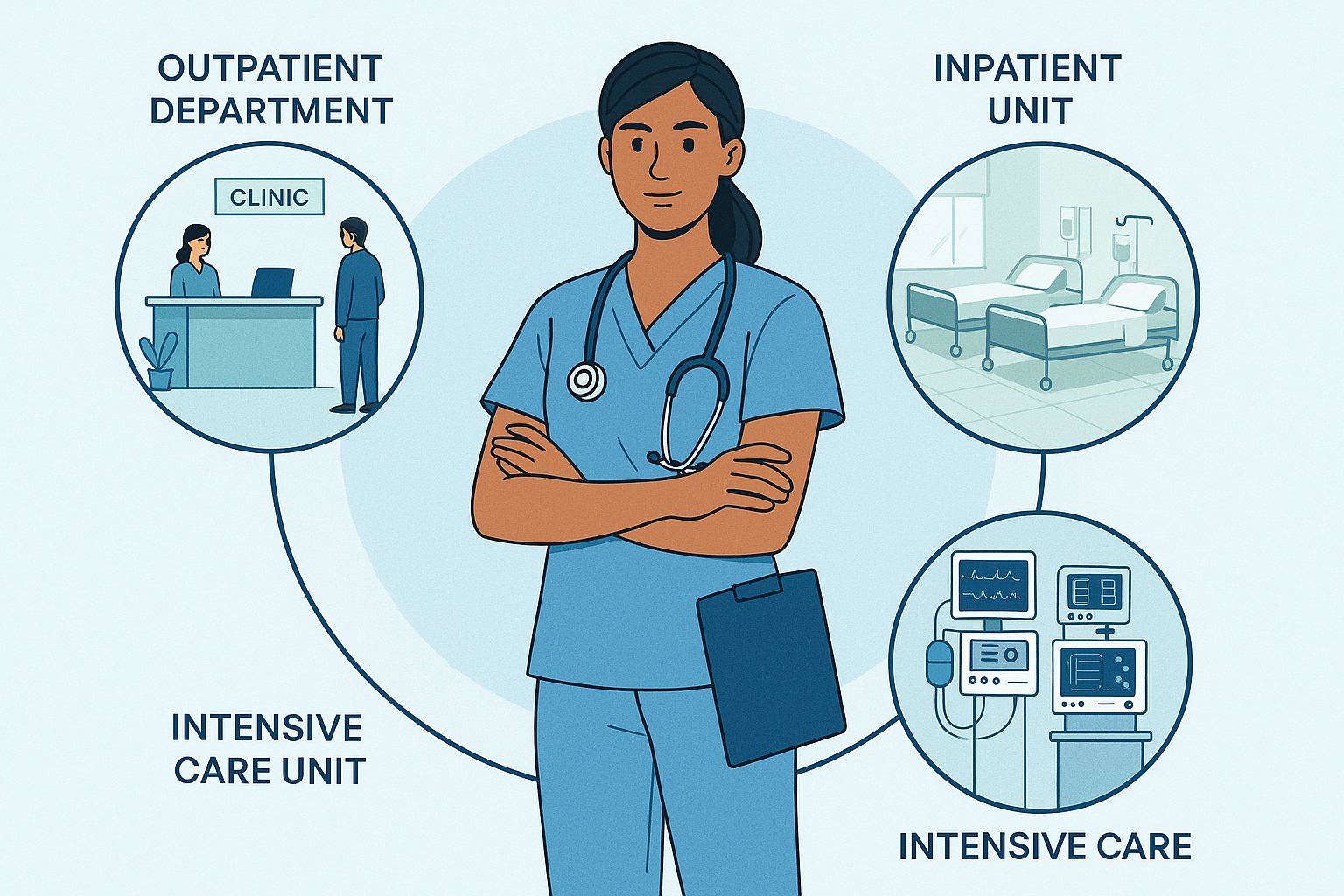
Table of Contents
Introduction to Nursing Care Excellence
Excellence in nursing care represents the pinnacle of healthcare delivery, where compassionate professionals blend scientific knowledge with therapeutic relationships to optimize patient outcomes. As a nursing student preparing for clinical practice, understanding your multifaceted role across different healthcare settings is essential for developing competence and confidence in your future career.
Key Learning Objectives
- Understand comprehensive nursing care responsibilities across healthcare settings
- Master evidence-based practices for optimal patient outcomes
- Develop critical thinking skills for complex clinical situations
- Build professional competencies for career advancement
Modern nursing care extends far beyond basic patient care tasks. Today’s nurses function as patient advocates, educators, care coordinators, and clinical decision-makers. Whether working in outpatient clinics, medical-surgical units, or intensive care environments, nurses must demonstrate expertise in assessment, intervention, evaluation, and continuous quality improvement.
Core Principles of Nursing Practice
Patient Safety First
Every nursing action must prioritize patient safety through risk assessment, error prevention, and continuous monitoring of patient status and care quality.
Holistic Care Approach
Nursing care addresses physical, emotional, social, and spiritual needs of patients and their families throughout the healthcare experience.
CARING Mnemonic for Nursing Excellence
A – Assessment & Analysis
R – Respectful Relationships
N – Nurturing Environment
G – Growth & Learning
Essential Nursing Care Standards
Evidence-based practice and continuous skill development
Moral reasoning and professional integrity
Respectful care for diverse populations
Outpatient Department Nursing Excellence
Outpatient nursing care represents the first point of contact for many patients seeking healthcare services. In these fast-paced environments, nurses must efficiently manage patient flow while delivering comprehensive care that promotes health maintenance, disease prevention, and early intervention strategies.
Primary Responsibilities
- Initial patient assessment and triage prioritization
- Vital signs monitoring and documentation
- Patient education and health promotion counseling
- Medication administration and management
- Procedure assistance and patient preparation
Specialized Functions
- Chronic disease management coordination
- Preventive care screening programs
- Telephone triage and follow-up care
- Appointment scheduling and care coordination
- Electronic health record management
| Skill Category | Core Competencies | Patient Impact |
|---|---|---|
| Assessment Skills | Physical examination, health history, symptom evaluation | Early detection, accurate diagnosis, treatment planning |
| Communication | Active listening, therapeutic communication, patient advocacy | Enhanced trust, improved compliance, emotional support |
| Technical Skills | Injection administration, wound care, specimen collection | Safe procedures, comfort, infection prevention |
| Education | Health teaching, disease prevention, lifestyle modification | Improved self-care, better outcomes, prevention focus |
OUTPATIENT Mnemonic for Success
U – Understand individual patient needs
T – Teach health promotion strategies
P – Prioritize based on acuity
A – Assess comprehensively
I – Implement evidence-based care
E – Evaluate patient responses
N – Navigate complex healthcare systems
T – Transition care seamlessly
Outpatient Nursing Care Excellence Tips
Successful outpatient nursing care requires exceptional time management, strong communication skills, and the ability to quickly build rapport with patients. Focus on creating positive first impressions, as outpatient encounters often set the tone for the entire healthcare experience.
Efficient scheduling and workflow optimization
Ensuring access to appropriate care resources
Continuous monitoring and improvement
Inpatient Unit Nursing Care Excellence
Inpatient nursing care represents the foundation of hospital-based healthcare delivery, where nurses provide 24-hour comprehensive care to patients with acute medical and surgical conditions. This environment demands sophisticated clinical skills, critical thinking abilities, and the capacity to manage multiple complex patient needs simultaneously while maintaining the highest standards of nursing care quality.
Direct Patient Care
- Comprehensive patient assessments
- Medication administration and monitoring
- Wound care and infection prevention
- Pain management and comfort measures
- Mobility assistance and fall prevention
- Nutritional support and hydration
Care Coordination
- Interdisciplinary team collaboration
- Care plan development and revision
- Family education and support
- Discharge planning coordination
- Continuity of care transitions
- Resource utilization optimization
Safety & Quality
- Risk assessment and mitigation
- Patient safety protocols
- Quality improvement initiatives
- Incident reporting and analysis
- Evidence-based practice implementation
- Regulatory compliance monitoring
Shift-Based Nursing Care Responsibilities
Day Shift Excellence
7:00 AM – 7:00 PM Focus Areas
- • Comprehensive patient assessments and care planning
- • Physician rounds participation and communication
- • Diagnostic test coordination and follow-up
- • Patient and family education sessions
- • Discharge planning and care transitions
- • Interdisciplinary team meetings and collaboration
Night Shift Excellence
7:00 PM – 7:00 AM Focus Areas
- • Continuous patient monitoring and surveillance
- • Emergency response and critical care support
- • Pain management and comfort interventions
- • Sleep promotion and environmental management
- • Documentation completion and care continuity
- • Family support during difficult situations
Weekend Excellence
Weekend & Holiday Considerations
- • Reduced staffing resource management
- • Emergency preparedness and response
- • Family visitation support and guidance
- • Maintaining routine care standards
- • Communication with on-call physicians
- • Critical thinking for independent decisions
| Acuity Level | Patient Characteristics | Nursing Care Requirements | Typical Nurse-Patient Ratio |
|---|---|---|---|
| Low Acuity | Stable vital signs, minimal assistance needs, routine medications | Standard assessments, medication administration, discharge planning | 1:6-8 patients |
| Moderate Acuity | Multiple comorbidities, complex medications, frequent monitoring | Enhanced assessments, care coordination, family education | 1:4-5 patients |
| High Acuity | Unstable conditions, intensive monitoring, specialized equipment | Continuous assessment, advanced interventions, critical thinking | 1:3-4 patients |
| Critical Acuity | Life-threatening conditions, multiple organ systems involved | Intensive monitoring, complex interventions, family support | 1:2-3 patients |
INPATIENT Mnemonic for Excellence
N – Navigate complex systems
P – Prioritize based on acuity
A – Assess continuously
T – Team collaboration
E – Evaluate patient responses
N – Nurture therapeutic relationships
T – Transition care smoothly
Inpatient Nursing Care Success Strategies
Excellence in inpatient nursing care requires masterful prioritization skills, emotional resilience, and the ability to provide compassionate care during some of the most vulnerable moments in patients’ lives. Focus on building strong therapeutic relationships while maintaining professional boundaries.
Analytical assessment and decision-making
Seamless interdisciplinary collaboration
Ensuring optimal care outcomes
Comprehensive psychosocial care
Intensive Care Unit Nursing Excellence
Intensive Care Unit nursing care represents the most advanced level of clinical nursing practice, requiring exceptional expertise in managing critically ill patients with complex, life-threatening conditions. ICU nurses must demonstrate mastery of sophisticated technology, advanced pharmacology, and complex pathophysiology while providing compassionate care to patients and their families during the most challenging healthcare experiences.
Advanced Technical Skills
- Hemodynamic monitoring and interpretation
- Mechanical ventilation management
- Vasoactive medication administration
- Continuous renal replacement therapy
- Intracranial pressure monitoring
Clinical Assessment Excellence
- Rapid clinical deterioration recognition
- Advanced physical assessment techniques
- Laboratory value interpretation
- Diagnostic imaging analysis
- Emergency response coordination
ICU Patient Population Management
Cardiac ICU
Post-cardiac surgery, myocardial infarction, heart failure, arrhythmias
Neuro ICU
Stroke, traumatic brain injury, seizures, neurosurgical procedures
Surgical ICU
Post-operative complications, trauma, multiple organ dysfunction
Medical ICU
Respiratory failure, sepsis, metabolic emergencies, overdoses
| Competency Domain | Required Skills | Clinical Application | Patient Outcomes |
|---|---|---|---|
| Technology Mastery | Ventilator management, hemodynamic monitoring, ECMO support | Complex equipment operation and troubleshooting | Improved organ support and recovery |
| Pharmacological Expertise | Vasoactive drugs, sedation protocols, continuous infusions | Precise medication titration and monitoring | Optimized hemodynamic stability |
| Assessment Excellence | Neurological assessments, cardiac rhythm interpretation | Early recognition of clinical changes | Rapid intervention and complication prevention |
| Family-Centered Care | Crisis communication, end-of-life support, decision-making | Compassionate family guidance and support | Enhanced coping and informed decisions |
CRITICAL Mnemonic for ICU Excellence
R – Rapid response to changes
I – Intensive interventions and support
T – Technology integration and mastery
C – Compassionate family-centered care
A – Advanced clinical decision-making
L – Life-sustaining care excellence
ICU Nursing Care Excellence Standards
ICU nursing care excellence demands the highest level of clinical expertise, emotional intelligence, and professional resilience. Success in critical care requires continuous learning, mentorship, and the ability to make complex decisions under pressure while maintaining therapeutic relationships with patients and families during their most vulnerable moments.
Complex pathophysiology understanding
Mastery of life-support systems
Emergency response leadership
Essential Skills & Competencies for Nursing Care
Excellence in nursing care across all healthcare settings requires a comprehensive foundation of technical skills, critical thinking abilities, and interpersonal competencies. These core competencies ensure that nurses can provide safe, effective, and compassionate care while adapting to the evolving healthcare landscape and diverse patient populations.
Foundational Competencies
Clinical Assessment
Comprehensive physical assessment, health history collection, and symptom evaluation
Medication Safety
Safe medication administration, dosage calculations, and adverse effect monitoring
Infection Control
Standard precautions, isolation protocols, and prevention strategies
Advanced Competencies
Critical Thinking
Clinical reasoning, problem-solving, and evidence-based decision making
Leadership
Team coordination, delegation, and quality improvement initiatives
Technology Integration
Electronic health records, monitoring systems, and digital health tools
Communication Excellence in Nursing Care
Patient Communication
- • Active listening and empathetic responses
- • Clear, jargon-free explanations
- • Cultural sensitivity and awareness
- • Health literacy assessment and adaptation
- • Therapeutic communication techniques
- • Difficult conversation navigation
Professional Communication
- • SBAR communication framework
- • Interdisciplinary team collaboration
- • Conflict resolution strategies
- • Professional documentation standards
- • Effective handoff communication
- • Quality improvement reporting
Family Communication
- • Family-centered care principles
- • Education and support provision
- • Crisis communication skills
- • End-of-life conversations
- • Boundary setting and maintenance
- • Advocacy and support coordination
Nursing Care Professional Development Pathway
Novice
Foundation building, basic skills mastery, preceptorship
Advanced Beginner
Experience integration, pattern recognition, confidence building
Competent
Efficiency development, prioritization mastery, leadership emergence
Expert
Intuitive practice, mentorship, innovation leadership
EXCELLENCE Mnemonic for Skill Development
X – eXpertise through continuous learning
C – Critical thinking development
E – Ethical decision-making
L – Leadership skill cultivation
E – Empathetic patient relationships
N – Nursing care innovation
C – Collaborative team participation
E – Excellence in all endeavors
Professional Development in Nursing Care
Professional development in nursing care is a continuous journey that extends throughout your entire career, encompassing formal education, specialized certifications, leadership opportunities, and personal growth initiatives. This commitment to lifelong learning ensures that nursing professionals remain current with best practices, emerging technologies, and evolving healthcare needs while advancing their careers and improving patient outcomes.
Specialized Certification Opportunities
Clinical Specialty Certifications
Advanced Practice Certifications
Nursing Care Career Advancement Timeline
Foundation Years (0-2 years)
Focus on mastering basic nursing care skills, developing confidence, and establishing professional relationships.
Competency Development (2-5 years)
Pursuing specialty certifications, taking on leadership roles, and developing expertise in chosen areas.
Leadership & Expertise (5+ years)
Advancing to management roles, pursuing advanced degrees, and becoming mentors for newer nurses.
Professional Development Success Strategies
Excellence in nursing care professional development requires strategic planning, continuous learning, and active engagement in professional organizations. Set clear career goals, seek mentorship opportunities, and remain committed to evidence-based practice and quality improvement initiatives.
Stay current with evolving practices
Build meaningful professional relationships
Cultivate leadership skills and opportunities
Global Best Practices in Nursing Care
Excellence in nursing care is advanced through the adoption of global best practices that have demonstrated superior patient outcomes, enhanced safety measures, and improved healthcare delivery efficiency. These evidence-based approaches, developed and refined in healthcare systems worldwide, provide valuable insights for advancing nursing care standards and professional practice excellence.
Scandinavian Model Excellence
Nordic countries demonstrate exceptional nursing care integration with emphasis on preventive care, patient empowerment, and interdisciplinary collaboration.
- Patient-centered care planning with shared decision-making
- Advanced nursing roles in primary care settings
- Technology integration for health monitoring
- Emphasis on work-life balance and staff wellbeing
Canadian Excellence Framework
Canada’s healthcare system emphasizes nursing care excellence through comprehensive quality assurance, cultural competency, and universal healthcare access.
- Cultural safety and Indigenous health focus
- Robust continuing education requirements
- Quality improvement through peer review
- Strong professional regulatory frameworks
Global Nursing Care Innovations
Japan: Robotics Integration
Advanced robotics supporting nursing care delivery, including patient lifting assistance, medication dispensing, and telepresence for remote consultation.
Netherlands: Digital Health
Comprehensive digital health platforms enabling nursing care coordination, patient monitoring, and predictive analytics for proactive intervention.
Australia: Community Nursing
Innovative community-based nursing care models emphasizing rural healthcare access, indigenous health, and chronic disease management.
| Country/Region | Key Innovation | Outcome Metrics | Applicability |
|---|---|---|---|
| United Kingdom | NHS Quality Improvement Methodology | Reduced healthcare-associated infections by 50% | Systematic quality improvement frameworks |
| Singapore | Integrated Care Networks | 30% reduction in readmission rates | Seamless care transitions and coordination |
| Germany | Advanced Nursing Education Programs | Improved patient satisfaction scores by 40% | Enhanced clinical competency development |
| South Korea | AI-Powered Clinical Decision Support | 25% improvement in diagnostic accuracy | Technology-enhanced clinical reasoning |
Implementing Global Best Practices in Your Nursing Care
Adopting global best practices in nursing care requires thoughtful adaptation to local contexts while maintaining the core principles that drive excellence. Focus on evidence-based implementation, stakeholder engagement, and continuous evaluation of outcomes.
Implementation Strategies:
- • Pilot testing before full implementation
- • Staff education and training programs
- • Regular outcome measurement and evaluation
- • Stakeholder engagement and buy-in
Success Factors:
- • Leadership support and commitment
- • Adequate resource allocation
- • Cultural adaptation and sensitivity
- • Continuous improvement mindset
Your Journey to Nursing Care Excellence
Excellence in nursing care across outpatient departments, inpatient units, and intensive care environments represents more than technical competency—it embodies a commitment to continuous learning, compassionate care, and professional growth. As you embark on your nursing career, remember that each patient interaction is an opportunity to make a meaningful difference in someone’s healthcare experience.
Compassionate Care
Every patient deserves dignified, empathetic nursing care that honors their individual needs and circumstances.
Continuous Learning
Professional excellence requires lifelong commitment to evidence-based practice and skill development.
Team Collaboration
Excellence emerges through effective interdisciplinary teamwork and professional relationship building.