
Patient Monitoring & Therapeutic Environment in Operating Theater
Comprehensive Nursing Notes
Evidence-Based Practice Guidelines for Perioperative Nursing
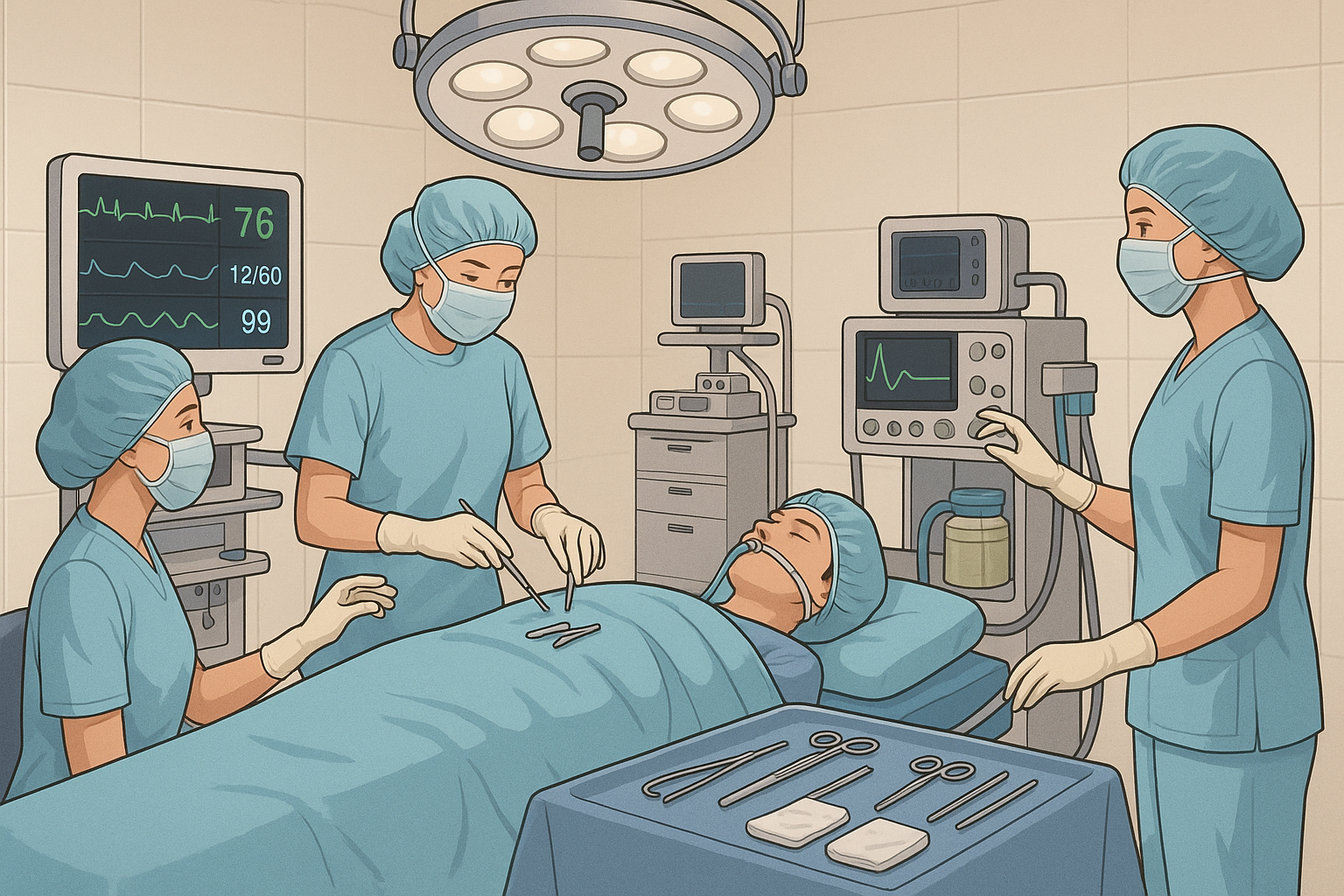
Modern Operating Theater: Patient Monitoring and Therapeutic Environment Management
Table of Contents
1. Introduction to Perioperative Monitoring
- • Definition and Scope
- • Legal and Ethical Considerations
- • Patient Safety Standards
2. Pre-Procedural Patient Assessment
- • Baseline Vital Signs
- • Risk Stratification
- • Equipment Preparation
3. Intraoperative Monitoring Systems
- • Cardiovascular Monitoring
- • Respiratory Monitoring
- • Neurological Assessment
- • Temperature Management
4. Therapeutic Environment Maintenance
- • Sterile Field Management
- • Environmental Controls
- • Infection Prevention
- • Equipment Safety
5. Emergency Response Protocols
- • Crisis Management
- • Code Blue Procedures
- • Malignant Hyperthermia
6. Documentation and Communication
- • Legal Documentation
- • Team Communication
- • Handoff Protocols
1. Introduction to Perioperative Monitoring
Learning Objectives
- • Understand the principles of continuous patient monitoring during surgical procedures
- • Identify key components of a therapeutic operating environment
- • Demonstrate competency in vital sign assessment and interpretation
- • Apply evidence-based infection control practices
- • Execute appropriate emergency response protocols
Perioperative nursing encompasses the care provided to patients before, during, and after surgical procedures. The operating theater represents one of the most critical environments in healthcare, where patient safety depends on continuous monitoring and maintenance of optimal therapeutic conditions.
Clinical Pearl
The “Golden Hour” concept applies not just to trauma care but to all surgical procedures. The first hour of any procedure is critical for establishing baseline parameters and preventing complications through proactive monitoring.
Definition and Scope
Patient monitoring during procedures involves the systematic observation, measurement, and documentation of physiological parameters to ensure patient safety and optimize surgical outcomes. This includes:
Physiological Monitoring
- • Cardiovascular function (ECG, BP, pulse)
- • Respiratory status (SpO2, capnography)
- • Neurological assessment (consciousness level)
- • Temperature regulation
- • Fluid balance and urine output
Environmental Monitoring
- • Air quality and filtration
- • Temperature and humidity control
- • Lighting adequacy
- • Noise level management
- • Electrical safety systems
Mnemonic: SAFETY-FIRST
A – Airway and breathing assessment
F – Fluid balance monitoring
E – Equipment functionality checks
T – Temperature regulation
Y – Year-round infection control
I – Immediate response to changes
R – Regular documentation
S – Surgical site protection
T – Team communication protocols
Legal and Ethical Considerations
Nurses have both legal and ethical obligations to maintain patient safety during procedures. These responsibilities include:
Legal Requirements: Adherence to state nursing practice acts, institutional policies, and professional standards (AORN, ASA guidelines). Documentation must be accurate, timely, and comprehensive.
- Duty of Care: Providing competent nursing care according to established standards
- Informed Consent: Ensuring patients understand procedural risks and monitoring requirements
- Confidentiality: Protecting patient information and maintaining privacy
- Advocacy: Speaking up for patient safety and rights
- Accountability: Taking responsibility for nursing actions and decisions
2. Pre-Procedural Patient Assessment
Comprehensive pre-procedural assessment forms the foundation of safe perioperative care. This systematic evaluation identifies risk factors, establishes baseline parameters, and guides monitoring protocols throughout the procedure.
Baseline Vital Signs Assessment
Heart Rate
Normal Range: 60-100 bpm
Assess rhythm, rate, and quality. Note any arrhythmias, murmurs, or irregular patterns.
Blood Pressure
Normal Range: <120/80 mmHg
Use appropriate cuff size. Consider pre-hypertension and stage classifications.
Respiratory Rate
Normal Range: 12-20 breaths/min
Assess depth, rhythm, and effort. Note use of accessory muscles.
Temperature
Normal Range: 36.1-37.2°C
Core temperature preferred. Consider route and patient factors.
Mnemonic: THOR Assessment
H – Heart rate and rhythm
R – Renal function and fluid balance
Risk Stratification
Risk assessment utilizes standardized tools to identify patients at higher risk for perioperative complications:
ASA Physical Status Classification
ASA I: Normal healthy patient
ASA II: Mild systemic disease
ASA III: Severe systemic disease
ASA IV: Life-threatening systemic disease
ASA V: Moribund patient
ASA VI: Brain-dead organ donor
ASA I-II
Routine monitoring
ASA III
Enhanced monitoring
ASA IV-V
Intensive monitoring
Equipment Preparation and Calibration
Proper equipment preparation ensures accurate monitoring and rapid response capability:
Monitoring Equipment Checklist
- ✓ ECG machine with appropriate leads
- ✓ Non-invasive blood pressure cuff (correct size)
- ✓ Pulse oximeter with sensor
- ✓ Capnography monitor (if applicable)
- ✓ Temperature monitoring device
- ✓ Defibrillator/AED readily available
- ✓ Emergency medications accessible
Calibration Protocol
- • Verify equipment functionality daily
- • Check battery levels and backup power
- • Calibrate pressure transducers
- • Test alarm systems and limits
- • Ensure proper electrode placement
- • Document calibration completion
- • Report equipment malfunctions immediately
3. Intraoperative Monitoring Systems
Intraoperative monitoring provides continuous assessment of patient status, enabling early detection of physiological changes and prompt intervention to prevent complications.
Cardiovascular Monitoring
Clinical Pearl: The ECG Triad
Monitor Rate, Rhythm, and Repolarization. Any change in one component requires assessment of the others and correlation with clinical status.
ECG Monitoring
Lead Placement:
- • Lead II: Best for rhythm monitoring
- • Lead V5: Optimal for ischemia detection
- • 12-lead: Comprehensive cardiac assessment
Key Parameters:
- • Heart rate trends
- • Rhythm irregularities
- • ST segment changes
- • Arrhythmia patterns
Blood Pressure Monitoring
Methods:
- • Non-invasive (NIBP): Every 3-5 minutes
- • Invasive (arterial line): Continuous
- • Doppler: For difficult access
Assessment Points:
- • Systolic pressure trends
- • Diastolic pressure stability
- • Mean arterial pressure (MAP)
- • Pulse pressure variations
Respiratory Monitoring
Mnemonic: BREATH
R – Respiratory rate and pattern
E – End-tidal CO2 (EtCO2)
A – Airway pressure monitoring
T – Tidal volume assessment
H – Hemodynamic correlation
Pulse Oximetry
Normal: >95% on room air
Continuous monitoring of oxygen saturation. Consider probe placement and perfusion status.
Capnography
Normal: 35-45 mmHg
End-tidal CO2 monitoring. Confirms ETT placement and ventilation adequacy.
Respiratory Rate
Normal: 12-20/min
Assess pattern, depth, and effort. Note ventilator parameters if applicable.
Neurological Assessment
Neurological monitoring varies based on anesthesia type and patient risk factors:
Consciousness Level Assessment
Sedation Scales:
- • Richmond Agitation-Sedation Scale (RASS)
- • Ramsay Sedation Scale
- • Modified Observer’s Assessment
Monitoring Parameters:
- • Response to verbal stimuli
- • Pupillary response and size
- • Motor response assessment
- • Bispectral index (BIS) monitoring
Temperature Management
Clinical Pearl: Temperature Matters
Even mild hypothermia (1-3°C decrease) increases surgical site infections by 200%, prolongs recovery, and increases bleeding risk.
Temperature Monitoring Sites
- Core Temperature:
- • Esophageal (most accurate)
- • Nasopharyngeal
- • Bladder/rectal
- • Pulmonary artery
- Peripheral Temperature:
- • Skin temperature probes
- • Axillary measurement
- • Temporal artery
Temperature Management Strategies
- Prevention of Hypothermia:
- • Prewarming patients
- • Forced-air warming blankets
- • Warmed IV fluids
- • Increased room temperature
- Hyperthermia Management:
- • Cooling blankets
- • Cold IV fluids
- • Ice packs to major vessels
- • Environmental cooling
4. Therapeutic Environment Maintenance
The operating theater must maintain optimal conditions that promote healing while preventing complications. This requires continuous attention to multiple environmental factors and strict adherence to safety protocols.
Sterile Field Management
Mnemonic: STERILE
T – Touch only sterile items
E – Establish clear boundaries
R – Restrict unnecessary movement
L – Level surfaces maintained
E – Everyone follows protocols
Sterile Technique Principles
- • Sterile items: Only touch other sterile items
- • Gown sterility: Front from chest to table level, sleeves to 2 inches above elbow
- • Glove integrity: Inspect for tears, change if contaminated
- • Movement patterns: Face sterile field, avoid turning back
- • Barrier maintenance: Keep sterile drapes intact
- • Time limits: Minimize exposure duration
Contamination Prevention
- • Traffic control: Limit personnel in sterile area
- • Door policy: Keep OR doors closed during procedures
- • Air currents: Minimize drafts and air turbulence
- • Talking restriction: Reduce unnecessary conversation
- • Cough/sneeze protocol: Turn away from sterile field
- • Hair covering: Complete coverage of hair and facial hair
Environmental Controls
HVAC System Requirements
Minimum requirement
(20-24°C)
Optimal range
Air Quality Management
- • HEPA filtration (99.97% efficiency)
- • Positive pressure maintenance
- • Laminar air flow systems
- • Regular filter replacement
- • Air quality monitoring
- • Particle count assessment
Lighting Requirements
- • 2,500 foot-candles minimum surgical site
- • Color temperature 4,000-6,500K
- • Shadow reduction techniques
- • Adjustable intensity controls
- • Emergency lighting backup
- • Regular bulb maintenance
Infection Prevention Protocols
Clinical Pearl: Bundle Approach
Surgical site infection prevention requires a comprehensive bundle approach – no single intervention is sufficient. All elements must be consistently applied.
Prophylactic antibiotics
Skin preparation
Sterile technique
Temperature control
Air quality
Traffic control
Wound care
Surveillance
Hand Hygiene Protocol
- Surgical Hand Scrub:
- • Remove jewelry and artificial nails
- • 3-5 minute initial scrub
- • Brush/brushless technique options
- • Hands higher than elbows
- • Sterile towel drying
- Alcohol-Based Rub:
- • WHO-approved formulation
- • 2-3ml application volume
- • Complete coverage technique
- • Allow to dry completely
Equipment Safety Protocols
- Electrical Safety:
- • Ground fault circuit interrupters
- • Equipment inspection protocols
- • Proper cord management
- • Isolation transformer systems
- Fire Prevention:
- • Fire triangle awareness
- • Alcohol-based prep safety
- • Laser safety protocols
- • Emergency response procedures
5. Emergency Response Protocols
Emergency preparedness in the operating theater requires immediate recognition of crisis situations and coordinated response protocols. Every team member must understand their role in emergency scenarios.
Crisis Recognition and Management
Mnemonic: CRISIS
R – Recognize the emergency
I – Initiate basic life support
I – Inform team of situation
S – Stabilize and support patient
Cardiovascular Emergencies
- • Cardiac arrest
- • Severe arrhythmias
- • Hypotension/shock
- • Massive hemorrhage
- • Pulmonary embolism
- • Myocardial infarction
Respiratory Emergencies
- • Airway obstruction
- • Pneumothorax
- • Aspiration
- • Severe bronchospasm
- • Equipment failure
- • Cannot intubate/ventilate
Other Critical Events
- • Malignant hyperthermia
- • Anaphylaxis
- • Local anesthetic toxicity
- • Fire/explosion
- • Power failure
- • Severe hypothermia
Code Blue Procedures
Clinical Pearl: The First 5 Minutes
The first 5 minutes of a cardiac arrest determine survival. High-quality CPR with minimal interruptions is more important than advanced interventions.
Unconscious
No pulse
Call code
Get defibrillator
30:2 ratio
100-120/min
Check every
2 minutes
Post-arrest
care
Malignant Hyperthermia Protocol
MH Crisis Hotline: 1-800-MH-HYPER (644-9737). Available 24/7 for emergency consultation and management guidance.
Early Warning Signs
- • Unexplained tachycardia
- • Rising end-tidal CO2
- • Increasing core temperature
- • Muscle rigidity
- • Metabolic acidosis
- • Mottled skin/cyanosis
- • Profuse sweating
- • Cardiac arrhythmias
Immediate Actions
- 1. Discontinue triggering agents
- 2. Call for MH cart/help
- 3. Hyperventilate with 100% O2
- 4. Give dantrolene 2.5 mg/kg IV
- 5. Cool the patient aggressively
- 6. Treat acidosis with bicarbonate
- 7. Monitor electrolytes/glucose
- 8. Maintain urine output
6. Documentation and Communication
Accurate documentation and effective communication are essential components of safe perioperative care. They provide legal protection, ensure continuity of care, and facilitate quality improvement initiatives.
Legal Documentation Requirements
Mnemonic: DOCUMENT
O – Objective findings recorded
C – Complete and accurate information
U – Use approved abbreviations only
E – Errors corrected properly
N – Nurse identification/signature
T – Timely documentation completion
Essential Documentation Elements
- Pre-procedural Assessment:
- • Baseline vital signs
- • Risk factors identified
- • Allergies and medications
- • Patient education provided
- • Consent verification
- Intraoperative Monitoring:
- • Vital signs at regular intervals
- • Medication administration
- • Position changes and padding
- • Equipment used and settings
- • Complications or variances
Quality Documentation Principles
- Accuracy and Objectivity:
- • Use specific measurements
- • Avoid subjective interpretations
- • Include relevant details
- • Quote patient statements
- Completeness and Timeliness:
- • Document as events occur
- • Include all relevant information
- • Address gaps or omissions
- • Complete within time limits
Team Communication Protocols
Clinical Pearl: Closed-Loop Communication
Effective communication follows a closed-loop pattern: Sender transmits message → Receiver acknowledges understanding → Sender confirms message was received correctly.
SBAR Communication
- Situation: Current status
- Background: Relevant history
- Assessment: Clinical findings
- Recommendation: Proposed actions
Critical Value Reporting
- • Immediate notification
- • Read-back verification
- • Document time and response
- • Follow institutional policy
Handoff Communication
- • Structured format (SBAR)
- • Allow questions and clarification
- • Include pertinent monitoring data
- • Document transfer of care
Implementation in Nursing Practice
Clinical Competency Requirements
- Initial Competency:
- • Formal orientation program
- • Skills demonstration and validation
- • Written competency examination
- • Precepted clinical experience
- • Emergency response drills
- Ongoing Competency:
- • Annual skills validation
- • Continuing education requirements
- • Peer review and feedback
- • Quality improvement participation
- • Professional development planning
Professional Development
- Certification Opportunities:
- • CNOR (Certified Perioperative Nurse)
- • CAPA (Certified Ambulatory Perianesthesia Nurse)
- • CPAN (Certified Post Anesthesia Nurse)
- • BLS/ACLS certification maintenance
- Advanced Practice Roles:
- • Perioperative nurse practitioner
- • Clinical nurse specialist
- • Nurse educator positions
- • Quality improvement leadership
- • Research and evidence-based practice
Conclusion and Key Takeaways
Effective patient monitoring and therapeutic environment maintenance in the operating theater requires comprehensive knowledge, skilled assessment, and coordinated teamwork. The perioperative nurse plays a critical role in ensuring patient safety through vigilant monitoring and adherence to evidence-based protocols.
Essential Learning Points
- • Continuous monitoring is essential for early detection of physiological changes
- • Sterile technique and infection prevention require consistent application
- • Environmental controls significantly impact patient outcomes
- • Emergency preparedness saves lives through rapid, coordinated response
- • Documentation provides legal protection and communication continuity
- • Team communication prevents errors and enhances safety
- • Competency validation ensures safe, quality care delivery
- • Professional development enhances career advancement opportunities
Final Clinical Pearl
Excellence in perioperative nursing comes from combining technical expertise with compassionate care, continuous learning, and unwavering commitment to patient safety. Every patient deserves our best effort, every time.
Study Resources and References
- • Association of periOperative Registered Nurses (AORN) Guidelines
- • American Society of Anesthesiologists (ASA) Standards
- • Joint Commission Patient Safety Goals
- • Centers for Disease Control and Prevention (CDC) Guidelines
- • Malignant Hyperthermia Association of the United States (MHAUS)
- • American Heart Association BLS/ACLS Guidelines