
Culture in Nursing
Comprehensive Study Notes for Nursing Students
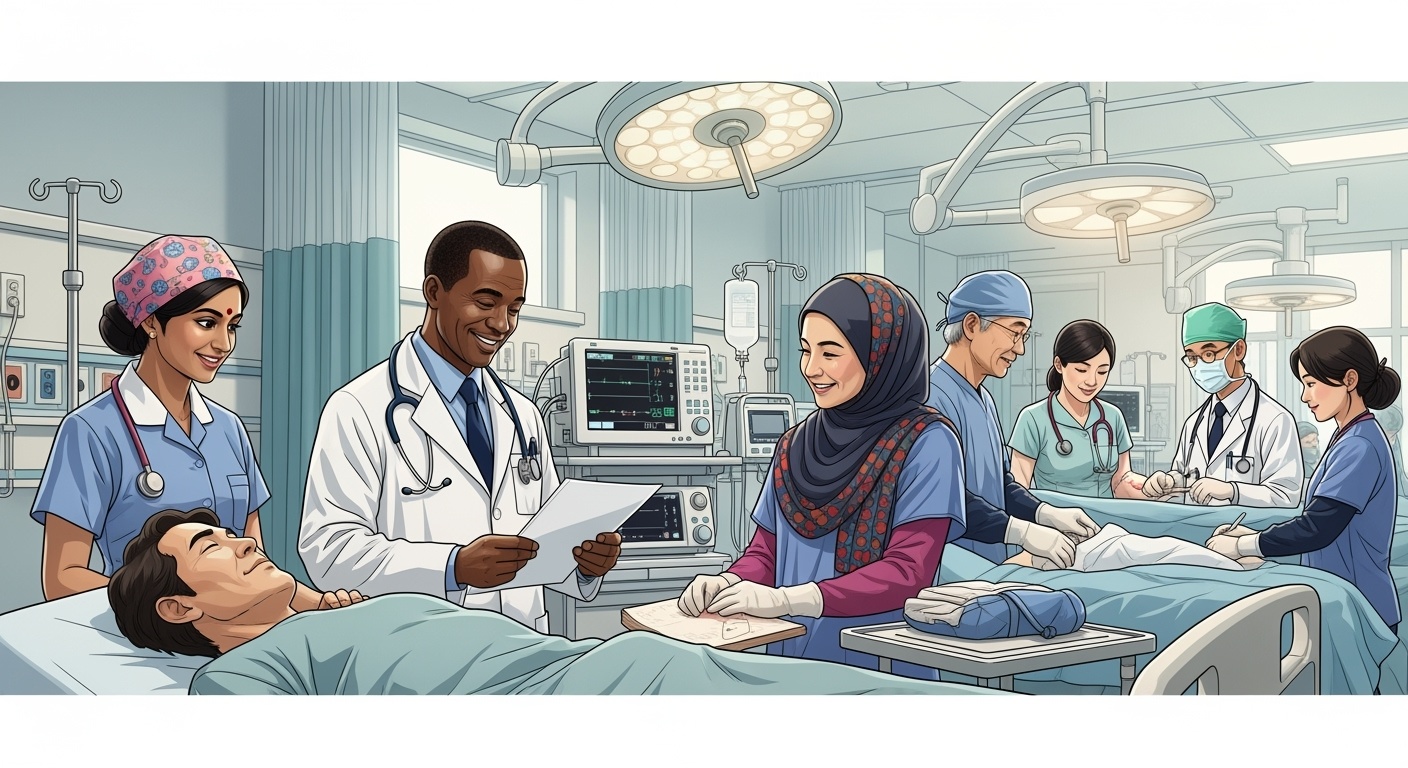
Cultural diversity in healthcare settings enhances patient care and outcomes
What is Culture?
Culture represents the complex web of shared beliefs, values, customs, behaviors, and artifacts that characterize a group of people. In nursing, understanding culture is fundamental to providing culturally competent care that respects and incorporates patients’ cultural backgrounds into their healthcare experience.
Key Components
- • Shared beliefs and values
- • Language and communication patterns
- • Social norms and behaviors
- • Religious and spiritual practices
Nursing Relevance
- • Patient-centered care delivery
- • Communication effectiveness
- • Treatment compliance
- • Health outcomes improvement
Nature, Characteristics and Evolution of Culture
Fundamental Nature of Culture
Culture is not static but represents a dynamic, living system that continuously evolves through human interaction, experience, and adaptation. It serves as both a lens through which individuals interpret their world and a framework that guides behavior and decision-making.
Intrinsic Characteristics
- Learned: Acquired through socialization, not inherited genetically
- Shared: Common among members of a specific group or society
- Symbolic: Uses symbols, language, and meanings to convey information
- Integrated: Various elements work together as a cohesive system
Dynamic Properties
- Adaptive: Changes in response to environmental pressures
- Transmitted: Passed down through generations via various means
- Evolving: Continuously develops through innovation and contact
- Selective: Chooses which elements to maintain or discard
Memory Aid: CULTURE Characteristics
C – Cumulative (builds over time)
U – Universal (found in all societies)
L – Learned (acquired through experience)
T – Transmitted (passed between generations)
U – Unified (integrated system)
R – Responsive (adapts to change)
E – Evolving (continuously develops)
Cultural Evolution in Healthcare Settings
Healthcare cultures evolve continuously through technological advances, policy changes, and shifting patient demographics. Nurses witness this evolution firsthand as they adapt to new protocols, integrate diverse patient populations, and incorporate evidence-based practices into traditional care models.
Nursing Practice Example
The evolution from paternalistic to patient-centered care represents a significant cultural shift in healthcare. Nurses now partner with patients in decision-making, respect cultural preferences in treatment plans, and incorporate family involvement based on cultural norms rather than institutional policies alone.
Diversity and Uniformity of Culture
While human cultures exhibit remarkable diversity in their specific expressions, they also demonstrate striking uniformities in their fundamental structures and functions. This paradox of diversity within uniformity is central to understanding cultural phenomena in healthcare settings.
Cultural Diversity
Surface-Level Diversity
- • Language variations and dialects
- • Dietary preferences and restrictions
- • Clothing styles and traditional dress
- • Religious ceremonies and rituals
- • Art forms and creative expressions
Deep-Level Diversity
- • Value systems and moral frameworks
- • Communication patterns and styles
- • Concepts of time and space
- • Authority structures and hierarchy
- • Health beliefs and healing practices
Cultural Uniformity
Universal Elements
- • Family structures and kinship systems
- • Educational processes and knowledge transfer
- • Economic systems and resource distribution
- • Political organization and governance
- • Spiritual beliefs and meaning-making
Common Functions
- • Social cohesion and identity formation
- • Behavioral regulation and norm enforcement
- • Adaptation to environmental challenges
- • Intergenerational knowledge transmission
- • Collective problem-solving mechanisms
Nursing Implications: Balancing Diversity and Uniformity
Recognizing Diversity
- • Assess individual cultural backgrounds thoroughly
- • Avoid stereotyping based on ethnicity or nationality
- • Adapt communication styles to cultural preferences
- • Incorporate traditional healing practices when appropriate
- • Respect dietary restrictions and food preferences
Leveraging Uniformity
- • Build on universal human needs and concerns
- • Use common emotional expressions for connection
- • Focus on shared values like family and health
- • Apply universal principles of respect and dignity
- • Recognize common responses to illness and healing
Cultural Assessment Flowchart for Nurses
“What’s important for me to know about your background to provide the best care?”
Unique practices + Common human needs
Honor differences while meeting universal healthcare standards
Difference between Culture and Civilization
While culture and civilization are interconnected concepts, they represent distinct aspects of human society. Understanding this distinction is crucial for nurses working in increasingly complex healthcare environments where both cultural sensitivity and technological advancement must coexist.
Culture
Definition
The intangible aspects of human society including beliefs, values, customs, arts, and social behaviors that give meaning to life and shape identity.
Key Characteristics
- • Intangible and abstract
- • Emotionally and spiritually driven
- • Focuses on human relationships
- • Emphasizes meaning and purpose
- • Transmitted through socialization
- • Highly variable across groups
Healthcare Examples
- • Healing rituals and ceremonies
- • Family involvement in healthcare decisions
- • Spiritual practices during illness
- • Traditional medicine beliefs
- • Death and dying customs
Civilization
Definition
The material and institutional aspects of human society including technology, infrastructure, organizational systems, and formal institutions.
Key Characteristics
- • Tangible and measurable
- • Technologically and rationally driven
- • Focuses on efficiency and progress
- • Emphasizes problem-solving
- • Transmitted through formal education
- • Increasingly standardized globally
Healthcare Examples
- • Medical technology and equipment
- • Hospital organizational structures
- • Evidence-based treatment protocols
- • Electronic health record systems
- • Pharmaceutical developments
Memory Aid: HEART vs TECH
Culture (HEART)
H – Human-centered values
E – Emotional connections
A – Artistic expressions
R – Relationships and kinship
T – Traditions and customs
Civilization (TECH)
T – Technology and tools
E – Efficiency and systems
C – Complexity of organization
H – Human progress and development
Integration in Nursing Practice
Effective nursing requires seamless integration of cultural sensitivity with civilizational advances. Nurses must master technological skills while maintaining cultural competence, creating a bridge between high-tech medical interventions and high-touch human care.
Cultural Competence
- • Respect for diverse beliefs
- • Culturally adapted communication
- • Family-centered approaches
+ Technological Proficiency
- • Advanced medical equipment
- • Electronic documentation
- • Evidence-based protocols
= Holistic Nursing
- • Patient-centered care
- • Optimal health outcomes
- • Professional satisfaction
Culture and Socialization
The Socialization Process
Socialization is the lifelong process through which individuals learn and internalize the cultural norms, values, beliefs, and behaviors of their society. This process is fundamental to understanding how cultural patterns influence health behaviors, healthcare decisions, and therapeutic relationships.
Primary Socialization
Characteristics
- • Occurs during early childhood (0-7 years)
- • Mediated primarily by family
- • Forms fundamental worldview
- • Establishes basic cultural identity
- • Creates emotional attachments to cultural practices
Health-Related Learning
- • Basic hygiene practices
- • Food preferences and dietary restrictions
- • Concepts of health and illness
- • Appropriate responses to pain
- • Trust or mistrust of healthcare systems
Secondary Socialization
Characteristics
- • Continues throughout life
- • Mediated by schools, peers, media, workplace
- • Builds on primary foundation
- • More conscious and selective
- • Allows for cultural adaptation
Professional Socialization
- • Nursing school cultural norms
- • Professional values and ethics
- • Healthcare team dynamics
- • Evidence-based practice adoption
- • Continuous learning culture
Cultural Socialization Agents in Healthcare
Family
Health beliefs, traditional remedies, healthcare seeking patterns
Education
Health literacy, scientific understanding, professional training
Peers
Social norms, lifestyle choices, health behaviors
Media
Health information, cultural stereotypes, medical trends
Nursing Implications of Cultural Socialization
Assessment Considerations
- Explore childhood health experiences and family health traditions
- Identify influential socialization agents in patient’s life
- Understand generational differences in health beliefs
- Recognize resocialization needs in chronic illness
Intervention Strategies
- Use culturally familiar metaphors and examples
- Involve family members in health education
- Respect traditional practices while promoting health
- Support positive resocialization during health crises
Transcultural Society
Understanding Transcultural Society
A transcultural society represents a social environment where multiple cultures coexist, interact, and influence each other while maintaining their distinct identities. In healthcare settings, this reality demands sophisticated cultural competence and adaptive nursing approaches.
Cultural Interaction Patterns
- Acculturation: Adopting elements from dominant culture while maintaining original identity
- Assimilation: Complete integration into dominant culture with loss of original identity
- Separation: Maintaining original culture while rejecting dominant culture
- Marginalization: Rejection of both original and dominant cultures
Transcultural Challenges
- Communication barriers and misunderstandings
- Conflicting health beliefs and practices
- Stereotyping and cultural bias
- Power imbalances between cultures
- Legal and ethical conflicts
Transcultural Opportunities
- Enhanced cultural competence development
- Integration of diverse healing traditions
- Improved cultural sensitivity in care
- Innovation through cultural exchange
- Global health perspective development
Memory Aid: BRIDGE for Transcultural Nursing
B – Build cultural awareness and sensitivity
R – Respect diverse perspectives and practices
I – Integrate cultural preferences into care plans
D – Dialogue openly about cultural needs
G – Generate culturally appropriate solutions
E – Evaluate outcomes with cultural lens
Transcultural Nursing Competencies
Core Competencies
Cultural Awareness
Understanding one’s own cultural background and potential biases
Cultural Knowledge
Learning about different cultural health beliefs and practices
Cultural Skills
Ability to conduct culturally sensitive assessments and interventions
Advanced Competencies
Cultural Encounters
Direct engagement with patients from diverse backgrounds
Cultural Desire
Motivation to become culturally competent
Cultural Humility
Recognizing limitations and continuously learning from patients
Culture, Modernization and its Impact on Health and Disease
The Modernization Paradigm
Modernization represents the transformation of traditional societies through industrialization, urbanization, technological advancement, and social change. This process profoundly affects health patterns, disease prevalence, and healthcare delivery systems, creating both opportunities and challenges for nursing practice.
Negative Health Impacts
Lifestyle Diseases
- • Cardiovascular disease from sedentary lifestyles
- • Type 2 diabetes from processed foods
- • Obesity from fast food culture
- • Mental health issues from social isolation
- • Substance abuse from urbanization stress
Environmental Health Risks
- • Air pollution from industrialization
- • Water contamination from industrial waste
- • Noise pollution in urban environments
- • Chemical exposures in workplaces
- • Loss of traditional healing environments
Social Health Disruption
- • Breakdown of traditional support systems
- • Increased social inequality and health disparities
- • Loss of indigenous health knowledge
- • Weakening of community health practices
- • Cultural identity crisis affecting mental health
Positive Health Impacts
Medical Advances
- • Advanced diagnostic technologies
- • Effective pharmaceutical interventions
- • Minimally invasive surgical procedures
- • Precision medicine and personalized treatments
- • Telemedicine and remote healthcare access
Public Health Improvements
- • Improved sanitation and water systems
- • Vaccination programs and disease prevention
- • Better nutrition and food safety
- • Enhanced emergency response systems
- • Health education and literacy programs
Healthcare Access
- • Increased healthcare infrastructure
- • Professional healthcare workforce
- • Health insurance and coverage systems
- • Specialized medical facilities
- • Global health cooperation and resources
Epidemiological Transition Model
Traditional Society
- • High infectious disease burden
- • High infant mortality
- • Short life expectancy
- • Malnutrition common
Transitional Society
- • Mixed disease patterns
- • Improving sanitation
- • Increasing life expectancy
- • Emerging lifestyle diseases
Modern Society
- • Chronic disease dominance
- • Low infectious disease rates
- • High life expectancy
- • Mental health challenges
Nursing Strategies for Modernization Challenges
Assessment Adaptations
- Screen for lifestyle-related risk factors
- Evaluate environmental exposure history
- Assess social support systems and cultural adaptation
- Identify stress factors related to modernization
Intervention Approaches
- Integrate traditional and modern healing approaches
- Promote health literacy and preventive care
- Support cultural identity while embracing beneficial changes
- Advocate for community health and environmental protection
Case Study Application
Scenario: Rural-to-Urban Migration Family
A family from a rural agricultural community has recently moved to an urban area for employment opportunities. The 45-year-old father presents with newly diagnosed hypertension and diabetes, the mother reports increased anxiety and depression, and their teenage son shows signs of cultural identity confusion and risky behaviors.
Cultural Assessment
- • Traditional health practices
- • Support system changes
- • Acculturation stress levels
Health Impact Analysis
- • Lifestyle-related disease development
- • Mental health consequences
- • Adolescent adaptation challenges
Nursing Interventions
- • Culturally adapted health education
- • Community resource connection
- • Family-centered care approach
Key Takeaways for Nursing Practice
Essential Principles
- Culture profoundly influences health behaviors, illness experiences, and treatment responses
- Cultural competence requires continuous learning and self-reflection
- Effective nursing integrates cultural sensitivity with evidence-based practice
- Modernization creates both health opportunities and challenges
Practice Applications
- Conduct comprehensive cultural assessments for all patients
- Develop cultural care plans that honor patient preferences
- Advocate for culturally appropriate healthcare policies
- Promote health equity through culturally competent care
Final Memory Aid: CULTURAL NURSING
C – Compassionate, culturally sensitive care
U – Understanding diverse perspectives
L – Learning continuously about cultures
T – Tailoring interventions to cultural needs
U – Uniting traditional and modern approaches
R – Respecting all cultural expressions
A – Advocating for cultural competence
N – Nurturing inclusive healthcare environments
U – Upholding dignity across cultures
R – Recognizing cultural influences on health
S – Supporting transcultural healing
I – Integrating cultural knowledge into practice
N – Navigating cultural complexities skillfully
G – Growing through cultural encounters