
Disinfection and Sterilization of Equipment
& Preparation of Sets for Common Surgical Procedures
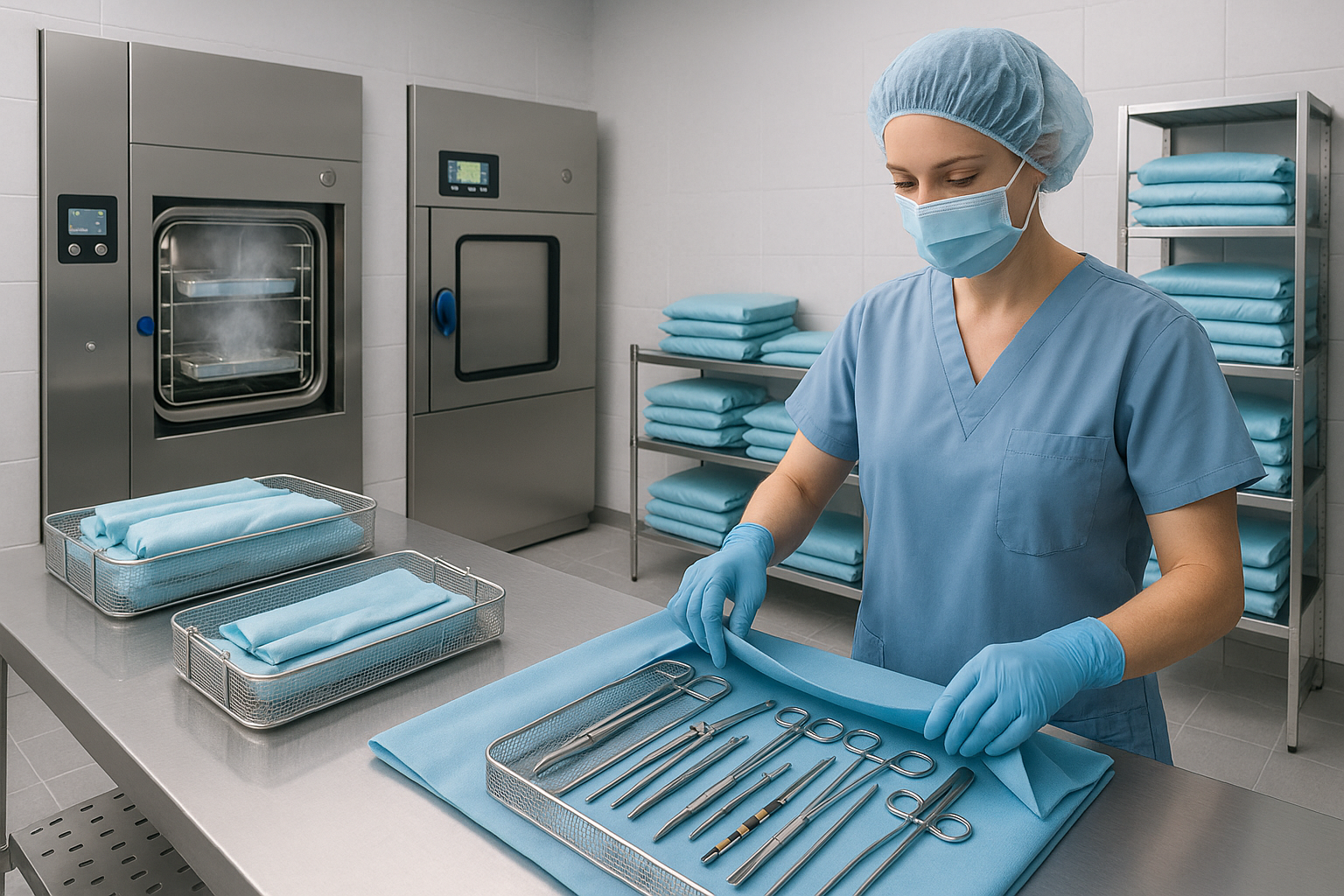
Modern hospital sterilization facility showing proper equipment and procedures
Table of Contents
1. Introduction and Learning Objectives
Disinfection and sterilization are fundamental cornerstones of infection prevention and control in healthcare settings. As a nursing professional, understanding these processes is not merely academic knowledge—it’s a critical competency that directly impacts patient safety, surgical outcomes, and overall healthcare quality. This comprehensive guide will equip you with the essential knowledge and practical skills needed to excel in maintaining sterile environments and preparing surgical instrument sets.
The significance of proper disinfection and sterilization cannot be overstated. Healthcare-associated infections (HAIs) affect millions of patients worldwide annually, with many being preventable through appropriate sterilization practices. As healthcare providers, nurses play a pivotal role in breaking the chain of infection transmission and ensuring that every medical intervention maintains the highest standards of safety.
Learning Objectives
- Differentiate between disinfection and sterilization processes
- Identify appropriate methods for different types of equipment
- Demonstrate proper surgical set preparation techniques
- Apply quality control measures and monitoring protocols
- Understand regulatory standards and compliance requirements
- Implement safety protocols for personnel protection
- Troubleshoot common problems in sterilization processes
- Maintain accurate documentation and record-keeping
2. Key Terminology and Definitions
Sterilization
Complete elimination of all forms of microbial life, including spores, bacteria, viruses, and fungi from objects or surfaces.
Disinfection
Process that eliminates most pathogenic microorganisms on inanimate objects, excluding bacterial spores.
Antisepsis
Application of antimicrobial agents to living tissue to reduce microbial load and prevent infection.
Bioburden
Number and types of viable microorganisms present on an item before sterilization or disinfection.
Critical Items
Medical devices that enter sterile tissue or the vascular system, requiring sterilization.
Semi-critical Items
Items that contact mucous membranes or non-intact skin, requiring high-level disinfection.
Non-critical Items
Items that contact intact skin only, requiring low-level disinfection.
D-value
Time required at a specific temperature to reduce microbial population by 90% (one log reduction).
Z-value
Temperature increase required to reduce D-value by 90%, indicating thermal resistance.
Sterility Assurance Level (SAL)
Probability of survival of microorganisms after sterilization, typically 10⁻⁶ for medical devices.
Memory Aid: Spaulding Classification
“CriSemiNon”
Critical (sterile tissue) → Semi-critical (mucous membranes) → Non-critical (intact skin)
3. Disinfection Methods and Levels
Disinfection is classified into three distinct levels based on antimicrobial activity and intended use. Understanding these levels is crucial for selecting appropriate disinfection methods for different healthcare scenarios and equipment types.
High-Level Disinfection
Target: All microorganisms except high numbers of bacterial spores
Use: Semi-critical items (endoscopes, respiratory equipment)
- Glutaraldehyde 2%
- Ortho-phthalaldehyde (OPA)
- Hydrogen peroxide 7.5%
- Peracetic acid
Contact Time: 12-45 minutes
Intermediate-Level Disinfection
Target: Vegetative bacteria, most viruses, most fungi, some spores
Use: Environmental surfaces, non-critical items
- 70-90% Isopropyl alcohol
- Sodium hypochlorite (bleach)
- Phenolic compounds
- Iodophor solutions
Contact Time: 1-10 minutes
Low-Level Disinfection
Target: Most vegetative bacteria, some viruses, some fungi
Use: Non-critical items, environmental surfaces
- Quaternary ammonium compounds
- 70% Ethyl alcohol
- Chlorine compounds (low concentration)
- Commercial sanitizers
Contact Time: 30 seconds – 5 minutes
Clinical Pearl: Factors Affecting Disinfection Efficacy
Physical Factors:
- Temperature (higher = more effective)
- pH levels (varies by agent)
- Contact time (longer = better kill rate)
- Concentration of active ingredient
Biological Factors:
- Bioburden level
- Organic material presence
- Microbial resistance patterns
- Biofilm formation
Memory Aid: Disinfection Levels
“HIGH-IN-LOW”
HIGH kills all but spores → INtermediate kills most → LOW kills some
4. Sterilization Techniques
Sterilization represents the highest level of microbial kill, achieving complete elimination of all forms of microbial life. Various sterilization methods are available, each with specific applications, advantages, and limitations. Selection depends on the material composition, heat sensitivity, and intended use of the items being processed.
Steam Sterilization (Autoclave)
Mechanism: Moist heat under pressure
Parameters: 121°C (250°F) for 15-30 minutes OR 134°C (273°F) for 3-4 minutes
Advantages: Most reliable, economical, non-toxic, rapid heating
Limitations: Cannot sterilize oils, powders, heat-sensitive items
Applications: Surgical instruments, glassware, fabrics, aqueous solutions
- Temperature
- Time
- Steam quality
- Pressure
Ethylene Oxide (EtO) Sterilization
Mechanism: Alkylating agent that disrupts DNA
Parameters: 37-63°C, 8-48 hours cycle time
Advantages: Low temperature, penetrates packaging
Limitations: Toxic, requires aeration, lengthy process
Applications: Heat-sensitive items, electronics, plastics
- Proper ventilation
- Personal protective equipment
- Aeration period (8-24 hours)
- Environmental monitoring
Hydrogen Peroxide Plasma Sterilization
Mechanism: Low-temperature gas plasma technology
Parameters: 45-50°C, 45-75 minutes cycle time
Advantages: Non-toxic byproducts, rapid cycle, no aeration
Limitations: Cannot sterilize liquids, cellulose materials
Applications: Heat-sensitive instruments, endoscopes
- No paper or linen wrapping
- Avoid long, narrow lumens
- Special packaging required
Dry Heat Sterilization
Mechanism: Hot air circulation without moisture
Parameters: 160-180°C for 2-4 hours
Advantages: No corrosion, sterilizes oils and powders
Limitations: Long cycle time, high temperature requirements
Applications: Glassware, metal instruments, oils, powders
- Moisture-sensitive items
- Sharp instruments
- Closed containers
Sterilization Process Workflow
Critical Safety Considerations
Pre-sterilization:
- Thorough cleaning is mandatory
- Proper packaging material selection
- Load configuration and spacing
- Biological and chemical indicators
Post-sterilization:
- Proper cooling and drying
- Package integrity inspection
- Sterile storage protocols
- Expiration date monitoring
5. Surgical Set Preparation
Surgical set preparation is a meticulous process that ensures all necessary instruments and supplies are properly sterilized, organized, and readily available for specific surgical procedures. This process requires attention to detail, knowledge of surgical procedures, and strict adherence to sterile technique principles.
Preparation Process Steps
Step 1: Set Assembly
- • Review surgical procedure requirements
- • Gather all necessary instruments and supplies
- • Verify instrument functionality and integrity
- • Arrange instruments in logical order of use
Step 2: Cleaning and Inspection
- • Thorough cleaning of all components
- • Remove all organic and inorganic debris
- • Inspect for damage, corrosion, or wear
- • Ensure proper instrument function
Step 3: Packaging
- • Select appropriate wrapping materials
- • Use proper wrapping techniques
- • Include chemical and biological indicators
- • Apply proper labeling and dating
Quality Assurance Measures
Documentation Requirements
- • Set composition and contents list
- • Sterilization parameters and cycle data
- • Expiration dates and lot numbers
- • Quality control test results
Storage Protocols
- • Controlled temperature and humidity
- • Protected from contamination
- • First-in, first-out rotation system
- • Regular inventory monitoring
Transport Guidelines
- • Covered transport containers
- • Minimize handling and movement
- • Verify package integrity before use
- • Maintain chain of sterility
Packaging Materials and Applications
Muslin Wraps
- • Reusable fabric wraps
- • Good air permeability
- • Requires double wrapping
- • Cost-effective for large items
Paper-Plastic Pouches
- • Single-use disposable
- • Transparent viewing panel
- • Self-sealing options
- • Ideal for small instruments
Rigid Containers
- • Reusable metal/plastic
- • Excellent protection
- • Filter retention system
- • Best for heavy instrument sets
Memory Aid: Packaging Selection
“MPR-SIS”
Muslin for large items → Paper-plastic for small → Rigid for heavy
Sterile technique → Inspection → Storage
6. Common Surgical Procedure Sets
Different surgical procedures require specific instrument sets tailored to the anatomical region, surgical approach, and complexity of the procedure. Understanding these standardized sets ensures efficiency, safety, and optimal surgical outcomes.
General Surgery Set
- Scalpel handles (#3, #4) and blades
- Mayo scissors (straight and curved)
- Metzenbaum scissors
- Bandage scissors
- Tissue forceps (toothed and smooth)
- Allis clamps
- Babcock clamps
- Hemostats (various sizes)
- Richardson retractors
- Army-Navy retractors
- Needle holders
- Sponge sticks
Cardiovascular Set
- Vascular clamps (DeBakey, Satinsky)
- Potts scissors
- Coronary dilators
- Vessel loops and umbilical tapes
- Prolene (polypropylene) sutures
- Silk sutures for ties
- Pledgets and felt strips
- Various needle types
- Rib spreaders
- Sternal saw and wires
- Cannulas for bypass
- Defibrillator paddles
Orthopedic Set
- Bone saws and nibblers
- Osteotomes and chisels
- Rongeurs
- Bone curettes
- Plates and screws
- Intramedullary nails
- K-wires and pins
- External fixation devices
- Drill and drill bits
- Bone reduction clamps
- Measuring devices
- Bone grafting instruments
Neurosurgery Set
- Micro scissors and forceps
- Bipolar electrocautery
- Neural hooks and probes
- Ventricular needles
- Craniotome and perforators
- Bone flap clamps
- Dural elevators
- Hemostatic agents
- Laminectomy sets
- Nerve root retractors
- Spinal fusion hardware
- Microscope drapes
Ophthalmic Set
- Corneal forceps
- Iris scissors
- Capsulorrhexis forceps
- Intraocular lens inserters
- Operating microscope
- Speculum and lid retractors
- Chandelier lights
- Endoillumination probes
- Phacoemulsification handpiece
- Vitrectomy instruments
- Laser photocoagulation
- Surgical viscoelastics
Pediatric Surgery Set
- Miniature instruments
- Pediatric retractors
- Small caliber sutures
- Age-appropriate clamps
- Warming devices
- Precise fluid management
- Minimal invasive options
- Emergency airway tools
- Blunt-tip instruments
- Temperature monitoring
- Pressure-sensitive equipment
- Child-safe materials
Clinical Pearl: Set Customization Principles
Standardization Benefits:
- Improved efficiency and workflow
- Reduced setup time
- Enhanced safety protocols
- Better inventory management
- Consistent training requirements
Customization Factors:
- Surgeon preferences
- Patient-specific needs
- Procedure complexity
- Institution protocols
- Available resources
7. Quality Control and Monitoring
Quality control in sterilization is a multi-layered approach involving physical, chemical, and biological monitoring methods. These systems work together to ensure sterilization processes are effective and provide documented evidence of sterility assurance.
Physical Monitoring
- Temperature
- Pressure
- Time
- Humidity (for EtO)
- Built-in gauges and displays
- Chart recorders
- Data loggers
- Computer monitoring systems
- Only monitors chamber conditions
- Cannot confirm sterility
- Requires correlation with other methods
Chemical Monitoring
- Chemical indicator strips
- Tape indicators
- Bowie-Dick test packs
- Multi-parameter indicators
- Class 1: Process indicators
- Class 2: Specific use tests
- Class 3-4: Single/multi-parameter
- Class 5-6: Integrating/emulating
- Package identification
- Process monitoring
- Air removal testing
- Quality assurance
Biological Monitoring
- Steam: Geobacillus stearothermophilus
- EtO: Bacillus atrophaeus
- Dry heat: Bacillus atrophaeus
- H2O2: Geobacillus stearothermophilus
- Steam: At least weekly
- EtO: Every load
- New equipment installation
- After major repairs
- 55-60°C for steam indicators
- 35-37°C for EtO indicators
- 24-48 hours reading time
- Rapid tests available (3 hours)
Quality Control Workflow Process
Pre-Process
- Equipment check
- Load configuration
- Indicator placement
- Parameter verification
During Process
- Continuous monitoring
- Data recording
- Alarm response
- Process validation
Post-Process
- Indicator evaluation
- Package inspection
- Documentation review
- Release authorization
Documentation
- Record maintenance
- Trend analysis
- Corrective actions
- Regulatory compliance
Critical Action Points for Failed Tests
Immediate Actions:
- Stop releasing affected loads
- Quarantine all items from suspect cycles
- Investigate root cause
- Document all findings
- Notify quality assurance department
Corrective Measures:
- Equipment maintenance/repair
- Reprocess affected items
- Retrain personnel if needed
- Review and update procedures
- Implement preventive actions
Memory Aid: Monitoring Methods
“PCB – Quality”
Physical (measures parameters) → Chemical (indicates exposure) → Biological (proves kill)
8. Nursing Implementation
Nursing professionals play a crucial role in implementing and maintaining effective disinfection and sterilization programs. This involves direct patient care responsibilities, equipment management, staff education, and quality assurance activities across various healthcare settings.
Primary Nursing Responsibilities
Point-of-Care Processing
- • Immediate cleaning of contaminated instruments
- • Proper handling and transport of soiled items
- • Application of appropriate disinfectants
- • Maintenance of sterile technique during procedures
- • Documentation of processing activities
Equipment Management
- • Daily inspection of sterilization equipment
- • Loading and unloading of sterilizers
- • Monitoring of sterilization parameters
- • Maintenance of sterile storage areas
- • Inventory management and rotation
Patient Safety Advocacy
- • Verification of sterile package integrity
- • Proper aseptic technique implementation
- • Recognition and reporting of contamination
- • Patient education about infection prevention
- • Compliance with isolation precautions
Education and Training Responsibilities
Staff Development
- • Orientation of new personnel
- • Ongoing competency assessment
- • Update training on new procedures
- • Mentoring of junior staff
- • Sharing of best practices
Quality Improvement
- • Participation in quality committees
- • Data collection and analysis
- • Process improvement initiatives
- • Incident reporting and investigation
- • Policy development and revision
Regulatory Compliance
- • Adherence to regulatory standards
- • Preparation for inspections
- • Maintenance of required documentation
- • Implementation of corrective actions
- • Reporting of non-compliance issues
Clinical Decision Making Framework
Assessment Phase
- • Evaluate item contamination level
- • Classify according to Spaulding system
- • Consider material composition
- • Assess urgency of need
- • Review manufacturer instructions
Planning Phase
- • Select appropriate method
- • Determine processing parameters
- • Plan workflow and timing
- • Prepare necessary supplies
- • Coordinate with other departments
Implementation Phase
- • Execute processing procedure
- • Monitor critical parameters
- • Document all activities
- • Evaluate processing outcomes
- • Make necessary adjustments
Common Implementation Challenges
Balancing patient care with processing requirements
Solution: Efficient workflow planning and task prioritization
Insufficient equipment or supplies
Solution: Strategic inventory management and backup protocols
Inconsistent adherence to protocols
Solution: Regular training and competency assessment
Unexpected sterilizer breakdowns
Solution: Preventive maintenance and contingency planning
Best Practice Strategies
Develop and follow consistent protocols
Benefit: Reduces errors and improves efficiency
Utilize tracking systems and automation
Benefit: Enhanced monitoring and documentation
Work closely with SPD and other departments
Benefit: Improved communication and coordination
Stay updated with current evidence and guidelines
Benefit: Maintains competency and improves outcomes
Clinical Pearl: The Five Rights of Sterilization
Appropriate sterilization process for the item
Correct time, temperature, and conditions
Proper materials and techniques
Adequate quality control measures
Complete and accurate record keeping
9. Safety Protocols and Guidelines
Safety protocols in disinfection and sterilization protect both healthcare workers and patients from potential hazards including chemical exposure, biological contamination, and physical injuries. Comprehensive safety programs integrate regulatory compliance, risk assessment, and emergency preparedness.
Occupational Safety Measures
Personal Protective Equipment (PPE)
- Disposable gloves
- Eye protection
- Face masks
- Protective gowns
- Chemical-resistant gloves
- Respirators (N95, P100)
- Full-face shields
- Impermeable aprons
Chemical Safety Protocols
- • Proper ventilation systems and air exchange
- • Chemical storage in designated areas
- • Safety data sheets (SDS) accessibility
- • Spill cleanup procedures and containment
- • Regular air quality monitoring
- • Emergency shower and eyewash stations
Biological Safety Measures
- • Standard precautions for all patient contacts
- • Transmission-based precautions when indicated
- • Post-exposure prophylaxis protocols
- • Vaccination requirements and recommendations
- • Sharp injury prevention programs
- • Waste segregation and disposal procedures
Regulatory Compliance
Key Regulatory Bodies
Bloodborne pathogens standard, hazard communication
Disinfectant registration, waste disposal requirements
Medical device classification, sterilization validation
Infection prevention guidelines, surveillance recommendations
Standards Organizations
- • AAMI (Association for Advancement of Medical Instrumentation)
- • ISO (International Organization for Standardization)
- • ANSI (American National Standards Institute)
- • ASTM (American Society for Testing and Materials)
- • Joint Commission accreditation standards
- • CMS (Centers for Medicare & Medicaid Services)
Documentation Requirements
- • Sterilization cycle records and parameters
- • Equipment maintenance and calibration logs
- • Staff training and competency records
- • Quality control testing results
- • Incident reports and corrective actions
- • Policy and procedure manual updates
Emergency Response Procedures
Fire Emergency
- • Activate alarm system
- • Evacuate personnel safely
- • Shut down gas and electrical supplies
- • Use appropriate fire extinguisher
- • Never use water on chemical fires
Chemical Spill
- • Alert others and evacuate area
- • Don appropriate PPE
- • Contain spill using absorbent materials
- • Ventilate area thoroughly
- • Follow SDS cleanup procedures
Exposure Incident
- • Immediate first aid and decontamination
- • Seek medical evaluation promptly
- • Document incident thoroughly
- • Report to supervisor immediately
- • Follow post-exposure protocols
Risk Assessment Matrix for Sterilization Processes
| Risk Category | Low Risk | Medium Risk | High Risk | Mitigation Strategies |
|---|---|---|---|---|
| Chemical Exposure | Minimal contact | Brief exposure | Prolonged contact | PPE, ventilation, training |
| Biological Contamination | Standard precautions | Contact precautions | Airborne precautions | Isolation protocols, vaccination |
| Equipment Malfunction | Minor issues | Partial failure | Complete breakdown | Maintenance, backup systems |
| Process Failure | Parameter deviation | Incomplete sterilization | Sterility failure | Monitoring, validation, reprocessing |
Critical Safety Reminders
Never Compromise On:
- Personal protective equipment usage
- Proper ventilation requirements
- Chemical storage and handling protocols
- Equipment maintenance schedules
- Training and competency requirements
Always Remember:
- Safety takes precedence over efficiency
- When in doubt, ask for guidance
- Report incidents immediately
- Stay current with safety updates
- Your safety protects everyone
10. Summary and Key Takeaways
Mastery of disinfection and sterilization principles is fundamental to nursing practice and patient safety. These processes form the foundation of infection prevention and control, directly impacting patient outcomes and healthcare quality. As healthcare continues to evolve, nurses must remain committed to excellence in these critical areas.
The integration of evidence-based practices, technological advances, and continuous quality improvement ensures that sterilization and disinfection programs meet the highest standards of safety and efficacy. Your role as a nursing professional in implementing and maintaining these standards cannot be overstated.
Essential Takeaways
Fundamental Principles
- • Spaulding classification guides processing decisions
- • Sterilization provides highest level of microbial kill
- • Disinfection levels vary based on antimicrobial activity
- • Proper cleaning is prerequisite to all processing
Process Selection
- • Steam sterilization remains gold standard
- • Low-temperature methods for heat-sensitive items
- • Chemical disinfection for environmental surfaces
- • Material compatibility determines method choice
Quality Assurance
- • Multi-level monitoring ensures effectiveness
- • Documentation provides legal protection
- • Regular testing validates process performance
- • Corrective actions prevent future failures
Critical Success Factors
Patient Safety Focus
- • Zero tolerance for contamination
- • Verification of sterile package integrity
- • Proper aseptic technique implementation
- • Immediate response to safety concerns
Professional Development
- • Continuous learning and skill enhancement
- • Staying current with best practices
- • Participating in quality improvement
- • Mentoring and knowledge sharing
System Integration
- • Coordination across departments
- • Technology utilization and optimization
- • Resource management and efficiency
- • Regulatory compliance maintenance
Future Trends and Considerations
Automation & AI
Increased use of automated systems, robotic processing, and artificial intelligence for monitoring and quality control
Sustainability
Environmental considerations driving development of eco-friendly sterilization methods and reduced waste generation
Novel Technologies
Emerging sterilization methods including pulsed light, ozone, and advanced oxidation processes
Master Mnemonic: “STERILE NURSE”
Your Commitment to Excellence
As a nursing professional, you are entrusted with the sacred responsibility of protecting patient safety through exemplary infection prevention practices. Your dedication to mastering these principles makes a profound difference in the lives of those you serve.