
Employee Safety Indicators
Comprehensive Study Guide for Nursing Students
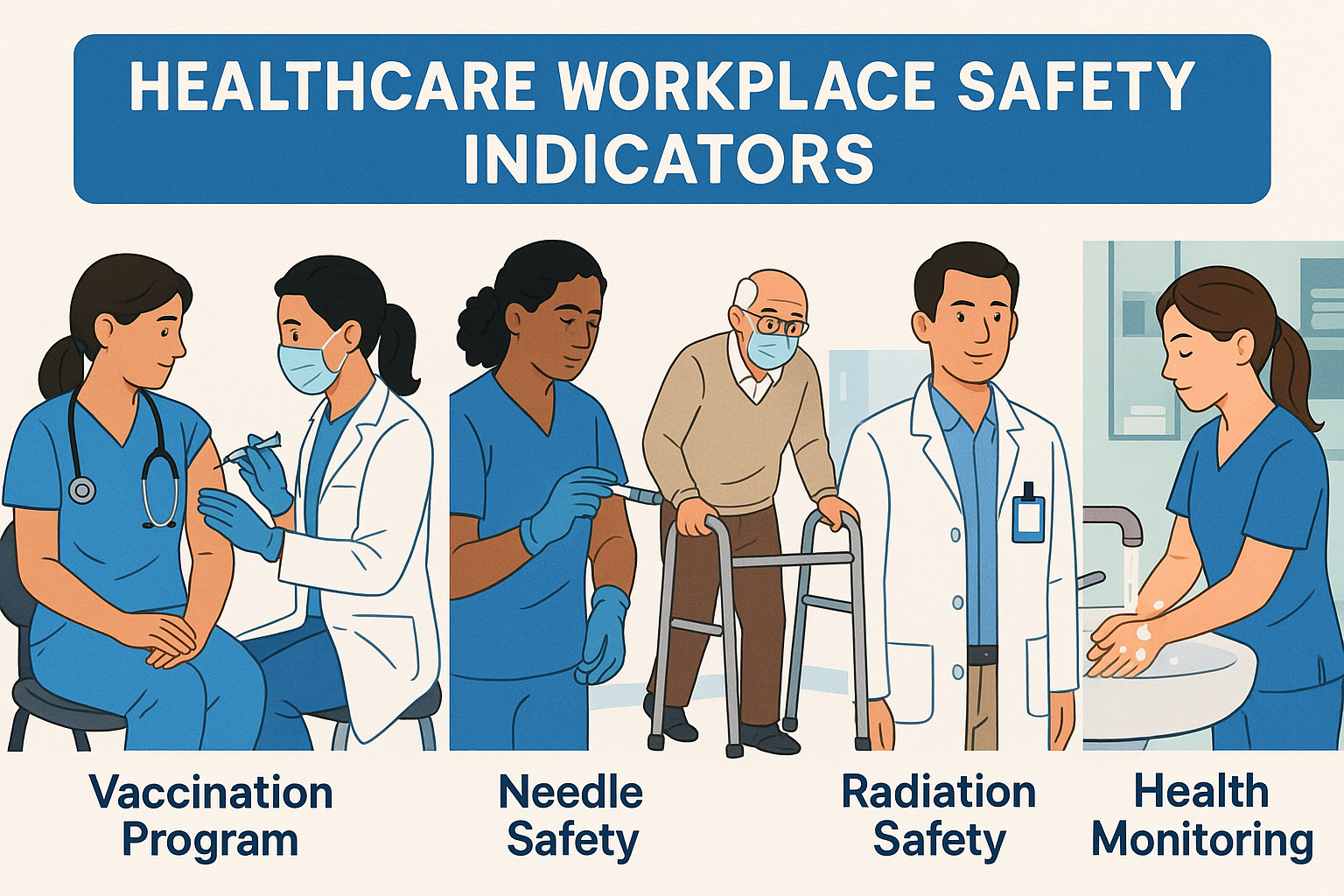
Introduction to Employee Safety Indicators
🎯 Learning Objectives
- Understand the critical importance of employee safety in healthcare settings
- Master the five core safety indicators for nursing professionals
- Implement evidence-based safety protocols in clinical practice
- Recognize and mitigate occupational hazards effectively
Employee safety indicators serve as critical metrics that healthcare institutions use to monitor, evaluate, and improve workplace safety for nursing professionals. These indicators are not merely compliance requirements but fundamental pillars that ensure the wellbeing of healthcare workers while maintaining quality patient care.
The healthcare environment presents unique challenges and risks that require specialized safety protocols. From infectious disease exposure to physical hazards, nurses face numerous occupational risks daily. Understanding and implementing comprehensive safety measures is essential for protecting both healthcare workers and patients.
Key Insight
Research shows that healthcare workers experience workplace injuries at rates nearly twice the national average. Implementing robust safety indicators can reduce these incidents by up to 70%.
Vaccination Programs
Essential Vaccinations for Healthcare Workers
Vaccination programs represent a cornerstone of occupational safety in healthcare settings. These programs protect healthcare workers from vaccine-preventable diseases while maintaining a safe environment for patients and colleagues.
Memory Aid: “HITS the Mark”
- Hepatitis B
- Influenza (Annual)
- Tetanus/Diphtheria/Pertussis (Tdap)
- Seasonal vaccines (COVID-19, etc.)
Vaccination Schedule Overview
| Vaccine | Primary Series | Boosters | Special Considerations |
|---|---|---|---|
| Hepatitis B | 3 doses (0, 1, 6 months) | None if immune | Titer check post-vaccination |
| Influenza | 1 dose annually | Annual | Live vaccine contraindicated |
| Tdap | 1 dose if no prior Tdap | Td every 10 years | Pregnancy considerations |
| MMR | 2 doses if non-immune | None | Contraindicated in pregnancy |
| Varicella | 2 doses if non-immune | None | Check immunity status first |
Critical Safety Points
- Document all vaccinations in employee health records
- Monitor for adverse reactions post-vaccination
- Maintain up-to-date vaccination tracking systems
- Provide education on vaccine importance and safety
Needlestick Injury (NSI) Prevention
Statistics That Matter
Prevention Strategies
Needlestick injury prevention is a multi-faceted approach combining engineering controls, work practice controls, and personal protective equipment. The hierarchy of controls prioritizes elimination and substitution before relying on individual protective measures.
Memory Aid: “SAFER Practices”
- Safety devices first choice
- Activate safety features immediately
- Forward needle pointing away
- Engineered sharps containers
- Report all exposures promptly
High-Risk Situations
| Control Level | Strategy | Examples | Effectiveness |
|---|---|---|---|
| Engineering Controls | Eliminate hazard at source | Safety needles, needleless systems | 95% reduction |
| Work Practice Controls | Change work methods | No recapping, proper disposal | 60% reduction |
| Administrative Controls | Policies and training | Education, protocols, audits | 40% reduction |
| PPE | Personal protection | Gloves, protective clothing | Limited effect |
Post-Exposure Protocol
Fall Prevention
Understanding Fall Risks in Healthcare
Falls represent one of the most common workplace injuries in healthcare settings. Healthcare workers face unique fall risks due to fast-paced environments, wet surfaces, equipment obstacles, and long working hours that can affect balance and coordination. Implementing comprehensive fall prevention strategies is essential for maintaining workplace safety.
Fall Statistics
- Healthcare workers: 2x higher fall rate than other industries
- Slips and falls: 25% of all workplace injuries
- Average cost per fall injury: $15,000-$30,000
- Lost work days: 15-30 days average per incident
Memory Aid: “WATCH Your Step”
- Wear appropriate footwear
- Always use handrails
- Take your time, don’t rush
- Clean up spills immediately
- Hold items securely while walking
Environmental Hazards
| Risk Factor | Prevention Strategy | Implementation | Monitoring |
|---|---|---|---|
| Footwear | Slip-resistant soles, proper fit | Footwear policy, education | Regular inspections |
| Wet Surfaces | Immediate cleanup, warning signs | Spill protocols, supplies available | Incident tracking |
| Lighting | Adequate illumination levels | Regular maintenance, LED upgrades | Light level measurements |
| Fatigue | Adequate rest breaks, shift limits | Staffing policies, workload management | Fatigue assessments |
| Equipment | Proper storage, clear pathways | 5S methodology, training | Walkthrough audits |
Best Practices
- Maintain three points of contact on stairs
- Use mechanical lifts for patient transfers
- Keep walkways clear of equipment and supplies
- Report hazards immediately to maintenance
- Participate in regular safety training programs
When Falls Occur
- Ensure immediate medical evaluation
- Document incident thoroughly
- Investigate root causes
- Implement corrective actions
- Follow up on recovery and return to work
Radiation Safety
Radiation Exposure Principles
Types of Radiation Exposure in Healthcare
Healthcare workers may encounter various types of ionizing radiation during routine patient care activities. Understanding the sources and implementing appropriate safety measures is crucial for minimizing occupational exposure while maintaining quality patient care.
Common Radiation Sources
Memory Aid: “BADGE ALARA”
- Badge monitoring required
- Always follow protocols
- Distance yourself when possible
- Go behind lead shields
- Exposure time minimal
- ALARA: As Low As Reasonably Achievable
Special Populations
- Pregnant staff: Declare pregnancy immediately
- Students: Enhanced supervision required
- New employees: Comprehensive training mandatory
- High-risk procedures: Additional monitoring
| Procedure Type | Required PPE | Distance Guidelines | Monitoring |
|---|---|---|---|
| Diagnostic X-ray | Lead apron, thyroid shield | 6 feet from primary beam | Personal dosimeter |
| Fluoroscopy | Lead apron, gloves, eyewear | As far as practical | Ring badge, body badge |
| Nuclear Medicine | Gloves, lab coat | Arm’s length minimum | Whole body counter |
| CT Procedures | Lead apron if in room | Behind control booth | Personal dosimeter |
| Interventional | Lead apron, thyroid, eyewear | Minimum necessary | Extremity badges |
Dosimeter Requirements
- Wear at collar level outside lead apron
- Never share dosimeters between employees
- Return monthly for processing and analysis
- Report lost or damaged badges immediately
- Review exposure reports quarterly
Exposure Limits (Annual)
Annual Health Checks
Comprehensive Health Monitoring
Annual health examinations serve as a cornerstone of occupational health programs in healthcare settings. These assessments help identify work-related health issues early, ensure fitness for duty, and maintain overall employee wellness. Regular health monitoring contributes significantly to workplace safety by detecting potential health problems before they impact job performance.
Health Check Benefits
- Early detection of occupational health issues
- Fitness for duty determination
- Baseline health status documentation
- Preventive care and health promotion
- Legal compliance with regulations
Health Assessment Components
Memory Aid: “HEALTH Check”
- History comprehensive
- Examination thorough
- Assessment of fitness
- Laboratory studies
- Tuberculosis screening
- Hepatitis B status check
| Assessment Type | Frequency | Components | Purpose |
|---|---|---|---|
| Pre-employment | Before job start | Complete medical, TB screen | Baseline, fitness determination |
| Annual Physical | Yearly | General exam, vital signs | Monitor health status |
| TB Screening | Annual or biennial | TST, IGRA, or CXR | Infection control |
| Respiratory | As indicated | Pulmonary function tests | Respirator clearance |
| Post-exposure | As needed | Targeted assessment | Exposure management |
| Return-to-work | After illness/injury | Fitness evaluation | Safe return clearance |
Infectious Disease Screening
- Tuberculosis testing (TST/IGRA)
- Hepatitis B surface antigen
- Hepatitis B antibody levels
- Varicella immunity status
- Measles, mumps, rubella titers
General Health Markers
- Blood pressure monitoring
- Body mass index assessment
- Cholesterol screening
- Diabetes screening (glucose)
- Cancer screening (age-appropriate)
Occupational Assessments
- Vision and hearing testing
- Musculoskeletal evaluation
- Skin condition assessment
- Respiratory function tests
- Mental health screening
Confidentiality and Employee Rights
Employee Protections
- Medical information confidentiality
- Right to access personal health records
- Protection against discrimination
- Reasonable accommodations when needed
Documentation Requirements
- Maintain records for duration of employment
- Plus 30 years for exposure-related records
- Separate storage from personnel files
- Limited access to authorized personnel only
Global Best Practices in Employee Safety
International Safety Innovations
Healthcare organizations worldwide have implemented innovative approaches to employee safety that serve as models for best practice implementation. These examples demonstrate how comprehensive safety programs can significantly reduce workplace injuries and improve overall staff wellbeing.
Australia: Zero Harm Initiative
Australian hospitals have implemented comprehensive “Zero Harm” programs that integrate all safety indicators into unified monitoring systems. This approach has resulted in 45% reduction in workplace injuries over five years.
- Integrated safety dashboard systems
- Real-time incident reporting
- Peer safety champion programs
- Predictive analytics for risk assessment
Canada: Psychological Safety Framework
Canadian healthcare systems have pioneered psychological safety integration with physical safety programs, recognizing the interconnection between mental health and workplace accidents.
- Mental health first aid training
- Stress and fatigue monitoring systems
- Workplace wellness programs
- Employee assistance program integration
Netherlands: Technology Integration
Dutch hospitals utilize advanced technology including wearable devices, AI-powered risk assessment, and virtual reality training to enhance employee safety programs.
- Wearable safety monitoring devices
- VR-based training simulations
- AI-powered incident prediction
- Automated compliance monitoring
Collaborative International Initiatives
WHO Global Patient Safety
Healthcare worker safety charter emphasizing mutual protection of patients and staff
International Safety Networks
Cross-border sharing of safety innovations and best practices
Global Training Standards
Standardized safety competency frameworks for international mobility
Key Takeaways for Nursing Students
Essential Success Factors
- Comprehensive understanding of all five safety indicators
- Consistent application of evidence-based protocols
- Active participation in institutional safety programs
- Commitment to continuous learning and improvement
- Personal responsibility for workplace safety
Professional Development
Mastering employee safety indicators is not just about compliance—it’s about developing the professional competence and ethical responsibility that defines excellent nursing practice.
- Seek additional safety training opportunities
- Stay current with evolving safety standards
- Participate in quality improvement initiatives
- Mentor other staff in safety practices
Final Memory Aid: “VINES”
- Vaccination programs protect everyone
- Injury prevention saves careers
- Needle safety prevents transmission
- Environmental hazards require vigilance
- Screening maintains fitness for duty
Remember
Your commitment to employee safety indicators not only protects your own health and career but also contributes to the overall safety culture that benefits every patient, colleague, and healthcare organization you serve.