
International Patient Safety Goals (IPSG)
Complete Nursing Study Guide for Excellence in Healthcare
Table of Contents
Introduction to International Patient Safety Goals
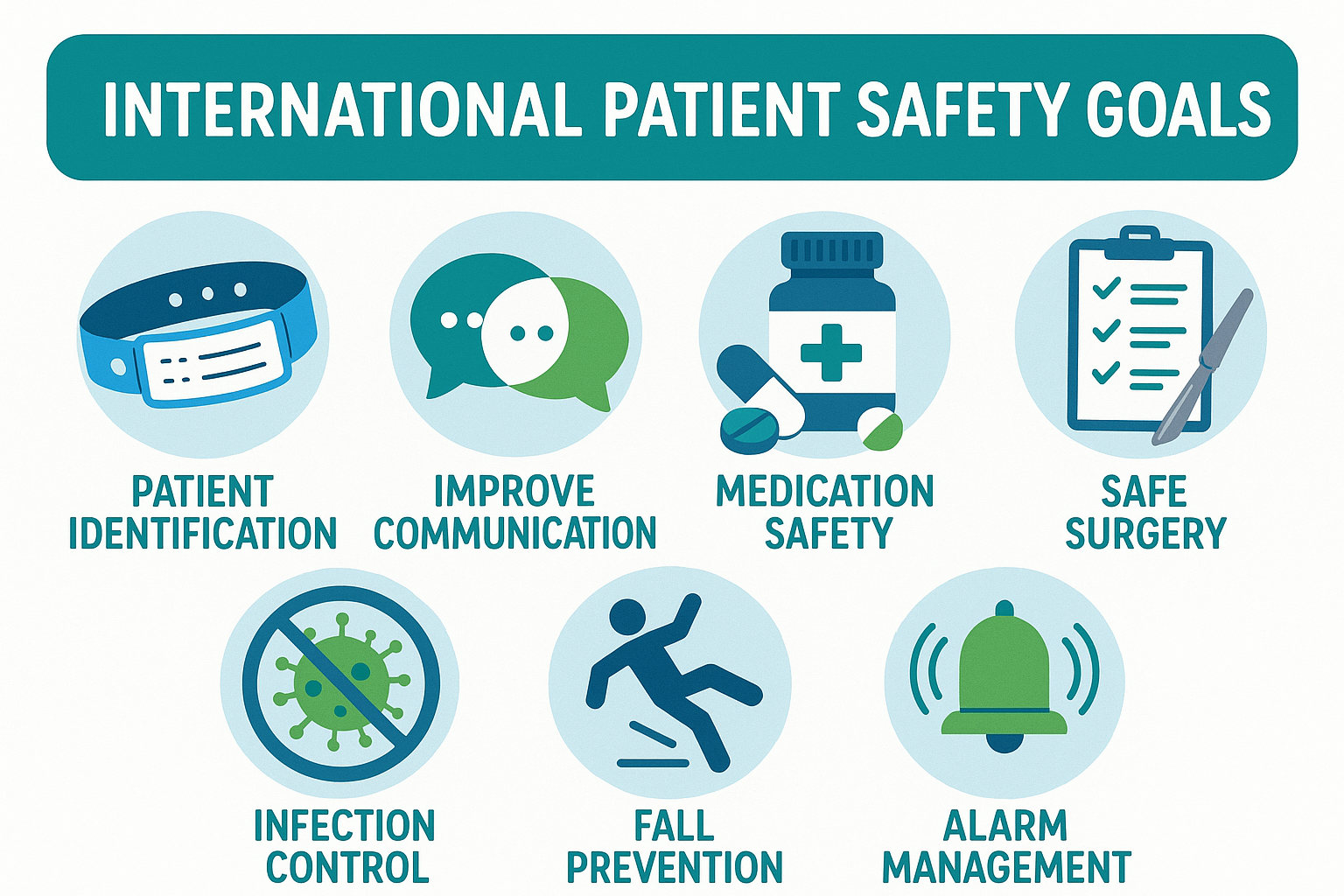
The International Patient Safety Goals (IPSG) represent a global commitment to enhancing healthcare quality and reducing preventable harm in medical settings. Established by the Joint Commission International (JCI), these patient safety goals serve as fundamental standards that healthcare organizations worldwide must implement to ensure optimal patient care and safety outcomes.
As nursing professionals, understanding and implementing these patient safety goals is crucial for delivering evidence-based care that protects patients from unnecessary harm. Each goal addresses specific areas where healthcare errors commonly occur, providing systematic approaches to prevention and improvement. The patient safety goals framework has been adopted by thousands of healthcare facilities globally, demonstrating their effectiveness in reducing medical errors and improving patient outcomes.
Key Learning Objectives
- Understand the rationale behind each patient safety goal
- Master practical implementation strategies for clinical practice
- Develop critical thinking skills for patient safety scenarios
- Learn evidence-based practices for error prevention
- Apply patient safety goals across diverse healthcare settings
Historical Context and Development
The development of patient safety goals emerged from extensive research into medical errors and adverse events in healthcare. The Institute of Medicine’s landmark report “To Err Is Human” highlighted that medical errors cause between 44,000 to 98,000 deaths annually in the United States alone. This revelation sparked a global movement toward systematic patient safety improvements, leading to the establishment of standardized patient safety goals that could be implemented across diverse healthcare systems worldwide.
Goal 1: Identify Patients Correctly
Ensuring accurate patient identification to prevent treatment errors and improve care coordination
Core Requirements
Two Patient Identifiers
Use at least two patient identifiers before providing care, treatment, or services
Room-Based Identification
Never use room number or location as a patient identifier
Verification Process
Match patient identifiers against treatment orders and documentation
Common Identification Errors
- • Wrong patient receives medication
- • Surgical procedures on incorrect patients
- • Laboratory results mixed between patients
- • Discharge instructions given to wrong family
- • Transfusion errors due to misidentification
Acceptable Patient Identifiers
| Acceptable Identifiers | Examples | Notes |
|---|---|---|
| Full Name | John Michael Smith | Must match legal documentation |
| Date of Birth | March 15, 1985 | Format: MM/DD/YYYY |
| Medical Record Number | MR-123456789 | Unique hospital identifier |
| National ID Number | SSN, NHS Number | Country-specific format |
Mnemonic: “ID-SAFE”
I – Identify with two methods
D – Double-check every time
S – Speak the name aloud
A – Ask patient to state name
F – Find matching wristband
E – Ensure accuracy before care
Practical Implementation Strategies
Bedside Verification Protocol
- Approach the patient and introduce yourself
- Ask the patient to state their full name and date of birth
- Check the patient’s wristband for matching identifiers
- Compare identifiers with medication order or treatment plan
- Document verification in the patient record
- Proceed with care only after positive identification
Special Populations Considerations
Pediatric Patients
- • Use parent/guardian for verification
- • Check pediatric-specific wristband
- • Consider age-appropriate identifiers
Unconscious Patients
- • Rely on wristband identification
- • Verify with family if available
- • Use photo identification when possible
Goal 2: Improve Effective Communication
Establishing clear, accurate, and timely communication among healthcare team members
Communication Challenges in Healthcare
Poor communication is a leading cause of medical errors, contributing to approximately 70% of serious adverse events in healthcare settings. Effective communication strategies within patient safety goals help prevent misunderstandings, ensure continuity of care, and promote collaborative decision-making among healthcare teams.
Verbal Order Requirements
- Read back complete order to prescriber
- Spell patient name and medication names
- Confirm dosage, route, and frequency
- Document time and prescriber identity
Critical Test Results
- Immediate notification to responsible physician
- Document communication attempts
- Follow escalation protocols if needed
- Ensure patient receives appropriate follow-up
SBAR Communication Framework
| Component | Description | Example |
|---|---|---|
| Situation | Current patient status | “Mr. Jones in room 302 has chest pain” |
| Background | Relevant clinical history | “History of MI, admitted yesterday” |
| Assessment | Clinical findings | “Vital signs stable, pain 8/10” |
| Recommendation | Suggested actions | “Need EKG and cardiology consult” |
Mnemonic: “CLEAR-TALK”
C – Concise and specific
L – Listen actively
E – Eye contact maintained
A – Ask for clarification
T – Time-sensitive information first
A – Acknowledge understanding
L – Language appropriate to audience
K – Keep documentation accurate
Technology-Enhanced Communication
Secure Messaging
- • HIPAA-compliant platforms
- • Real-time notifications
- • Audit trail maintenance
Electronic Health Records
- • Standardized documentation
- • Alert systems
- • Decision support tools
Telemedicine
- • Remote consultations
- • Specialist access
- • Patient education
Goal 3: Improve Safety of High Alert Medications
Implementing systematic approaches to prevent errors with high-risk medications
High alert medications are drugs that bear a heightened risk of causing significant patient harm when used in error. These medications require special safeguards to reduce the risk of errors and minimize harm when errors occur. Understanding patient safety goals related to medication management is essential for preventing adverse drug events and ensuring optimal therapeutic outcomes.
Categories of High Alert Medications
Anticoagulants
- • Heparin and Low Molecular Weight Heparins
- • Warfarin (Coumadin)
- • Direct Oral Anticoagulants (DOACs)
- • Thrombolytic agents
Cardiovascular Medications
- • Inotropic agents (Digoxin, Dobutamine)
- • Antiarrhythmics (Amiodarone, Lidocaine)
- • Vasopressors (Epinephrine, Norepinephrine)
Insulin and Hypoglycemics
- • Rapid-acting insulin (Lispro, Aspart)
- • Long-acting insulin (Glargine, Detemir)
- • Oral hypoglycemics
- • IV dextrose solutions
Narcotics and Sedatives
- • Opioids (Morphine, Fentanyl, Oxycodone)
- • Benzodiazepines (Lorazepam, Midazolam)
- • Anesthetic agents
- • Neuromuscular blocking agents
Five Rights of Medication Administration
| Right | Verification Process | Common Errors |
|---|---|---|
| Right Patient | Two patient identifiers, verbal confirmation | Wrong patient, similar names |
| Right Drug | Compare label to order, check generic/brand names | Look-alike/sound-alike medications |
| Right Dose | Calculate dose, double-check high-risk calculations | Calculation errors, decimal point mistakes |
| Right Route | Verify administration route matches order | IV vs IM, oral vs sublingual |
| Right Time | Check schedule, consider drug interactions | Missed doses, inappropriate timing |
Mnemonic: “STAR-SAFE”
S – Stop and think before giving
T – Two nurses verify high-risk drugs
A – Always check allergies
R – Read labels three times
S – Scan barcodes when available
A – Assess patient response
F – Follow up on effectiveness
E – Educate patient about medication
Safety Strategies and Best Practices
Independent Double Check
Two qualified healthcare providers independently verify:
- Patient identification
- Medication name and concentration
- Dose calculation
- Route of administration
- Pump programming (if applicable)
Smart Pump Technology
Features that enhance medication safety:
- Drug libraries with dose limits
- Clinical advisories and alerts
- Dose error reduction systems
- Automated documentation
- Wireless connectivity for monitoring
Goal 4: Ensure Safe Surgery
Implementing comprehensive surgical safety protocols to prevent wrong-site, wrong-procedure, and wrong-person surgery
Surgical safety represents a critical component of patient safety goals, as surgical errors can result in devastating consequences for patients. The World Health Organization estimates that surgical complications affect 3-25% of all surgical patients globally. Implementing systematic surgical safety protocols helps ensure that the right procedure is performed on the right patient at the right site every time.
WHO Surgical Safety Checklist
SIGN IN Phase
Before induction of anesthesia
- ✓ Patient identity confirmed
- ✓ Site and procedure verified
- ✓ Consent obtained and documented
- ✓ Site marked if applicable
- ✓ Anesthesia safety check completed
- ✓ Known allergies assessed
- ✓ Difficult airway or aspiration risk evaluated
- ✓ Blood loss risk >500ml assessed
TIME OUT Phase
Before skin incision
- ✓ All team members introduce themselves
- ✓ Patient name and procedure confirmed
- ✓ Correct site and positioning verified
- ✓ Prophylactic antibiotics given
- ✓ Critical steps reviewed
- ✓ Equipment issues addressed
- ✓ Imaging displayed if needed
- ✓ Any concerns discussed
SIGN OUT Phase
Before patient leaves OR
- ✓ Procedure name recorded
- ✓ Instrument count completed
- ✓ Sponge count verified
- ✓ Specimen labeled correctly
- ✓ Equipment problems identified
- ✓ Recovery and management concerns reviewed
- ✓ Post-operative instructions given
Site Marking and Verification Process
| Step | Responsibility | Requirements | Documentation |
|---|---|---|---|
| Pre-procedure Verification | Attending Surgeon | Review medical records, imaging, consent | Verification checklist |
| Site Marking | Operating Surgeon | Mark operative site with indelible marker | Site marking form |
| Universal Protocol | Entire Surgical Team | Active participation in timeout | Timeout documentation |
Mnemonic: “SURGERY-CHECK”
S – Site marked and verified
U – Universal protocol followed
R – Right patient confirmed
G – Gather all team members
E – Everyone participates in timeout
R – Review critical steps
Y – Yes to all safety questions
C – Consent verified
H – History and physical reviewed
E – Equipment functioning properly
C – Count instruments and sponges
K – Keep communication open
Nursing Responsibilities in Surgical Safety
Pre-operative Phase
- • Verify patient identity using two identifiers
- • Confirm surgical consent is signed and witnessed
- • Ensure site marking is present and correct
- • Complete pre-operative assessment
- • Verify NPO status and last oral intake
- • Remove jewelry, dentures, and prosthetics
- • Administer pre-operative medications as ordered
Intra-operative Phase
- • Participate actively in surgical timeout
- • Monitor patient positioning and skin integrity
- • Maintain sterile field and aseptic technique
- • Perform accurate instrument and sponge counts
- • Advocate for patient safety concerns
- • Document all nursing interventions
- • Communicate effectively with surgical team
Goal 5: Reduce Healthcare-Associated Infections
Implementing evidence-based practices to prevent infections acquired during healthcare delivery
Healthcare-associated infections (HAIs) affect millions of patients worldwide and represent a significant threat to patient safety goals. These infections occur as a result of medical care and can lead to prolonged hospital stays, increased healthcare costs, and potentially life-threatening complications. Understanding and implementing comprehensive infection prevention strategies is essential for all healthcare providers.
Common Healthcare-Associated Infections
Ventilator-Associated Pneumonia (VAP)
- • Occurs 48+ hours after intubation
- • Prevention: Elevate head of bed 30-45°
- • Daily sedation breaks and weaning trials
- • Oral care with chlorhexidine
Central Line-Associated Bloodstream Infections (CLABSI)
- • Bloodstream infection with central line in place
- • Prevention: Sterile insertion technique
- • Daily line necessity assessment
- • Proper catheter site care and dressing changes
Surgical Site Infections (SSI)
- • Infection at or near surgical incision
- • Prevention: Appropriate hair removal
- • Prophylactic antibiotic timing
- • Glucose control and normothermia
Catheter-Associated Urinary Tract Infections (CAUTI)
- • UTI with indwelling urinary catheter
- • Prevention: Avoid unnecessary catheterization
- • Sterile insertion and maintenance
- • Daily assessment for removal
Hand Hygiene: The Foundation of Infection Prevention
WHO 5 Moments for Hand Hygiene
Before patient contact
Before aseptic procedure
After body fluid exposure
After patient contact
After patient environment
| Isolation Precaution | Indications | PPE Requirements |
|---|---|---|
| Standard Precautions | All patients, all times | Gloves for body fluid contact, hand hygiene |
| Contact Precautions | MRSA, VRE, C. difficile | Gloves, gown for all patient contact |
| Droplet Precautions | Influenza, pertussis, meningitis | Surgical mask within 3 feet |
| Airborne Precautions | Tuberculosis, measles, chickenpox | N95 respirator, negative pressure room |
Mnemonic: “CLEAN-HANDS”
C – Check for visible soil
L – Lather with soap and water
E – Everywhere on hands and wrists
A – Apply alcohol-based sanitizer
N – No jewelry or artificial nails
H – Hold for 15-20 seconds minimum
A – Always before and after patient care
N – Never forget the five moments
D – Dry completely with clean towel
S – Sanitize when soap unavailable
Bundle Approaches to Infection Prevention
Central Line Bundle
- • Hand hygiene before insertion
- • Maximal sterile barrier precautions
- • Chlorhexidine skin antisepsis
- • Optimal catheter site selection
- • Daily review of line necessity
- • Prompt removal when no longer needed
Ventilator Bundle
- • Elevation of head of bed 30-45 degrees
- • Daily sedation vacation
- • Assessment of readiness to extubate
- • Peptic ulcer disease prophylaxis
- • Deep vein thrombosis prophylaxis
- • Daily oral care with chlorhexidine
Goal 6: Reduce Patient Falls
Implementing comprehensive fall prevention strategies to protect patients from injury
Patient falls represent one of the most common adverse events in healthcare settings, affecting millions of patients annually. Falls can result in serious injuries, prolonged hospital stays, increased healthcare costs, and decreased quality of life. Effective fall prevention strategies within patient safety goals help identify at-risk patients and implement targeted interventions to prevent falls and related injuries.
Fall Risk Assessment Tools
Morse Fall Scale
Risk Levels:
0-24: Low | 25-50: Moderate | >51: High
Hendrich II Fall Risk Model
Risk Level:
≥5 points indicates high fall risk
Environmental Safety Interventions
| Risk Factor | Environmental Intervention | Equipment/Tools |
|---|---|---|
| Mobility impairment | Clear pathways, adequate lighting | Night lights, grab bars, non-slip mats |
| Toileting urgency | Scheduled toileting, bedside commode | Call bells within reach, bedpans |
| Bed height | Lowest position when unoccupied | Low beds, floor mats, bed alarms |
| Footwear | Proper fitting, non-slip soles | Grippy socks, appropriate shoes |
Mnemonic: “FALL-SAFE”
F – Fall risk assessment completed
A – Ambulation assistance provided
L – Low bed position maintained
L – Lighting adequate at all times
S – Side rails appropriately positioned
A – Alarms activated when indicated
F – Footwear appropriate and non-slip
E – Environment cleared of hazards
Multidisciplinary Fall Prevention Strategies
Nursing Interventions
- • Hourly rounding protocols
- • Bedside toileting assistance
- • Medication effect monitoring
- • Patient and family education
- • Post-fall analysis and learning
Physical Therapy
- • Strength and balance training
- • Gait assessment and training
- • Assistive device evaluation
- • Exercise program development
- • Home safety assessments
Pharmacy Review
- • High-risk medication identification
- • Dosage optimization
- • Drug interaction screening
- • Alternative medication options
- • Medication reconciliation
Goal 7: Reduce Harm from Clinical Alarms
Managing clinical alarm systems to ensure patient safety while reducing alarm fatigue
Clinical alarm systems are crucial safety features designed to alert healthcare providers to changes in patient condition or equipment malfunction. However, excessive or inappropriate alarms can lead to alarm fatigue, where staff become desensitized to alerts, potentially compromising patient safety goals. Effective alarm management balances patient safety with staff well-being and workflow efficiency.
The Problem of Alarm Fatigue
Consequences of Alarm Fatigue
- • Delayed response to critical alarms
- • Desensitization to alarm sounds
- • Inappropriate alarm disabling
- • Missed life-threatening events
- • Increased stress and burnout
- • Disrupted patient rest and recovery
- • Decreased staff satisfaction
Alarm Statistics
Types of Clinical Alarms
| Alarm Type | Priority Level | Examples | Response Time |
|---|---|---|---|
| Life-threatening | High | Ventricular fibrillation, apnea | Immediate (< 30 seconds) |
| Physiological | Medium | Tachycardia, hypertension | Within 3 minutes |
| Technical | Low | Lead disconnection, low battery | Within 15 minutes |
| Advisory | Information | Maintenance due, calibration needed | Next convenient time |
Alarm Management Strategies
Customization and Personalization
- • Patient-specific alarm parameters
- • Condition-based threshold adjustment
- • Age and weight-appropriate limits
- • Medication effect considerations
- • Historical trend incorporation
- • Physician-guided customization
Technology Solutions
- • Smart alarm algorithms
- • Multi-parameter alarm integration
- • Delayed alarm activation
- • Tiered escalation systems
- • Mobile device integration
- • Artificial intelligence filtering
Mnemonic: “ALARM-WISE”
A – Assess alarm appropriateness
L – Limit unnecessary alarms
A – Adjust parameters for patient
R – Respond promptly to critical alarms
M – Monitor for alarm fatigue
W – Work with team to optimize settings
I – Investigate recurring false alarms
S – Standardize alarm management protocols
E – Educate staff on best practices
Implementation Framework
Phase 1: Assessment and Planning
- • Conduct alarm audit and analysis
- • Identify high-frequency false alarms
- • Survey staff about alarm fatigue
- • Review current alarm policies
- • Establish multidisciplinary team
- • Set measurable improvement goals
- • Develop implementation timeline
- • Identify necessary resources
Phase 2: Implementation and Training
- • Update alarm management policies
- • Implement standardized parameters
- • Install new technology solutions
- • Create visual alarm indicators
- • Train staff on new protocols
- • Educate on alarm customization
- • Practice emergency scenarios
- • Establish feedback mechanisms
Phase 3: Monitoring and Evaluation
- • Track alarm frequency and types
- • Monitor response times
- • Measure false alarm rates
- • Assess patient safety outcomes
- • Survey staff satisfaction
- • Evaluate sleep quality impact
- • Conduct regular audits
- • Implement continuous improvements
Global Best Practices in Patient Safety Goals
United Kingdom – NHS Patient Safety Strategy
- • Implementation of Patient Safety Specialists in every trust
- • Systematic use of Human Factors principles in safety design
- • National patient safety alerts system with mandatory implementation
- • Patient Safety Partners program involving patients in safety initiatives
- • Focus on psychological safety and just culture principles
Canada – Safer Healthcare Now!
- • National collaborative improvement initiatives
- • Standardized evidence-based care bundles
- • Real-time data sharing and benchmarking
- • Indigenous cultural safety integration
- • Focus on healthcare equity and social determinants
Japan – Team STEPPS Integration
- • Integration of traditional respect culture with safety speaking up
- • Advanced technology integration in patient identification
- • Standardized handoff communication protocols
- • National incident reporting and learning system
- • Focus on elderly care safety with aging population
Sweden – Patient Safety through Leadership
- • Board-level accountability for patient safety outcomes
- • Transparency in safety data with public reporting
- • Investment in safety research and innovation
- • Strong patient and family engagement in safety decisions
- • Integration of mental health in safety considerations
Key Lessons for Implementation
Leadership Commitment
Executive and board-level support is essential for sustainable patient safety improvements and culture change.
Staff Engagement
Frontline healthcare workers must be empowered to identify risks and participate in solution development.
Technology Integration
Smart implementation of technology can enhance patient safety goals while maintaining human-centered care approaches.
Conclusion and Key Takeaways
The International Patient Safety Goals represent a comprehensive framework for delivering safe, high-quality healthcare across diverse settings and populations. These patient safety goals provide evidence-based strategies that, when properly implemented, significantly reduce the risk of preventable harm and improve patient outcomes. As nursing professionals, mastering these patient safety goals is essential for providing excellent patient care and advancing the profession’s commitment to safety excellence.
Critical Success Factors
Individual Competence
- • Continuous learning and skill development
- • Evidence-based practice implementation
- • Critical thinking and clinical judgment
- • Professional accountability
Systems Approach
- • Organizational culture of safety
- • Standardized processes and protocols
- • Technology integration and optimization
- • Continuous quality improvement
The journey toward excellence in patient safety goals requires commitment at all levels of healthcare organizations, from frontline caregivers to executive leadership. By embracing these principles and implementing evidence-based practices consistently, nursing professionals can significantly contribute to reducing medical errors, improving patient outcomes, and advancing the overall quality of healthcare delivery. The patient safety goals framework continues to evolve as new evidence emerges and healthcare systems adapt to changing patient needs and technological advances.
Next Steps for Nursing Students
- • Practice applying patient safety goals in clinical rotations
- • Participate in quality improvement initiatives
- • Develop strong communication and teamwork skills
- • Stay current with evidence-based safety practices
- • Advocate for patient safety in all care settings
- • Pursue additional certifications in patient safety