
Hand Hygiene
Comprehensive Nursing Notes
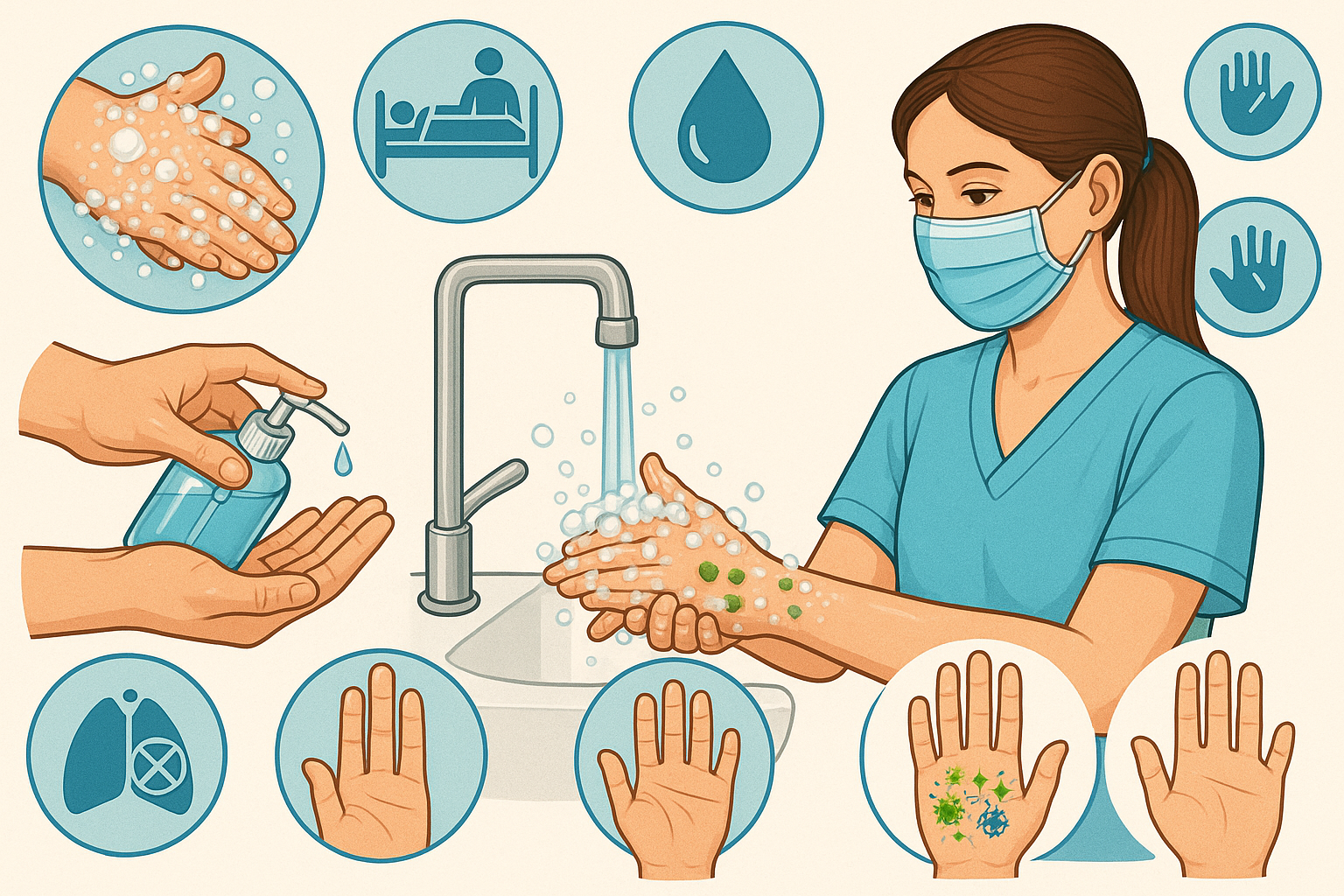
Table of Contents
Introduction to Hand Hygiene
Why Hand Hygiene Matters
Hand hygiene is the single most effective intervention for preventing healthcare-associated infections (HAIs) and reducing antimicrobial resistance. Healthcare workers’ hands are the primary vehicle for transmitting pathogens between patients, making proper hand hygiene critical for patient safety and quality care delivery.
Historical Context: The importance of hand hygiene was first demonstrated by Ignaz Semmelweis in 1847, who showed that handwashing with chlorinated lime solutions reduced mortality rates in maternity wards from 18% to less than 2%. This foundational discovery laid the groundwork for modern infection prevention practices.
Current Significance: Despite overwhelming evidence supporting hand hygiene, compliance rates among healthcare workers globally remain suboptimal, ranging from 30-70%. This gap between knowledge and practice represents a significant opportunity for improving patient outcomes and reducing healthcare costs associated with preventable infections.
Memory Aid: CLEAN
- Compliance saves lives
- Lather for 15-30 seconds
- Every patient contact
- Alcohol-based rub when available
- Nails should be short and clean
Types of Hand Hygiene
1. Routine Hand Hygiene
Purpose: Remove transient microorganisms and some resident flora
Duration: 15-30 seconds with soap and water or alcohol-based hand rub
Indications:
- Before and after patient contact
- Before clean/aseptic procedures
- After body fluid exposure risk
- After touching patient surroundings
2. Antiseptic Hand Hygiene
Purpose: Reduce transient and some resident microorganisms
Duration: 2-5 minutes with antiseptic agent
Indications:
- Before invasive procedures
- In outbreak situations
- When caring for immunocompromised patients
- In high-risk units (ICU, OR)
3. Surgical Hand Antisepsis
Purpose: Eliminate transient flora and reduce resident flora
Duration: 2-5 minutes initial scrub, 2-3 minutes subsequent
Key Features:
- Systematic approach from fingertips to elbows
- Use of brush or sponge for mechanical action
- Sterile towels for drying
- Persistent antimicrobial activity
4. Protective Hand Hygiene
Purpose: Protect healthcare worker from exposure
Components: Proper glove use with hand hygiene
Critical Points:
- Hand hygiene before gloving
- Proper glove removal technique
- Hand hygiene after glove removal
- Understanding that gloves are not 100% protective
Hand Hygiene Decision Flowchart
Hand Washing Technique
When to Use Soap and Water
Mandatory Situations
- Hands visibly soiled or contaminated
- After caring for patients with C. difficile
- After caring for patients with norovirus
- Before eating or handling food
- After using the restroom
- When alcohol-based rub is not available
Advantages of Soap and Water
Step-by-Step Handwashing Technique
Wet Hands
Use warm running water, avoid hot water
Apply Soap
Use adequate amount to cover all surfaces
Rub Palms
Palm to palm circular motions
Back of Hands
Interlaced fingers over back of hands
Between Fingers
Interlace and rub between fingers
Thumbs & Nails
Rotational rubbing, clean under nails
Critical Success Factors
Common Mistakes to Avoid
Memory Aid: WASH HANDS
- Wet hands with clean water
- Apply soap to cover all surfaces
- Scrub for at least 15-30 seconds
- Hit all areas: palms, backs, between fingers
- Hold thumbs and fingertips attention
- Always rinse thoroughly
- Now dry with single-use towel
- Shut off faucet with towel
Alcohol-Based Hand Rub (ABHR)
Why ABHR is Preferred
Composition and Standards
WHO Formula 1 (Ethanol-based)
- • Ethanol 80% v/v
- • Glycerol 1.45% v/v
- • Hydrogen peroxide 0.125% v/v
- • Sterile distilled water
WHO Formula 2 (Isopropanol-based)
- • Isopropyl alcohol 75% v/v
- • Glycerol 1.45% v/v
- • Hydrogen peroxide 0.125% v/v
- • Sterile distilled water
Mechanism of Action
ABHR Application Technique
Apply Product
Use adequate amount (3-5 ml) in palm
Rub Palms
Palm to palm
Back of Hands
Right palm over left dorsum and vice versa
Interlace Fingers
Palm to palm with fingers interlaced
Backs of Fingers
Backs of fingers to opposing palms
Thumbs & Tips
Rotational rubbing, then fingertips in palms
Continue until hands are dry (approximately 20-30 seconds)
Advantages of ABHR
Limitations of ABHR
Safety Considerations
Fire Safety
- • Keep away from heat sources and flames
- • Allow to dry completely before touching electrical equipment
- • Store in cool, well-ventilated areas
- • Follow facility fire safety protocols
Skin Care
- • Choose products with skin conditioners
- • Monitor for signs of dermatitis
- • Use hand moisturizer at end of shift
- • Report allergic reactions immediately
WHO 5 Moments of Hand Hygiene
The Science Behind the 5 Moments
The WHO 5 Moments framework is based on extensive research demonstrating that healthcare workers’ hands become contaminated at predictable points during patient care. These five critical moments represent opportunities to interrupt pathogen transmission and protect both patients and healthcare workers.
Patient Protection
Moments 1, 2, and 3 protect the patient from harmful microorganisms, including those from the healthcare worker and the environment.
Healthcare Worker Protection
Moments 4 and 5 protect the healthcare worker and healthcare environment from patient microorganisms.
Moment 1: Before Touching a Patient
When:
- • Before any direct patient contact
- • Before putting on gloves for patient contact
- • When moving from contaminated to clean body site
Examples:
- • Shaking hands, helping patient move
- • Clinical examination, taking vital signs
- • Providing comfort or reassurance
Moment 2: Before Clean/Aseptic Procedures
When:
- • Before any invasive procedure
- • Before handling invasive medical devices
- • Before preparing medications
Examples:
- • IV insertion, urinary catheterization
- • Wound dressing changes
- • Administering injections
Moment 3: After Body Fluid Exposure Risk
When:
- • After any contact with body fluids
- • After handling contaminated items
- • After removing gloves
Examples:
- • After handling specimens, secretions
- • After wound care or suctioning
- • After cleaning up spills
Moment 4: After Touching a Patient
When:
- • After any direct patient contact
- • After removing gloves from patient contact
- • Before touching anything else
Examples:
- • After physical examination
- • After assisting with ADLs
- • After helping patient with mobility
Moment 5: After Touching Patient Surroundings
When:
- • After contact with surfaces near patient
- • After handling patient equipment
- • Before leaving patient area
Examples:
- • After touching bed rails, monitors
- • After handling IV pumps, ventilators
- • After touching bedside table, chair
Memory Aid: BEFORE and AFTER
BEFORE (Patient Protection)
- 1. Before patient contact
- 2. Before clean/aseptic procedures
AFTER (Self & Environment Protection)
- 3. After body fluid exposure
- 4. After patient contact
- 5. After touching patient surroundings
WHO Hand Hygiene Promotion
Global Hand Hygiene Initiative
The World Health Organization’s “Clean Care is Safer Care” campaign, launched in 2005, represents the first global initiative to improve hand hygiene in healthcare. This multimodal strategy has been implemented in thousands of healthcare facilities worldwide, resulting in significant improvements in hand hygiene compliance and reduction in healthcare-associated infections.
WHO Multimodal Hand Hygiene Improvement Strategy
System Change
Infrastructure and resource accessibility
Training & Education
Regular training and competency assessment
Evaluation & Feedback
Monitoring and performance feedback
Reminders & Communication
Workplace reminders and communication
Institutional Safety Climate
Senior management support and culture
System Change Components
Training & Education Elements
Implementation Timeline
Key Success Factors
Common Implementation Barriers
Implementation in Nursing Practice
Nursing Leadership in Hand Hygiene
Nurses play a pivotal role in hand hygiene compliance as they represent the largest group of healthcare workers and have the most frequent patient contact. Research consistently shows that nursing units with strong leadership and peer support achieve higher hand hygiene compliance rates and better patient outcomes.
Professional Responsibility
Nurses have both ethical and legal obligations to prevent harm through proper infection control practices.
Role Modeling
Nurses serve as role models for other healthcare workers, students, and patients’ families.
Clinical Applications by Setting
Critical Care Units
• Hand hygiene before and after each patient contact
• Additional moments for ventilator care, central line management
• Strict compliance due to high-risk patient population
• Family education on hand hygiene importance
Medical-Surgical Units
• Standard 5 moments application
• Medication administration protocols
• Wound care and dressing changes
• Patient mobility assistance considerations
Emergency Department
• Rapid patient turnover challenges
• ABHR accessibility at every bed/station
• Universal precautions for unknown patients
• Trauma and resuscitation considerations
Pediatric Units
• Age-appropriate patient and family education
• Consideration for developmental needs
• Play therapy integration
• Higher transmission risk in children
Nursing-Specific Challenges
Time Constraints
Challenge: Heavy patient loads and competing priorities
Solution: Strategic ABHR placement, efficient workflow design
Skin Issues
Challenge: Frequent hand hygiene causing dermatitis
Solution: Quality products with emollients, regular moisturizing
Emergency Situations
Challenge: Life-threatening situations may compromise compliance
Solution: Post-emergency hand hygiene protocols
Technology Integration
Challenge: Electronic devices and hand hygiene timing
Solution: Device cleaning protocols, hand hygiene reminders
Nursing Hand Hygiene Workflow
Patient Education Strategies
Quality Improvement Initiatives
Nursing Implementation Memory Aid: NURSE LEAD
- Notice opportunities for hand hygiene
- Understand the 5 moments framework
- Role model for others consistently
- Support colleagues and provide feedback
- Lead quality improvement initiatives
- Educate patients and families
- Advocate for adequate resources
- Document and monitor compliance
Compliance Strategies & Monitoring
Understanding Compliance Challenges
Hand hygiene compliance remains one of the most significant challenges in healthcare. Despite universal knowledge of its importance, compliance rates often fall below 50% in many settings. Understanding the psychological, organizational, and practical barriers is essential for developing effective improvement strategies.
Behavioral Factors Affecting Compliance
Individual Factors
• Knowledge gaps about transmission risks
• Overconfidence in personal immunity
• Habit formation and automatic behaviors
• Risk perception and personal beliefs
Social Factors
• Peer influence and social norms
• Leadership examples and expectations
• Team dynamics and communication
• Professional identity and pride
Environmental Factors
• Product accessibility and convenience
• Time pressures and competing priorities
• Physical layout and workflow design
• Technology integration challenges
Evidence-Based Improvement Strategies
Behavioral Interventions
Goal Setting: Set specific, measurable compliance targets
Feedback Systems: Real-time and periodic performance feedback
Social Accountability: Peer observation and mutual responsibility
Organizational Interventions
Leadership Commitment: Visible senior management support
Resource Allocation: Adequate staffing and infrastructure investment
Policy Integration: Hand hygiene in job descriptions and evaluations
Technological Solutions
Electronic Monitoring: Automated compliance tracking systems
Smart Dispensers: Data collection and reminder systems
Mobile Applications: Education and self-monitoring tools
Monitoring and Measurement Methods
Direct Observation
Advantages:
- Gold standard method
- Detailed behavioral data
- Immediate feedback possible
Limitations:
- Resource intensive
- Hawthorne effect
- Observer bias potential
Electronic Monitoring
Advantages:
- Continuous monitoring
- Large data volumes
- No observer bias
Limitations:
- High initial cost
- Technical challenges
- Privacy concerns
Product Usage Data
Advantages:
- Easy to collect
- Cost-effective
- Long-term trending
Limitations:
- Indirect measure
- No timing information
- Waste not accounted
Compliance Improvement Cycle
Feedback and Recognition Strategies
Sustainability Measures
Evidence-Based Practice & Research
Research Foundation
Hand hygiene effectiveness is supported by decades of rigorous research, including randomized controlled trials, systematic reviews, and large-scale implementation studies. The evidence consistently demonstrates significant reductions in healthcare-associated infections when proper hand hygiene practices are implemented and sustained.
Landmark Studies
Pittet et al. (2000)
Setting: Geneva University Hospital
Intervention: Hospital-wide hand hygiene promotion
Results: 40% reduction in nosocomial infections, improved compliance from 48% to 66%
Impact: Established foundation for modern hand hygiene programs
WHO Multimodal Studies
Setting: Multiple countries and healthcare facilities
Intervention: WHO 5-component strategy implementation
Results: Sustained compliance improvements across diverse settings
Impact: Global standardization of hand hygiene approaches
Cochrane Reviews
Scope: Systematic reviews of hand hygiene interventions
Findings: Multimodal interventions most effective
Results: Strong evidence for ABHR superiority over soap and water
Impact: Evidence-based practice guidelines development
Clinical Outcomes Research
Infection Reduction
MRSA Infections: 30-50% reduction with improved hand hygiene
C. difficile: Significant reduction when combined with appropriate technique
Central Line Infections: Up to 70% reduction in ICU settings
Economic Impact
Cost Savings: $3-7 return for every $1 invested in hand hygiene programs
Length of Stay: Reduced hospital stays due to fewer complications
Liability Reduction: Decreased malpractice risk and legal costs
Patient Satisfaction
Trust Building: Visible hand hygiene increases patient confidence
Perceived Quality: Better infection control associated with higher quality ratings
Family Engagement: Education programs improve family participation
Current Research Priorities
Technology Integration
AI-powered monitoring, smart dispensers, and automated feedback systems
Behavioral Science
Psychology of compliance, habit formation, and sustainable behavior change
Product Development
New formulations, delivery systems, and skin-friendly alternatives
Emerging Pathogens
Effectiveness against new threats, pandemic preparedness
Implementation Science Findings
Future Research Directions
Research Gaps and Limitations
Methodological Challenges
- • Difficulty conducting randomized controlled trials in healthcare settings
- • Hawthorne effect in observational studies
- • Confounding variables in multi-intervention studies
- • Long-term sustainability measurement challenges
Knowledge Gaps
- • Optimal frequency of hand hygiene in different settings
- • Effectiveness against emerging antimicrobial-resistant organisms
- • Cultural adaptation strategies for diverse populations
- • Long-term skin health effects of frequent hand hygiene
Conclusion & Key Points
The Imperative for Excellence
Hand hygiene represents the intersection of scientific evidence, professional ethics, and practical healthcare delivery. As nursing professionals, our commitment to proper hand hygiene practices directly impacts patient safety, public health, and the integrity of healthcare systems worldwide. The evidence is clear: when we improve hand hygiene compliance, we save lives, reduce suffering, and advance the quality of care for all patients.
Essential Knowledge Points
Professional Responsibilities
Critical Success Factors
Knowledge
Understanding microbiology, transmission, and evidence base
Skills
Proper technique for handwashing and ABHR use
Attitude
Commitment to patient safety and professional excellence
Consistency
Sustained practice in all clinical situations
Final Memory Aid: COMMIT TO CARE
- Consistent practice in all situations
- Observe the 5 moments framework
- Model proper technique for others
- Monitor compliance and outcomes
- Involve patients and families
- Teach and mentor colleagues
- Treat hand hygiene as non-negotiable
- Operate with evidence-based practice
- Champion quality improvement efforts
- Advocate for adequate resources
- Recognize and celebrate achievements
- Evaluate and improve continuously
Call to Action
As nursing professionals, we have the power to transform healthcare outcomes through our commitment to excellence in hand hygiene. Every patient interaction is an opportunity to demonstrate our dedication to safety, quality, and professional integrity.
“Clean hands save lives – make every moment count.”