
Emergency Codes & Disaster Nursing
Comprehensive Guide for Nursing Students
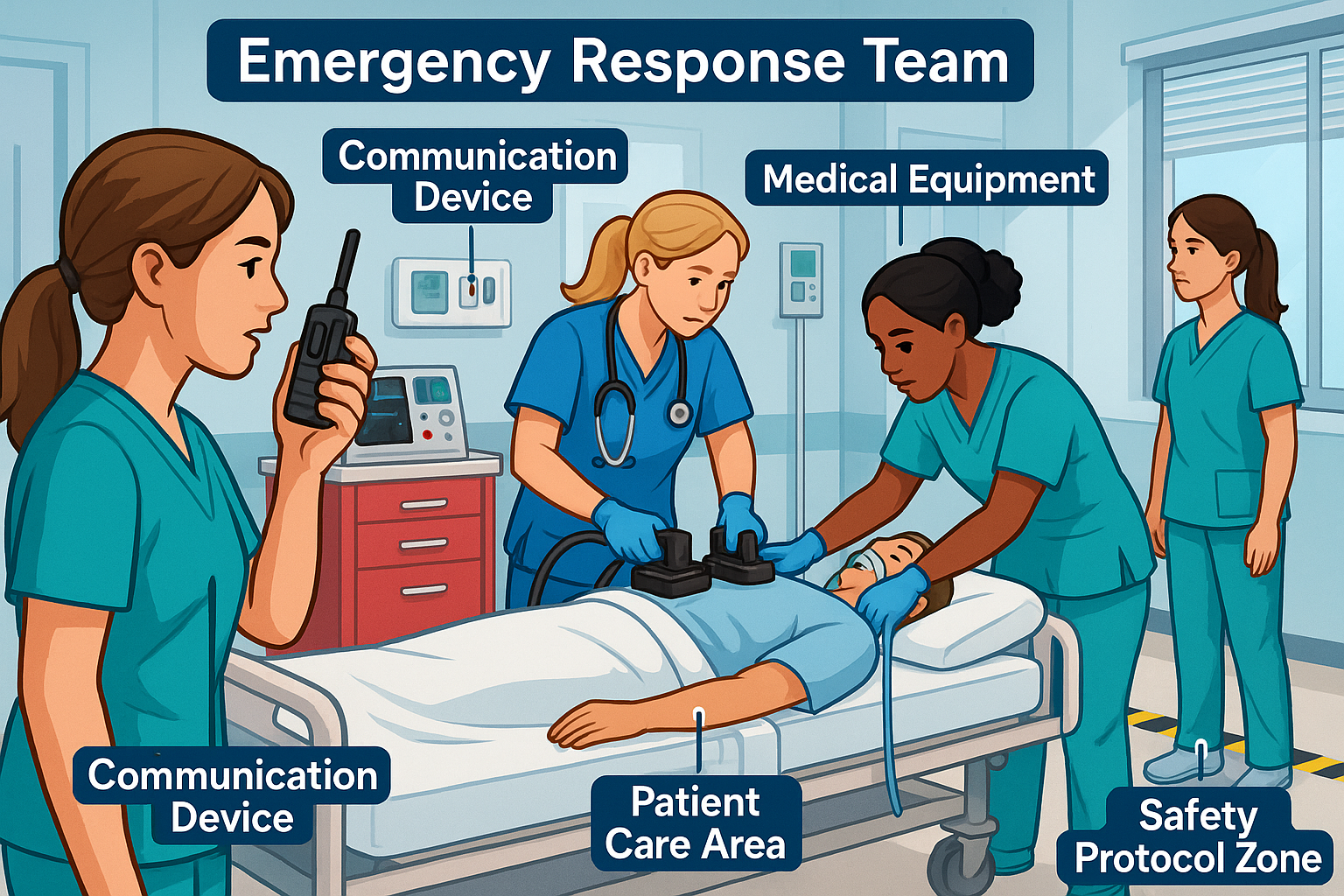
Table of Contents
Introduction to Emergency Response in Healthcare
What Makes Emergency Response Critical?
Healthcare emergencies demand immediate, coordinated responses that can mean the difference between life and death. As nursing professionals, understanding emergency-response protocols is fundamental to providing safe, effective patient care during critical situations.
Key Learning Objectives
- Master hospital emergency code systems
- Understand nursing roles during emergencies
- Develop disaster response competencies
- Apply emergency-response principles in practice
Why This Matters
Emergency situations in healthcare settings occur without warning. Whether it’s a cardiac arrest, fire evacuation, or mass casualty event, nurses must be prepared to respond swiftly and effectively. This knowledge forms the foundation of patient safety and professional competence.
Hospital Emergency Codes: The Foundation of Rapid Response
Hospital emergency codes are standardized communication systems designed to quickly alert healthcare staff about specific types of emergencies. These codes enable immediate, coordinated emergency-response actions while maintaining patient and visitor calm through coded language.
Memory Aid: CODES Framework
C – Clear communication protocols
O – Organized team response
D – Defined roles and responsibilities
E – Efficient resource allocation
S – Swift action implementation
Important Note
While emergency codes may vary between institutions, the fundamental principles of emergency-response remain consistent. Always familiarize yourself with your specific facility’s code system during orientation.
Types of Emergency Codes: Color-Coded Response System
Code Red: Fire Emergency
Immediate Actions:
- • Activate fire alarm system
- • Ensure patient safety first
- • Begin evacuation procedures if needed
- • Close doors to contain fire/smoke
RACE Protocol:
- • Rescue patients in immediate danger
- • Alarm – sound the alarm
- • Confine fire and smoke
- • Evacuate or Extinguish
Code Blue: Cardiac/Respiratory Arrest
Critical Response:
- • Begin CPR immediately
- • Call emergency-response team
- • Prepare crash cart and defibrillator
- • Document time and interventions
Team Roles:
- • Team leader: directs resuscitation
- • Primary nurse: continues CPR
- • Medication nurse: prepares drugs
- • Recorder: documents events
Code Yellow: Missing Patient/Child Abduction
Immediate Response:
- • Secure all exits immediately
- • Notify security and administration
- • Begin systematic search
- • Contact law enforcement if needed
Prevention Measures:
- • Use patient identification bands
- • Implement visitor management
- • Regular patient rounds
- • Staff awareness training
Code Green: Emergency Activation Plan
Activation Triggers:
- • Mass casualty incidents
- • Natural disasters
- • Infrastructure failures
- • Public health emergencies
Response Actions:
- • Activate incident command
- • Mobilize additional staff
- • Prepare surge capacity
- • Coordinate with external agencies
Code White: Violent/Combative Person
Safety First:
- • Do not attempt to restrain alone
- • Call security immediately
- • Remove other patients/visitors
- • Use de-escalation techniques
De-escalation Tips:
- • Speak calmly and slowly
- • Maintain safe distance
- • Listen actively
- • Avoid confrontational language
Code Black: Bomb Threat/Hazardous Material
Bomb Threat Response:
- • Do not touch suspicious objects
- • Evacuate area immediately
- • Contact law enforcement
- • Follow facility protocols
Hazmat Procedures:
- • Identify contamination source
- • Isolate affected area
- • Use appropriate PPE
- • Begin decontamination
Nursing Roles During Emergency Codes
| Emergency Code | Primary Nursing Role | Key Responsibilities | Documentation Requirements |
|---|---|---|---|
| Code Red (Fire) | Patient Safety Coordinator |
• Evacuate patients safely • Account for all patients • Assist with fire suppression |
Fire incident report Patient location log Injury assessments |
| Code Blue (Cardiac Arrest) | Resuscitation Team Member |
• Perform CPR/defibrillation • Administer emergency drugs • Monitor vital signs |
Resuscitation record Medication administration Timeline of events |
| Code Yellow (Missing Patient) | Search Coordinator |
• Conduct area searches • Interview witnesses • Coordinate with security |
Missing person report Search area log Recovery details |
| Code Green (Emergency Plan) | Resource Mobilization |
• Set up triage areas • Prepare surge beds • Staff reassignment |
Resource utilization Patient flow tracking Staff deployment |
Universal Nursing Responsibilities in All Emergency Situations
Patient Care
- • Assess patient condition
- • Provide immediate interventions
- • Monitor vital signs
- • Ensure patient comfort
Communication
- • Clear, concise reporting
- • Family notification
- • Team coordination
- • Status updates
Documentation
- • Accurate time records
- • Intervention details
- • Patient responses
- • Incident reporting
Disaster Nursing: Beyond Hospital Walls
Disaster nursing extends emergency-response capabilities beyond traditional healthcare settings. Nurses play crucial roles in disaster preparedness, response, and recovery across communities, providing care in challenging environments with limited resources.
Types of Disasters
Natural Disasters:
Earthquakes, hurricanes, floods, wildfires, pandemics
Human-Made Disasters:
Terrorist attacks, industrial accidents, building collapses
Complex Emergencies:
War, refugee crises, infrastructure failures
Disaster Impact Categories
Primary Effects:
Direct injuries, deaths, structural damage
Secondary Effects:
Infrastructure disruption, supply shortages
Tertiary Effects:
Long-term health, psychological, economic impacts
Memory Aid: DISASTER Response Framework
D – Detect and assess the situation
I – Identify resources and needs
S – Set up command structure
A – Allocate personnel and supplies
S – Stabilize immediate threats
T – Triage and treat casualties
E – Evaluate and adapt response
R – Recover and rehabilitate
Disaster Management Phases: The Nursing Perspective
Effective disaster management follows a cyclical approach with four distinct phases. Understanding each phase enables nurses to provide appropriate emergency-response interventions and contribute to community resilience.
1. Prevention/Mitigation Phase
Nursing Activities:
- • Community risk assessments
- • Public health education programs
- • Vulnerability identification
- • Health promotion initiatives
- • Environmental health monitoring
Key Outcomes:
- • Reduced disaster impact
- • Enhanced community awareness
- • Improved infrastructure safety
- • Strengthened health systems
- • Better resource allocation
2. Preparedness Phase
Nursing Activities:
- • Emergency plan development
- • Staff training and drills
- • Resource stockpiling
- • Communication system setup
- • Community education programs
Essential Preparations:
- • Emergency supply kits
- • Evacuation procedures
- • Contact information systems
- • Backup communication methods
- • Training documentation
3. Response Phase
Immediate Actions:
- • Activate emergency-response plans
- • Establish incident command
- • Conduct rapid needs assessment
- • Implement triage procedures
- • Coordinate with agencies
Nursing Priorities:
- • Life-saving interventions
- • Mass casualty management
- • Psychological first aid
- • Family reunification
- • Resource coordination
4. Recovery Phase
Short-term Recovery:
- • Restore basic services
- • Continue medical care
- • Mental health support
- • Temporary housing assistance
- • Supply distribution
Long-term Recovery:
- • Community rebuilding
- • Health system restoration
- • Lesson learned integration
- • Resilience building
- • Prevention planning
Core Nursing Competencies for Emergency Response
Clinical Skills
- Advanced life support
- Triage assessment
- Wound care management
- Medication administration
- Infection control practices
Communication
- Crisis communication
- Interprofessional collaboration
- Family notification skills
- Media interaction
- Cultural sensitivity
Leadership
- Team coordination
- Decision-making under pressure
- Resource management
- Delegation skills
- Conflict resolution
Psychological Support
- Stress management
- Psychological first aid
- Trauma-informed care
- Grief counseling basics
- Self-care practices
Technical Skills
- Equipment operation
- Documentation systems
- Technology adaptation
- Supply management
- Safety protocols
Ethical Practice
- Ethical decision-making
- Resource allocation
- Patient advocacy
- Professional boundaries
- Legal compliance
Memory Aid: COMPETENT Nurse in Emergencies
C – Clinical expertise and skills
O – Outstanding communication abilities
M – Masterful leadership qualities
P – Psychological support provision
E – Effective technical proficiency
T – Thoughtful ethical practice
E – Excellent emergency-response
N – Never-ending learning commitment
T – Team-oriented approach
Emergency Communication Systems and Protocols
Effective communication forms the backbone of successful emergency-response operations. Nurses must understand various communication systems, protocols, and technologies to ensure seamless coordination during critical situations.
Internal Hospital Communication
Primary Systems:
- • Overhead paging systems
- • Secure mobile devices
- • Electronic health records
- • Nurse call systems
- • Emergency alert networks
Backup Options:
- • Two-way radios
- • Manual message boards
- • Runner systems
- • Landline telephones
External Emergency Communication
Emergency Services:
- • 911 emergency dispatch
- • Fire department coordination
- • Police communication
- • EMS coordination
- • Hazmat teams
Community Partners:
- • Other healthcare facilities
- • Public health departments
- • Emergency management
- • Media relations
SBAR Communication Protocol for Emergency Situations
| Component | Description | Emergency Example |
|---|---|---|
| Situation | Current emergency status | “Code Blue in Room 302, 65-year-old male” |
| Background | Relevant patient history | “Post-operative day 2, cardiac history” |
| Assessment | Current findings | “No pulse, not breathing, CPR in progress” |
| Recommendation | Requested actions | “Need physician immediately, prepare intubation” |
Critical Communication Principles
- • Clarity: Use clear, concise language without medical jargon when communicating with non-medical personnel
- • Accuracy: Provide precise, factual information to prevent miscommunication
- • Timeliness: Communicate critical information immediately to enable rapid emergency-response
- • Confirmation: Always confirm receipt and understanding of critical messages
- • Documentation: Record all emergency communications for legal and quality improvement purposes
Global Best Practices in Emergency Response and Disaster Nursing
Learning from international experiences and evidence-based practices enhances our ability to provide effective emergency-response care. These global examples demonstrate innovative approaches to emergency and disaster management that have proven successful in various settings.
Japan: Advanced Disaster Preparedness
Key Innovations:
- • Comprehensive school-based disaster education
- • Community-wide regular disaster drills
- • Advanced early warning systems
- • Integrated mobile emergency hospitals
- • Disaster-resistant infrastructure design
Nursing Applications:
- • Regular community preparedness training
- • Mobile triage and treatment protocols
- • Rapid deployment nursing teams
- • Integration with technology systems
- • Cultural sensitivity in disaster response
Netherlands: Innovative Flood Response
System Strengths:
- • Proactive evacuation protocols
- • Floating emergency facilities
- • Integrated water management
- • Community resilience networks
- • Multi-agency coordination
Nursing Lessons:
- • Adaptable care delivery models
- • Waterproof medical supply systems
- • Community partnership development
- • Environmental health monitoring
- • Preventive health interventions
Singapore: Pandemic Response Excellence
Response Features:
- • Rapid contact tracing systems
- • Designated infectious disease facilities
- • Strict infection control measures
- • Technology-enhanced monitoring
- • Clear public communication
Nursing Integration:
- • Specialized infection control training
- • Digital health monitoring tools
- • Community health surveillance
- • Psychological support services
- • Evidence-based practice protocols
Australia: Wildfire Emergency Management
Strategic Approaches:
- • Rural and remote care delivery
- • Mobile health service units
- • Volunteer community networks
- • Mental health first aid programs
- • Indigenous community partnerships
Nursing Applications:
- • Remote area nursing skills
- • Respiratory health management
- • Trauma-informed care practices
- • Cultural competency development
- • Long-term recovery support
Haiti: International Humanitarian Response
Response Innovations:
- • Rapid deployment medical teams
- • Field hospital establishment
- • Supply chain logistics
- • Cross-cultural communication
- • Resource-limited care protocols
Nursing Insights:
- • Austere environment nursing
- • Cultural humility practices
- • Resource optimization strategies
- • Team resilience building
- • Sustainable care transitions
Key Takeaways for Nursing Practice
Universal Principles:
- • Preparation is key to effective emergency-response
- • Community engagement enhances resilience
- • Cultural sensitivity improves outcomes
- • Technology can enhance but not replace human care
Adaptation Strategies:
- • Customize approaches to local contexts
- • Build on existing community strengths
- • Integrate traditional and modern practices
- • Focus on sustainable long-term solutions
Conclusion: Mastering Emergency Response as a Nursing Professional
Your Journey to Emergency Response Excellence
Congratulations on completing this comprehensive guide to emergency codes and disaster nursing! You’ve gained essential knowledge that will serve you throughout your nursing career and enable you to provide life-saving emergency-response care when it matters most.
What You’ve Accomplished
- Mastered hospital emergency code systems and protocols
- Understood your crucial role in emergency-response situations
- Learned disaster management phases and nursing competencies
- Explored global best practices in emergency care
- Developed critical thinking skills for crisis situations
Next Steps in Your Learning
- Practice emergency scenarios through simulation
- Obtain certifications in BLS, ACLS, and disaster response
- Volunteer with local emergency response organizations
- Stay updated on evidence-based emergency practices
- Develop leadership skills for crisis management
Final Memory Aid: PREPARED for Emergency Response
P – Possess clinical competencies
R – Respond quickly and effectively
E – Engage in team collaboration
P – Practice regular emergency drills
A – Assess situations rapidly
R – Remain calm under pressure
E – Educate others about preparedness
D – Document all emergency activities
Remember: Your Role Makes a Difference
“In emergency situations, nurses are often the first responders, the critical thinkers, the comforters, and the advocates. Your knowledge, skills, and compassion can literally save lives and provide hope in the darkest moments.”
Every moment of preparation strengthens your ability to provide exceptional emergency-response care when your patients and community need you most.
Additional Study Resources
Professional Organizations
- • Emergency Nurses Association (ENA)
- • American Organization for Nursing Leadership
- • International Association for Healthcare Security
- • World Association for Disaster Medicine
Certification Programs
- • Certified Emergency Nurse (CEN)
- • Basic Life Support (BLS)
- • Advanced Cardiovascular Life Support (ACLS)
- • Disaster Response Certification