
Pain Management
Comprehensive Nursing Notes
Evidence-Based Pain Assessment and Management Strategies for Nursing Practice
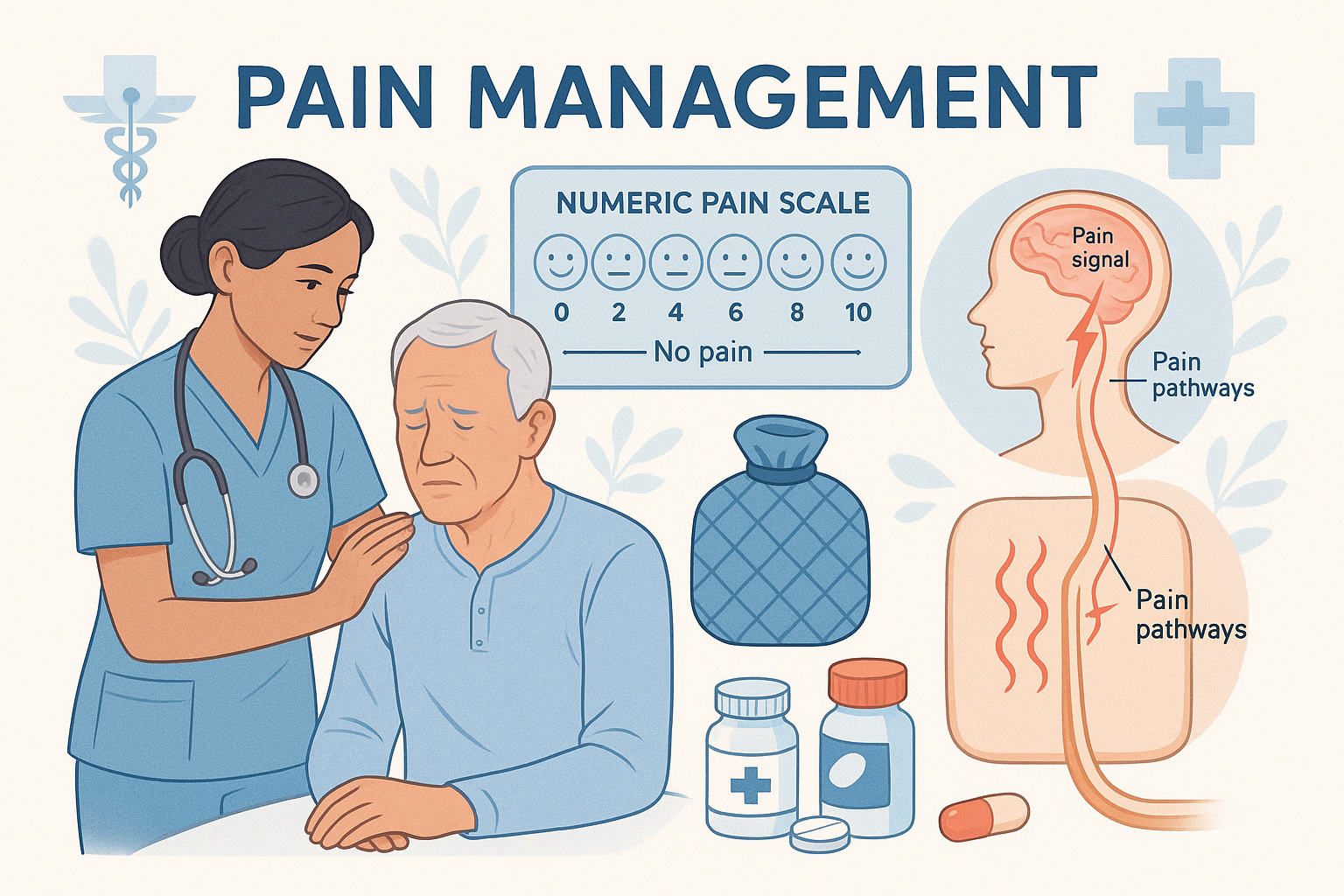
Table of Contents
1. Definition and Overview
Pain management is a multidisciplinary approach to reducing and controlling pain experienced by patients. It encompasses the assessment, diagnosis, and treatment of various types of pain using both pharmacological and non-pharmacological interventions. The goal is to improve quality of life, restore function, and minimize suffering while considering individual patient needs, preferences, and safety.
Key Concept
Pain is considered the “fifth vital sign” and should be assessed and documented with the same frequency and importance as temperature, pulse, respiration, and blood pressure.
Mnemonic: PAIN Assessment
- P – Provocation/Palliation (What makes it better/worse?)
- A – Associated symptoms
- I – Intensity (0-10 scale)
- N – Nature/Quality (sharp, dull, burning, etc.)
2. Pathophysiology of Pain
Pain Pathway Process
Pain Transmission Pathway
Nursing Implementation: Understanding Pathophysiology
- • Educate patients about how pain signals work to improve compliance with treatment
- • Use this knowledge to explain why certain interventions work at different stages
- • Recognize that pain perception is highly individual and influenced by psychological factors
- • Understand that chronic pain may involve changes in the nervous system (neuroplasticity)
3. Types of Pain
By Duration
Acute Pain
Duration: < 3-6 months
Purpose: Protective mechanism
Examples: Post-surgical, trauma, burns
Chronic Pain
Duration: > 3-6 months
Purpose: Often no protective value
Examples: Arthritis, fibromyalgia, neuropathy
By Mechanism
Nociceptive Pain
Source: Tissue damage/inflammation
Quality: Aching, throbbing, sharp
Neuropathic Pain
Source: Nerve damage/dysfunction
Quality: Burning, shooting, tingling
Mixed Pain
Source: Both mechanisms
Example: Lower back pain, cancer pain
Mnemonic: SOCRATES for Pain Assessment
S – Site (Where is the pain?)
O – Onset (When did it start?)
C – Character (What does it feel like?)
R – Radiation (Does it spread?)
A – Associated symptoms
T – Time pattern (Constant/intermittent?)
E – Exacerbating/Relieving factors
S – Severity (0-10 scale)
4. Pain Assessment
Pain Assessment Tools
Numeric Rating Scale (NRS) 0-10
No Pain
Mild
Moderate
Severe
Subjective Assessment
- • Patient’s self-report (gold standard)
- • Location and radiation
- • Quality and character
- • Intensity and severity
- • Timing and duration
- • Aggravating and relieving factors
- • Impact on daily activities
- • Previous pain experiences
Objective Assessment
- • Vital signs changes
- • Facial expressions
- • Body positioning and movement
- • Guarding or protective behaviors
- • Muscle tension
- • Sleep disturbances
- • Appetite changes
- • Social withdrawal
Assessment Principles
Pain is subjective and individual. The patient’s self-report is the most reliable indicator of pain existence and intensity. Believe the patient’s report unless there are clear contraindications.
Nursing Implementation: Pain Assessment
- • Assess pain regularly using standardized tools appropriate for patient population
- • Document location using body diagrams when possible
- • Use appropriate assessment tools for special populations (pediatric, cognitively impaired)
- • Reassess pain after interventions (30 minutes for IV, 60 minutes for PO medications)
- • Consider cultural factors that may influence pain expression
- • Assess pain at rest and with movement/activity
5. Pharmacological Management
WHO Analgesic Ladder
Step 3: Severe Pain (7-10)
Opioids + Non-opioids + Adjuvants
Morphine, Fentanyl, Oxycodone + NSAIDs + Anticonvulsants
Step 2: Moderate Pain (4-6)
Weak Opioids + Non-opioids
Codeine, Tramadol + Acetaminophen, NSAIDs
Step 1: Mild Pain (1-3)
Non-opioid Analgesics
Acetaminophen, NSAIDs, Topical agents
Non-Opioid Analgesics
Acetaminophen
Max: 3000mg/day (adults)
Monitor: Liver function
NSAIDs
Examples: Ibuprofen, Naproxen
Monitor: GI, Renal, CV effects
Opioid Analgesics
Morphine (Gold Standard)
Onset: 15-30 min PO, 5 min IV
Duration: 3-4 hours
Fentanyl
100x more potent than morphine
Rapid onset, short duration
Adjuvant Medications
Anticonvulsants
Gabapentin, Pregabalin
For: Neuropathic pain
Antidepressants
Amitriptyline, Duloxetine
For: Chronic pain, neuropathy
Mnemonic: OPIOID Side Effects
O – Oversedation
P – Pruritis (itching)
I – Ileus (constipation)
O – Orthostatic hypotension
I – Inadequate ventilation
D – Dependence/tolerance
Nursing Implementation: Pharmacological Management
- • Always assess pain before and after medication administration
- • Monitor for side effects, especially respiratory depression with opioids
- • Educate patients about proper medication use and potential side effects
- • Implement preventive measures for opioid-induced constipation
- • Use multimodal approach combining different classes of medications
- • Consider patient-controlled analgesia (PCA) for appropriate candidates
- • Monitor for signs of tolerance, dependence, or addiction
- • Ensure proper disposal of unused opioid medications
6. Non-Pharmacological Interventions
Physical Interventions
Heat and Cold Therapy
Heat: Muscle spasms, chronic pain
Cold: Acute inflammation, swelling
TENS Unit
Gate control theory application
Effective for chronic pain conditions
Positioning and Mobility
Proper alignment, frequent turning
Early mobilization when appropriate
Massage and Acupuncture
Promotes relaxation and circulation
Evidence-based complementary therapies
Cognitive-Behavioral Interventions
Distraction Techniques
Music, TV, conversation, games
Redirects attention from pain
Relaxation Techniques
Deep breathing, progressive muscle relaxation
Reduces muscle tension and anxiety
Guided Imagery
Visualization of peaceful scenes
Promotes mental escape from pain
Education and Counseling
Pain understanding, coping strategies
Addresses fear and anxiety about pain
Mnemonic: COMFORTS for Non-Pharmacological Pain Relief
C – Calm environment
O – Optimize positioning
M – Massage and touch
F – Fresh air and temperature control
O – Offer distraction
R – Relaxation techniques
T – Temperature therapy (hot/cold)
S – Support and reassurance
Nursing Implementation: Non-Pharmacological Interventions
- • Assess patient preferences and previous experiences with non-drug therapies
- • Use non-pharmacological methods as adjuncts, not replacements for appropriate medications
- • Ensure patient safety when applying heat or cold therapy (check skin integrity)
- • Create a calm, supportive environment to enhance effectiveness
- • Teach patients and families how to perform simple techniques independently
- • Collaborate with physical therapy, occupational therapy, and other disciplines
- • Document effectiveness of interventions and patient responses
7. Special Populations
Pediatric Patients
Assessment Tools
- • FLACC Scale (0-5 years)
- • Wong-Baker FACES (3+ years)
- • Numerical Rating (8+ years)
Special Considerations
- • Age-appropriate explanations
- • Parental involvement
- • Weight-based dosing
- • Developmental stage impact
Elderly Patients
Physiological Changes
- • Decreased kidney/liver function
- • Altered drug metabolism
- • Increased sensitivity to medications
- • Multiple comorbidities
Management Principles
- • “Start low, go slow”
- • Avoid high-risk medications
- • Monitor for drug interactions
- • Consider functional impact
Cognitively Impaired
Assessment Tools
- • PAINAD Scale
- • Abbey Pain Scale
- • Behavioral indicators
- • Family input
Behavioral Signs
- • Agitation or restlessness
- • Changes in vocalization
- • Facial expressions
- • Body language changes
Universal Principles for Special Populations
Regardless of population, pain assessment and management should be individualized, culturally sensitive, and based on the best available evidence. Always consider the patient’s ability to communicate and their unique physiological and psychological needs.
8. Comprehensive Nursing Implementation
Nursing Process Application
Assessment
- • Comprehensive pain history
- • Use appropriate assessment tools
- • Consider cultural factors
- • Assess impact on ADLs
- • Evaluate previous treatments
- • Monitor for complications
Planning
- • Set realistic pain goals with patient
- • Develop individualized care plan
- • Include multimodal approaches
- • Plan for breakthrough pain
- • Consider patient preferences
- • Involve interdisciplinary team
Implementation
- • Administer medications as ordered
- • Implement non-pharmacological interventions
- • Provide patient education
- • Monitor for side effects
- • Ensure patient safety
- • Advocate for patients
Evaluation
- • Reassess pain levels regularly
- • Evaluate intervention effectiveness
- • Monitor functional improvement
- • Assess patient satisfaction
- • Adjust plan as needed
- • Document outcomes
Mnemonic: NURSE Approach to Pain Management
- N – Notice and assess pain regularly
- U – Understand patient’s experience and preferences
- R – Respond with appropriate interventions
- S – Support patient and family
- E – Evaluate effectiveness and adjust care
Clinical Implementation Scenarios
Scenario 1: Post-Operative Pain
Nursing Actions:
- • Pre-emptive pain management education
- • Regular pain assessments (q4h minimum)
- • PCA setup and monitoring
- • Ice application to surgical site
- • Position for comfort
Expected Outcomes:
- • Pain level ≤ 3/10 at rest
- • Pain ≤ 5/10 with movement
- • Early mobilization achieved
- • No opioid-related complications
- • Patient satisfaction with pain control
Scenario 2: Chronic Pain Management
Nursing Actions:
- • Comprehensive pain history and assessment
- • Medication adherence monitoring
- • Non-pharmacological technique teaching
- • Functional assessment and goals
- • Psychological support and referrals
Expected Outcomes:
- • Improved functional status
- • Better sleep quality
- • Enhanced mood and coping
- • Reduced healthcare utilization
- • Patient empowerment in self-care
9. Complications and Considerations
Medication-Related Complications
Respiratory Depression
Signs: RR <12, shallow breathing, decreased oxygen saturation
Risk factors: High opioid doses, elderly, sleep apnea, concurrent CNS depressants
Management: Naloxone (Narcan), respiratory support, dose adjustment
Opioid-Induced Constipation
Prevention: Prophylactic bowel regimen, adequate hydration
Treatment: Stimulant laxatives, stool softeners, methylnaltrexone for severe cases
Tolerance and Dependence
Tolerance: Decreased analgesic effect over time, requiring dose increases
Physical dependence: Withdrawal symptoms if medication stopped abruptly
Management: Rotate opioids, add adjuvants, taper gradually if discontinuing
System-Related Considerations
Undertreatment of Pain
Causes: Opiophobia, inadequate assessment, cultural biases
Consequences: Prolonged suffering, delayed recovery, chronic pain development
Solutions: Education, standardized protocols, pain champions
Cultural and Ethical Considerations
Cultural variations: Pain expression, treatment preferences, family involvement
Ethical principles: Beneficence, non-maleficence, autonomy, justice
Approach: Cultural competence, respect for beliefs, individualized care
Legal and Regulatory Issues
Controlled substances: Proper prescribing, storage, disposal
Documentation: Thorough assessment records, intervention outcomes
Patient rights: Right to pain management, informed consent
Safety Alert: Red Flags in Pain Management
- • Respiratory rate < 12 breaths/minute
- • Excessive sedation (difficult to arouse)
- • Sudden change in pain pattern
- • Signs of drug-seeking behavior
- • Allergic reactions to medications
- • Signs of withdrawal syndrome
- • Persistent severe pain despite treatment
- • New neurological symptoms
10. Documentation and Evaluation
Documentation Requirements
Essential Documentation Elements
Initial Assessment
- • Pain intensity, location, quality
- • Onset, duration, aggravating factors
- • Previous pain experiences and treatments
- • Functional impact assessment
- • Patient goals and preferences
Ongoing Documentation
- • Regular pain scores and reassessments
- • Interventions provided and timing
- • Patient response to interventions
- • Side effects and adverse reactions
- • Changes in pain management plan
Quality Indicators
Process Measures
- • Percentage of patients screened for pain
- • Time from assessment to intervention
- • Use of appropriate assessment tools
- • Staff compliance with protocols
Outcome Measures
- • Patient satisfaction with pain management
- • Functional improvement scores
- • Length of stay reduction
- • Complication rates
Mnemonic: RECORD for Pain Documentation
- R – Record pain scores before and after interventions
- E – Evaluate and document intervention effectiveness
- C – Chart patient’s subjective reports accurately
- O – Observe and note objective signs of pain/relief
- R – Report significant changes or concerns
- D – Document patient education provided
Pain Management Evaluation Cycle
Final Nursing Implementation Summary
Effective pain management requires a comprehensive, patient-centered approach that combines evidence-based assessment, multimodal interventions, and continuous evaluation. Key implementation strategies include:
- • Regular, systematic pain assessment using validated tools
- • Prompt intervention with appropriate pharmacological and non-pharmacological measures
- • Patient and family education about pain and its management
- • Collaborative care with interdisciplinary team members
- • Thorough documentation of all pain-related care
- • Continuous quality improvement initiatives
- • Cultural sensitivity and individualized care approaches
- • Advocacy for patients’ right to effective pain management
Key Learning Outcomes
Upon completion of this comprehensive pain management guide, nursing students should be able to:
- • Conduct thorough pain assessments using appropriate tools and techniques
- • Implement evidence-based pharmacological and non-pharmacological pain management interventions
- • Recognize and manage common complications associated with pain treatments
- • Provide culturally sensitive care to diverse patient populations
- • Document pain management activities accurately and comprehensively
- • Evaluate the effectiveness of pain management interventions and modify care plans accordingly
Conclusion
Pain management is a fundamental nursing responsibility that requires knowledge, skill, compassion, and commitment to patient-centered care. By implementing evidence-based practices, maintaining therapeutic relationships, and advocating for patients’ needs, nurses play a crucial role in minimizing suffering and promoting healing. Remember that effective pain management is not just about eliminating pain, but about helping patients achieve their functional goals and maintain their dignity and quality of life.