
Surgical Scrubbing Procedures
Gowning, Masking & Gloving for Nursing Practice
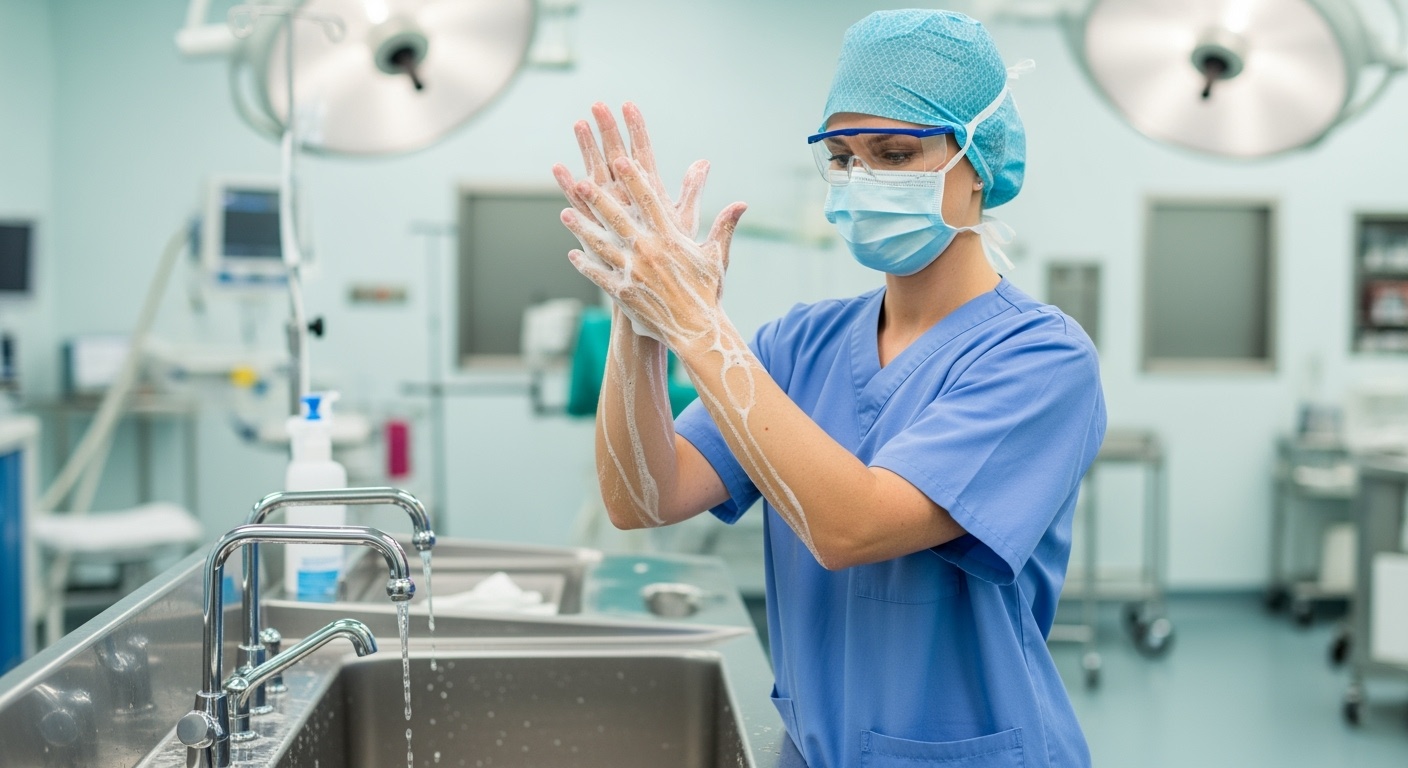
Professional demonstration of surgical scrubbing technique in sterile environment
Table of Contents
Introduction to Surgical Scrubbing
Surgical scrubbing, gowning, masking, and gloving represent the cornerstone of infection control in perioperative environments. These procedures create and maintain a sterile barrier between healthcare providers and the surgical field, dramatically reducing the risk of surgical site infections (SSIs) and ensuring optimal patient outcomes.
The significance of proper sterile technique cannot be overstated in modern healthcare. According to the Centers for Disease Control and Prevention (CDC), surgical site infections affect approximately 2-5% of patients undergoing surgery, leading to increased morbidity, mortality, and healthcare costs. Proper implementation of scrubbing procedures can reduce this risk by up to 80%.
Key Learning Objectives
- Master the step-by-step procedures for surgical hand scrubbing
- Understand proper masking, gowning, and gloving techniques
- Recognize and prevent sterility breaches
- Apply evidence-based practices in clinical settings
- Implement quality assurance measures
Fundamental Principles
Sterile vs. Clean
Sterile: Complete absence of all microorganisms and spores
Clean: Reduced number of microorganisms but not necessarily sterile
Contamination Sources
- Airborne particles and droplets
- Direct contact with non-sterile surfaces
- Breaks in sterile technique
- Personnel movement and talking
Mnemonic: STERILE Principles
S – Scrub hands thoroughly
T – Time limits must be observed
E – Environment must be controlled
R – Reach only sterile areas
I – Inspect all equipment
L – Level surfaces for sterile items
E – Everyone follows protocols
Microbiology Foundation
Understanding the microbial environment is crucial for effective sterile technique. The human skin harbors both resident and transient flora. Resident flora includes Staphylococcus epidermidis and Corynebacterium species, which are deeply embedded in skin layers. Transient flora, including potentially pathogenic organisms like Staphylococcus aureus and gram-negative bacteria, can be effectively removed through proper scrubbing techniques.
Pre-Scrubbing Preparation
Critical Pre-Scrub Checklist
Failure to complete any of these steps may compromise sterility
Personal Preparation
- Remove all jewelry
- Trim nails short
- Secure hair completely
- Check for cuts/breaks
- Don surgical attire
Equipment Check
- Scrub sink function
- Antimicrobial soap
- Sterile towels available
- Gown/glove packages
- Timer functionality
Environment
- Positive air pressure
- Temperature 68-75°F
- Humidity 30-60%
- Minimal traffic
- Clean surfaces
Personal Protective Equipment (PPE) Sequence
Surgical Hand Scrubbing
Traditional Scrub Method
Duration: 5-10 minutes
Agent: Antimicrobial soap
Technique: Anatomical timed method
Alcohol-Based Rub
Duration: 2-3 minutes
Agent: 70-90% alcohol with emollients
Technique: Manufacturer’s instructions
Step-by-Step Traditional Scrub Procedure
Initial Rinse and Inspection
Turn on water using knee/foot/sensor controls. Wet hands and forearms up to 2 inches above the elbow. Inspect hands and forearms for cuts, scratches, or breaks in skin integrity.
Apply Antimicrobial Agent
Dispense appropriate amount of antimicrobial soap (usually 5-10 mL). Begin with fingernails using nail brush or disposable nail pick for 30 seconds each hand.
Anatomical Scrubbing Sequence
Scrub each anatomical area for prescribed time using circular motions:
Fingers: 30 seconds each (10 total)
Palm: 30 seconds each
Back of hand: 30 seconds each
Wrist: 30 seconds each
Forearm: 1 minute each
Above elbow: 30 seconds each
Final Rinse
Rinse thoroughly from fingertips to elbows, allowing water to run off at the elbows. Keep hands higher than elbows at all times to prevent recontamination.
Evidence-Based Practice
Recent studies show that alcohol-based hand rubs achieve superior microbial reduction compared to traditional scrubbing, with 99.9% reduction in bacterial counts versus 90-95% with soap and water. However, visible soiling requires pre-cleaning with soap and water.
Masking Procedures
Mask Types and Applications
Standard Surgical Mask
Fluid-resistant, filters particles ≥3 microns
Use: Standard procedures
High-Filtration Mask
Filters particles ≥0.1 microns
Use: Implant procedures
N95 Respirator
Filters 95% of particles ≥0.3 microns
Use: Airborne precautions
Proper Masking Technique
Common Masking Errors
- • Touching mask front during wear
- • Leaving nose exposed
- • Reusing single-use masks
- • Improper removal technique
- • Wearing mask below chin when “not in use”
Sterile Gowning
Self-Gowning Procedure
Used when gowning independently after scrubbing
- • Pick up gown by inside neckline
- • Allow gown to unfold away from body
- • Insert arms simultaneously
- • Have circulator tie back ties
Assisted Gowning
Used when helping another sterile person gown
- • Hold gown at shoulder seams
- • Allow sleeves to remain turned
- • Guide arms into sleeves
- • Assist with back tie closure
Detailed Self-Gowning Steps
1. Gown Selection and Inspection
Select appropriate gown size from sterile package. Inspect package for damage, moisture, or expiration date. Check gown for holes or contamination before proceeding.
2. Sterile Technique for Gown Handling
Lift gown by inside neckline only, keeping gown away from unsterile surfaces. Allow gown to unfold completely before insertion of arms. Never shake or flap the gown.
3. Arm Insertion Technique
Insert both arms simultaneously into sleeves, keeping hands inside cuffs until gloves are donned. Arms should slide easily through sleeves without forcing.
4. Back Tie Assistance
Have unsterile circulator secure back ties and waist ties without contaminating gown front or sleeves. Circulator should approach from behind and avoid reaching around the sterile person.
Gown Quality Indicators
Proper Fit:
- Covers scrub attire completely
- Sleeves cover to mid-palm
- Length reaches mid-calf
Sterile Coverage:
- Front from chest to knees
- Sleeves to 2 inches above elbow
- Back covered by ties
Sterile Gloving Techniques
Closed Gloving
Used after gowning when hands remain in sleeves
Most Common Method
Open Gloving
Used when gowning not required or for glove changes
Higher Risk Method
Assisted Gloving
Used when helping another person glove
Team Technique
Closed Gloving Technique (Step-by-Step)
Glove Package Opening
Open inner glove package on sterile field, ensuring gloves are positioned with cuffs toward you. Keep hands inside gown sleeves throughout the process.
First Glove Application
Pick up right glove with left hand (still in sleeve), grasping glove at the cuff fold. Place glove palm-down over right gown cuff, with glove fingers pointing toward elbow.
Cuff Manipulation
Grasp both gown sleeve and glove cuff together with left hand. Work glove onto right hand by pushing through gown sleeve cuff. Pull glove cuff over gown cuff once hand is seated.
Second Glove Application
With gloved right hand, pick up left glove by sliding fingers under the cuff fold. Repeat the process for left hand, ensuring proper sterile technique throughout.
Final Adjustments
Adjust both gloves for proper fit using only sterile glove-to-glove contact. Ensure no air pockets exist and that gloves cover gown cuffs completely.
Open Gloving Technique
When to Use: Procedures not requiring gowns, glove changes during procedures, or when closed gloving is not possible.
First Glove Steps:
1. Pick up first glove by cuff fold with non-dominant hand
2. Insert dominant hand, avoiding contact with outside
3. Pull glove on completely before second glove
Second Glove Steps:
1. Slide gloved fingers under cuff of second glove
2. Lift glove away from table surface
3. Insert hand and adjust both gloves
Maintaining Sterility
Sterile Consciousness Principle
“The sterile person must be constantly aware of what is sterile, what is not sterile, and what may have become contaminated.”
Sterile Field Boundaries
Sterile Areas
- Gown front: chest to waist level
- Sleeves: 2 inches above elbow to cuff
- Gloved hands and arms
- Sterile table surfaces
- Sterile drapes and instruments
Non-Sterile Areas
- Gown back and sides
- Below waist level
- Above shoulder level
- Table edges and undersides
- Any dropped items
Movement and Positioning Guidelines
Sterile Person Movement
Acceptable Actions:
- • Face sterile areas when moving
- • Keep hands in sight and above waist
- • Move slowly and deliberately
- • Pass back-to-back with other sterile persons
Prohibited Actions:
- • Turning back to sterile field
- • Reaching across non-sterile areas
- • Quick or jerky movements
- • Passing face-to-face with others
Memory Aid: STERILE Movement Rules
S – Stay within sterile field boundaries
T – Turn to face sterile areas always
E – Elevate hands above waist level
R – Respect the one-foot sterile border
I – Inspect continuously for breaks
L – Limit movements to essential only
E – Execute movements slowly and deliberately
Common Mistakes & Solutions
Frequent Errors
Contamination During Scrubbing
Touching non-sterile surfaces with scrubbed hands
Prevention: Maintain awareness of clean/dirty boundaries at all times
Mask Displacement
Mask slipping below nose during procedures
Prevention: Proper initial fitting and avoiding facial movements
Gown Contamination
Touching non-sterile surfaces with gown front
Prevention: Maintain minimum 12-inch distance from non-sterile surfaces
Glove Tears or Punctures
Sharp instruments or excessive stretching
Prevention: Double gloving for high-risk procedures, gentle handling
Immediate Solutions
Suspected Contamination
When sterility is questionable
Action: Consider contaminated, re-scrub, re-gown, re-glove immediately
Glove Integrity Compromise
Visible tears or punctures discovered
Action: Change gloves immediately using proper technique
Sterile Field Breach
Non-sterile item touches sterile field
Action: Remove contaminated items, re-establish sterile barrier
Time Limit Exceeded
Lengthy procedures exceeding glove integrity time
Action: Change gloves every 90-120 minutes or per policy
Zero Tolerance Policy
Any doubt about sterility requires immediate corrective action. The principle “when in doubt, throw it out” applies to all sterile technique situations. Patient safety always takes precedence over time or cost considerations.
Nursing Implementation
Operating Room
- • All invasive procedures
- • Implant surgeries
- • Major surgical interventions
- • Emergency procedures
ICU/Critical Care
- • Central line insertions
- • Arterial line placement
- • Chest tube insertions
- • Wound care procedures
General Units
- • Urinary catheter insertion
- • Dressing changes
- • IV insertion procedures
- • Injection preparations
Nursing Roles and Responsibilities
Scrub Nurse Responsibilities
Pre-Procedure:
- • Verify patient identity and procedure
- • Gather and inspect all sterile supplies
- • Prepare and organize sterile field
- • Perform surgical scrub procedure
- • Don sterile gown and gloves
Intra-Procedure:
- • Maintain sterile field integrity
- • Anticipate instrument needs
- • Count sponges and instruments
- • Monitor for contamination
- • Communicate sterility concerns
Circulating Nurse Responsibilities
Environmental Management:
- • Monitor room temperature and humidity
- • Control traffic in and out of OR
- • Ensure proper air flow systems
- • Maintain clean environment
Sterile Support:
- • Open sterile supplies properly
- • Assist with gowning and gloving
- • Monitor sterile technique compliance
- • Provide non-sterile assistance
Clinical Decision Making
Scenario-Based Applications
Scenario 1: Glove Puncture During Procedure
Action: Immediately notify team, have circulator assist with glove change, continue with procedure using proper re-gloving technique.
Scenario 2: Suspected Gown Contamination
Action: Step away from sterile field, have circulator assess, re-gown if contamination confirmed, document incident.
Scenario 3: Emergency Procedure Setup
Action: Prioritize critical items first, use abbreviated but complete sterile technique, ensure team communication about any modifications.
Competency Development
Nursing competency in sterile technique requires ongoing education, practice, and evaluation. Regular competency assessments should include:
- • Demonstration of proper scrubbing technique
- • Sterile gowning and gloving proficiency
- • Recognition of contamination events
- • Appropriate corrective actions
- • Teaching and mentoring abilities
Quality Assurance
Monitoring Indicators
- Surgical site infection rates
- Sterile technique compliance scores
- Contamination event frequencies
- Staff competency assessment results
- Patient satisfaction scores
Improvement Strategies
- Regular training and updates
- Peer observation programs
- Technology integration
- Evidence-based protocol updates
- Multidisciplinary team reviews
Documentation Requirements
Required Documentation Elements
Pre-Procedure:
- • Scrub duration and method
- • Personnel involved
- • Equipment verification
- • Environmental conditions
Intra-Procedure:
- • Sterility maintenance
- • Any breaches or concerns
- • Corrective actions taken
- • Glove changes performed
Post-Procedure:
- • Final counts verification
- • Equipment integrity
- • Incident reports if needed
- • Patient outcomes
Best Practice Standards
Gold Standard Outcomes:
- • SSI rate <1% for clean procedures
- • 100% compliance with hand hygiene
- • Zero preventable contamination events
- • 95% staff competency achievement
Continuous Improvement:
- • Monthly quality reviews
- • Quarterly competency assessments
- • Annual protocol updates
- • Real-time feedback systems
Complications & Management
High-Risk Scenarios
These situations require immediate recognition and intervention to prevent patient harm
Surgical Site Infections (SSI)
Risk Factors:
- • Inadequate skin preparation
- • Prolonged procedure duration
- • Contamination events
- • Poor wound closure technique
- • Patient comorbidities
Prevention Strategies:
- • Strict sterile technique adherence
- • Appropriate antibiotic prophylaxis
- • Optimal surgical environment
- • Proper wound care protocols
- • Patient optimization pre-op
Allergic Reactions
Common Allergens:
- • Latex in gloves
- • Antimicrobial agents
- • Chlorhexidine solutions
- • Iodine-based products
- • Powder in gloves
Management:
- • Immediate removal of allergen
- • Patient assessment and monitoring
- • Alternative product selection
- • Documentation and reporting
- • Future prevention planning
Equipment Failures
Common Issues: Glove tears, gown breaches, mask displacement, scrub sink malfunctions
Response Protocol: Immediate cessation of activity, assessment of contamination risk, appropriate corrective measures, incident documentation
Prevention: Regular equipment inspection, proper storage conditions, staff training on equipment limitations
Emergency Response: REACT Protocol
R – Recognize the problem immediately
E – Evaluate the extent of contamination
A – Act to prevent further compromise
C – Communicate with team members
T – Take corrective measures promptly
Additional Resources
Professional Organizations
Association of periOperative Registered Nurses (AORN)
Guidelines for perioperative practice and sterile technique standards
Centers for Disease Control and Prevention (CDC)
Infection prevention guidelines and surveillance data
The Joint Commission
Patient safety standards and accreditation requirements
Educational Materials
Surgical Technology Textbooks
Comprehensive coverage of sterile technique principles
Online Learning Modules
Interactive training programs and competency assessments
Simulation Laboratory Practice
Hands-on training in controlled environments
Continuing Education Recommendations
Annual Requirements:
- • Sterile technique competency
- • Infection control updates
- • New technology training
Specialty Certifications:
- • CNOR certification
- • CIC certification
- • Specialty practice areas
Quality Improvement:
- • Root cause analysis
- • Evidence-based practice
- • Leadership development
Summary & Key Takeaways
Essential Competencies
- Master proper hand scrubbing techniques
- Demonstrate sterile gowning and gloving
- Maintain sterile field integrity
- Recognize and respond to contamination
- Apply evidence-based practices
Patient Safety Impact
- Reduce surgical site infection risk by 80%
- Improve patient outcomes and satisfaction
- Decrease healthcare-associated costs
- Support professional nursing standards
- Enhance multidisciplinary team performance
Excellence in sterile technique is not just a skill—it’s a commitment to patient safety and professional integrity