
Fire Safety for Nursing Students
Complete Guide to Protection and Prevention in Healthcare Settings
Table of Contents
Introduction to Fire Safety in Healthcare
Fire safety represents one of the most critical aspects of healthcare facility management and nursing practice. As healthcare professionals, nurses must possess comprehensive knowledge of fire safety protocols, equipment, and emergency procedures to protect patients, staff, and visitors. This guide provides essential fire safety information specifically tailored for nursing students and healthcare professionals working in medical environments.
Critical Statistics
- • Healthcare facilities experience over 5,000 fires annually in the United States
- • Fire-related incidents cause approximately $165 million in property damage yearly
- • 85% of healthcare fires are preventable through proper fire safety measures
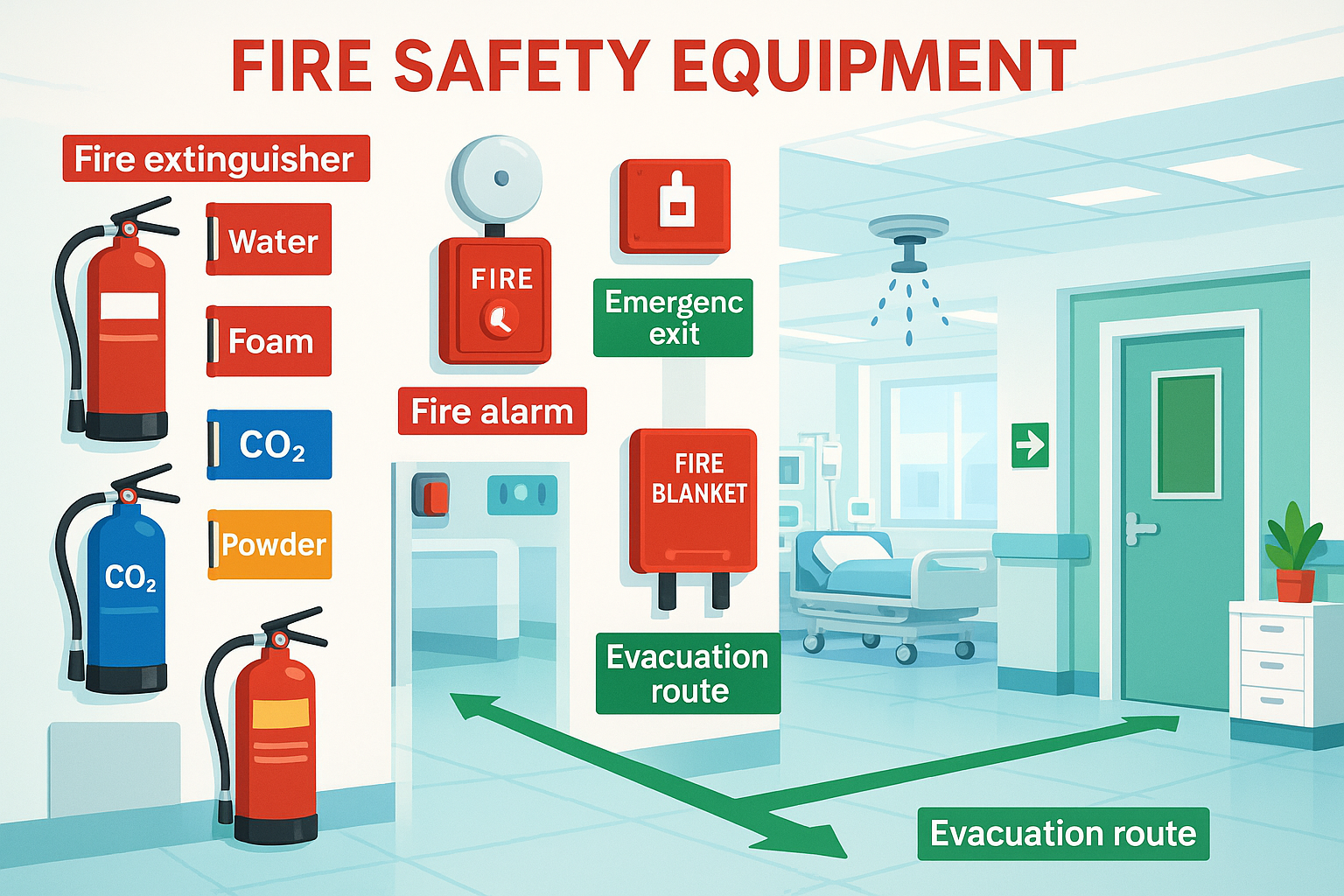
Comprehensive fire safety equipment layout in healthcare settings
Fire Types and Classification
Understanding fire classification is fundamental to fire safety management. Fires are categorized based on the type of fuel involved, which determines the appropriate suppression method and firefighting equipment required.
Remember Fire Classes with: “Always Be Careful During Kitchen”
Class A: Ordinary Combustibles
Solid materials that burn and leave ash
Materials:
- • Wood and paper
- • Textiles and fabrics
- • Plastic materials
- • Rubber products
Healthcare Examples:
- • Patient charts and documents
- • Bed linens and curtains
- • Furniture and equipment
- • Medical packaging
Suppression Methods:
- • Water-based extinguishers
- • Foam systems
- • Dry chemical agents
- • Sprinkler systems
Class B: Flammable Liquids
Liquids that boil and vaporize
Materials:
- • Gasoline and diesel
- • Alcohol and solvents
- • Oil-based products
- • Paint and varnishes
Healthcare Examples:
- • Medical alcohol and antiseptics
- • Laboratory chemicals
- • Petroleum-based medications
- • Cleaning solvents
Suppression Methods:
- • Foam extinguishers
- • CO2 systems
- • Dry chemical agents
- • Never use water directly
Class C: Electrical Fires
Energized electrical equipment
Sources:
- • Electrical panels and wiring
- • Motors and transformers
- • Electronic equipment
- • Power distribution systems
Healthcare Examples:
- • Medical devices and monitors
- • X-ray and imaging equipment
- • Computer systems
- • Life support equipment
Suppression Methods:
- • CO2 extinguishers
- • Dry chemical agents
- • Disconnect power first
- • Never use water on live circuits
Class D: Combustible Metals
Reactive metals that burn at high temperatures
Materials:
- • Magnesium and titanium
- • Sodium and potassium
- • Aluminum powder
- • Lithium and zinc
Healthcare Examples:
- • Medical implants (rare)
- • Laboratory materials
- • Equipment components
- • Research materials
Suppression Methods:
- • Specialized dry powder
- • Sand or graphite
- • Metal-specific agents
- • Never use water or CO2
Class K: Cooking Oils and Fats
High-temperature cooking media
Materials:
- • Vegetable oils
- • Animal fats
- • Cooking grease
- • Deep fryer oils
Healthcare Examples:
- • Hospital kitchen facilities
- • Cafeteria cooking areas
- • Staff break room equipment
- • Food service operations
Suppression Methods:
- • Wet chemical systems
- • Class K extinguishers
- • Automatic suppression
- • Never use water on hot oil
The Fire Triangle Concept
Fire safety professionals use the fire triangle to understand and prevent fires. All three elements must be present for a fire to occur:
FUEL
Any combustible material
OXYGEN
Usually from ambient air
HEAT
Ignition source or energy
Fire Safety Principle: Remove any one element of the fire triangle to extinguish or prevent fire. This principle guides all fire safety strategies and suppression methods.
Fire Alarm Systems
Fire alarm systems serve as the first line of defense in fire safety, providing early detection and warning capabilities crucial for protecting lives and property in healthcare facilities. Understanding different alarm system components and their functions is essential for nursing professionals.
Fire Detection Methods
Smoke Detection
Detects visible and invisible smoke particles
- • Ionization detectors
- • Photoelectric sensors
- • Dual sensor technology
Heat Detection
Responds to temperature changes
- • Fixed temperature
- • Rate-of-rise sensors
- • Combination detectors
Flame Detection
Optical sensors for flame recognition
- • Ultraviolet sensors
- • Infrared detectors
- • Multi-spectrum analysis
Gas Detection
Monitors combustible gases
- • Carbon monoxide
- • Combustible vapors
- • Toxic gas monitoring
Fire Alarm System Components
Fire Alarm Control Panel (FACP)
The central hub that monitors all system components and coordinates emergency responses.
Functions:
- • Monitors detector status
- • Processes alarm signals
- • Controls notification devices
- • Manages system diagnostics
Healthcare Features:
- • Zone identification
- • Trouble signal monitoring
- • Remote monitoring capability
- • Battery backup systems
Manual Pull Stations
Manual activation devices that allow individuals to trigger the fire alarm system.
Placement Requirements:
- • Near exit doors
- • Along escape routes
- • Maximum 75 feet apart
- • 42-48 inches from floor
Operation Instructions:
- • Pull down firmly
- • Break glass if required
- • Follow posted instructions
- • Verify alarm activation
Notification Devices
Audible and visual devices that alert occupants to fire emergencies.
Audible Devices:
- • Horns and bells
- • Electronic sounders
- • Voice evacuation systems
- • Tone generators
Visual Devices:
- • Strobe lights
- • LED indicators
- • Message displays
- • Combination devices
Types of Fire Alarm Systems
Conventional Fire Alarm Systems
Characteristics:
- • Zone-based detection
- • Hardwired connections
- • Simple operation
- • Cost effective for smaller facilities
Healthcare Applications:
- • Small clinics
- • Outpatient facilities
- • Limited area coverage
- • Basic monitoring needs
Addressable Fire Alarm Systems
Advanced Features:
- • Individual device identification
- • Precise location reporting
- • Enhanced diagnostics
- • Remote programming capability
Healthcare Benefits:
- • Large hospital systems
- • Detailed emergency response
- • Reduced false alarms
- • Comprehensive monitoring
Wireless Fire Alarm Systems
Technology Advantages:
- • Reduced installation time
- • Flexible placement options
- • Minimal building disruption
- • Easy system expansion
Healthcare Considerations:
- • Historic building retrofits
- • Temporary facility protection
- • Areas with wiring challenges
- • Renovation projects
Fire Alarm Response Protocol: “RACE”
RESCUE
Remove patients from immediate danger
ALERT
Activate fire alarm system
CONFINE
Close doors to contain smoke and fire
EXTINGUISH
Attempt to extinguish if safe to do so
Firefighting Equipment
Proper knowledge and use of firefighting equipment is crucial for healthcare professionals. Understanding different types of suppression systems and their applications can mean the difference between a minor incident and a major catastrophe in medical facilities.
Fire Extinguisher Types and Applications
Water Extinguishers
Suitable for:
- • Class A fires only
- • Paper and cardboard
- • Wood and textiles
- • General combustibles
Operating Method:
- • Cooling effect
- • Removes heat element
- • Creates steam barrier
- • Penetrates materials
Limitations:
- • Never use on electrical fires
- • Ineffective on liquid fires
- • Can spread burning liquids
- • Freezing concerns
Foam Extinguishers
Suitable for:
- • Class A and B fires
- • Flammable liquids
- • Organic solvents
- • Hydrocarbon fuels
Operating Method:
- • Creates foam blanket
- • Excludes oxygen
- • Cooling effect
- • Prevents re-ignition
Healthcare Use:
- • Laboratory areas
- • Chemical storage
- • Maintenance areas
- • Loading docks
Carbon Dioxide (CO2) Extinguishers
Suitable for:
- • Class B and C fires
- • Electrical equipment
- • Sensitive electronics
- • Computer rooms
Operating Method:
- • Displaces oxygen
- • Leaves no residue
- • Non-conductive
- • Rapid dispersal
Safety Considerations:
- • Risk of asphyxiation
- • Ventilation required
- • Cold discharge
- • Avoid confined spaces
Dry Chemical Extinguishers
Types Available:
- • ABC multipurpose
- • BC specialty types
- • Purple K systems
- • Mono ammonium phosphate
Operating Method:
- • Chemical chain breaking
- • Flame suppression
- • Coating action
- • Multi-class capability
Cleanup Concerns:
- • Corrosive residue
- • Equipment damage risk
- • Thorough cleanup required
- • Professional restoration
Fire Extinguisher Operation: “PASS” Technique
PULL
Pull the safety pin to break the tamper seal
AIM
Aim at the base of the fire, not the flames
SQUEEZE
Squeeze the handle to discharge the agent
SWEEP
Sweep from side to side at the base of fire
Fixed Fire Suppression Systems
Automatic Sprinkler Systems
System Types:
- Wet Pipe: Water-filled pipes, immediate response
- Dry Pipe: Air-filled pipes, freeze protection
- Pre-action: Double interlock system
- Deluge: Open sprinklers, manual activation
Healthcare Applications:
- • Patient care areas
- • Storage and utility rooms
- • Administrative offices
- • Common areas and corridors
Clean Agent Suppression Systems
Agent Types:
- FM-200: Heptafluoropropane gas
- Novec 1230: Advanced clean agent
- Inergen: Inert gas mixture
- Argonite: Nitrogen and argon blend
Ideal Locations:
- • Data centers and server rooms
- • Medical equipment rooms
- • Pharmacy storage areas
- • Critical care units
Kitchen Fire Suppression Systems
System Features:
- • Wet chemical agents
- • Automatic detection and activation
- • Equipment shutdown integration
- • Fuel line shutoff capability
Coverage Areas:
- • Cooking surfaces and hoods
- • Exhaust systems and ducts
- • Deep fryers and grills
- • Food preparation equipment
| Equipment Type | Fire Classes | Healthcare Use | Maintenance |
|---|---|---|---|
| Water Extinguisher | Class A only | General areas, storage rooms | Annual inspection, freeze protection |
| CO2 Extinguisher | Class B, C | Electrical rooms, labs | Weight check, valve inspection |
| ABC Dry Chemical | Class A, B, C | Multi-purpose, common areas | Pressure gauge, agent condition |
| Foam Extinguisher | Class A, B | Chemical storage, maintenance | Foam solution replacement |
| Wet Chemical | Class K | Kitchen facilities | Solution level, nozzle cleaning |
Healthcare-Specific Fire Safety Considerations
Healthcare facilities present unique fire safety challenges due to the presence of vulnerable patients, complex medical equipment, and hazardous materials. Understanding these specific considerations is essential for maintaining comprehensive fire safety in medical environments.
Patient Safety Priorities
Non-Ambulatory Patients
- • Bedridden patients: Require assisted evacuation plans
- • Surgical patients: May need continuing procedures during evacuation
- • ICU patients: Dependent on life support equipment
- • Pediatric patients: Need additional assistance and comfort measures
Special Populations
- • Behavioral health patients: May resist evacuation efforts
- • Dementia patients: Confused and disoriented during emergencies
- • Hearing impaired: May not respond to audible alarms
- • Mobility impaired: Require accessible evacuation routes
Medical Equipment Fire Safety
High-Risk Equipment
Electrical Devices:
- • Defibrillators and monitors
- • X-ray and imaging equipment
- • Electrosurgical units
- • Laser surgical systems
Heat-Generating:
- • Incubators and warmers
- • Autoclaves and sterilizers
- • Laboratory ovens
- • Heating blankets
Oxygen-Related:
- • Ventilators and CPAP units
- • Oxygen concentrators
- • Hyperbaric chambers
- • Anesthesia machines
Oxygen-Enriched Environment Hazards
Critical Fire Safety Principle
Oxygen-enriched atmospheres significantly increase fire risk and combustion rates. Materials that are normally non-flammable may become ignitable, and fires burn much more intensely.
High-Risk Areas
- • Operating rooms during procedures
- • Intensive care units with ventilated patients
- • Hyperbaric oxygen therapy chambers
- • Recovery areas with oxygen therapy
- • Emergency departments with oxygen equipment
Safety Protocols
- • No smoking or open flames policy
- • Static electricity prevention measures
- • Specialized electrical equipment requirements
- • Enhanced ventilation systems
- • Regular oxygen leak detection
Hazardous Materials Management
Chemical Categories
Flammable
Alcohol, acetone, ether
Oxidizing
Hydrogen peroxide, nitrates
Radioactive
Medical isotopes, contrast agents
Toxic
Chemotherapy drugs, formaldehyde
Storage Requirements
Physical Safeguards:
- • Fire-rated storage cabinets
- • Segregated storage by compatibility
- • Temperature and humidity control
- • Spill containment systems
Fire Suppression:
- • Appropriate extinguishing agents
- • Automatic suppression systems
- • Enhanced detection systems
- • Emergency response protocols
Daily Fire Safety Checklist for Nurses
Patient Area Inspection:
- Clear escape routes and exits
- Proper medical equipment placement
- Fire door functionality
- Oxygen safety compliance
Equipment and Systems:
- Fire extinguisher accessibility
- Alarm system functionality
- Emergency lighting operation
- Sprinkler system clearance
Emergency Fire Safety Procedures
Effective emergency response procedures are the cornerstone of fire safety in healthcare settings. Every nursing professional must understand and be prepared to execute these life-saving protocols during fire emergencies.
RACE Protocol: Detailed Implementation
R – RESCUE
Remove patients from immediate danger first. Prioritize those closest to the fire or unable to move independently.
Priority Order:
- Patients in immediate fire area
- Non-ambulatory patients
- Patients on life support
- Ambulatory patients
- Visitors and staff
Evacuation Methods:
- • Bed evacuation for bedridden patients
- • Wheelchair transfer assistance
- • Carry techniques for non-ambulatory
- • Guided assistance for ambulatory
A – ALERT
Activate the fire alarm system and notify appropriate personnel immediately.
Activation Steps:
- Pull nearest manual fire alarm
- Call emergency services (911)
- Notify facility security
- Alert nursing supervisor
- Announce via communication system
Information to Provide:
- • Exact location of fire
- • Nature and size of fire
- • Number of patients affected
- • Any injuries or exposures
C – CONFINE
Contain the fire and smoke to prevent spread to other areas of the facility.
Containment Actions:
- Close all doors to fire area
- Close fire doors in corridors
- Turn off oxygen sources if safe
- Shut down ventilation systems
- Seal gaps under doors if possible
Safety Priorities:
- • Maintain safe escape routes
- • Protect non-fire areas
- • Prevent smoke infiltration
- • Preserve emergency access
E – EXTINGUISH
Attempt to extinguish the fire only if it is safe to do so and you have proper training.
Safety Conditions:
- • Fire is small and contained
- • Proper extinguisher available
- • Clear escape route behind you
- • No immediate danger to patients
- • You have received training
When NOT to Fight Fire:
- • Fire is larger than you
- • Smoke filling the room
- • No proper equipment available
- • Escape route compromised
- • Patients need immediate care
Healthcare Evacuation Procedures
Horizontal Evacuation (Preferred Method)
Move patients to another fire compartment on the same floor, away from the fire area.
Advantages:
- • Maintains same level of care
- • Less physically demanding
- • Preserves medical equipment connections
- • Reduces patient stress
Procedure:
- • Identify safe fire compartment
- • Move bed patients first
- • Assist ambulatory patients
- • Close fire doors behind
Equipment Needs:
- • Portable oxygen tanks
- • Battery-powered monitors
- • Emergency medications
- • Patient charts/identification
Vertical Evacuation (When Necessary)
Move patients to a different floor when horizontal evacuation is not possible or safe.
When Required:
- • Entire floor compromised
- • Fire spreading rapidly
- • Structural damage present
- • Emergency services direction
Special Considerations:
- • Use stairwells, never elevators
- • Carry techniques for patients
- • Coordinate with fire department
- • Plan for equipment transport
Resources Needed:
- • Additional staff assistance
- • Evacuation chairs/devices
- • Emergency communication
- • Temporary care supplies
Emergency Communication Protocols
Internal Communications
- • Code Red announcement: “Code Red, [Location], Code Red, [Location]”
- • All-clear signal: Wait for official all-clear announcement
- • Status updates: Regular progress reports to command center
- • Patient accountability: Maintain accurate patient location records
External Communications
- • 911 Emergency call: Provide exact location and situation details
- • Fire department liaison: Designate contact person for updates
- • Family notifications: Coordinate through administration
- • Media management: Refer all inquiries to designated spokesperson
Post-Emergency Recovery Procedures
Immediate Actions:
- • Patient safety assessment
- • Medical equipment functionality check
- • Air quality evaluation
- • Structural damage inspection
Documentation:
- • Incident report completion
- • Patient care continuity records
- • Equipment damage assessment
- • Staff exposure documentation
Recovery Planning:
- • Patient relocation planning
- • Service restoration timeline
- • Staff debriefing sessions
- • System improvement recommendations
Global Fire Safety Best Practices in Healthcare
Healthcare fire safety practices vary globally, but leading countries have developed innovative approaches and technologies that set benchmarks for international fire safety standards. Understanding these practices helps improve fire safety implementation worldwide.
International Fire Safety Standards
United States – NFPA Standards
- • NFPA 101: Life Safety Code for healthcare occupancies
- • NFPA 99: Health Care Facilities Code
- • NFPA 25: Water-based fire protection systems inspection
- • Joint Commission: Mandatory fire safety compliance
- • CMS Conditions: Medicare/Medicaid fire safety requirements
United Kingdom – NHS Guidelines
- • HTM 05-01: Managing healthcare fire safety
- • HTM 05-02: Firecode guidance
- • Care Quality Commission: Fire safety regulations
- • Building Regulations: Approved Document B
- • BS 5588: Fire precautions in buildings
Leading International Practices
Japan – Advanced Technology Integration
Innovative Technologies:
- • AI-powered fire detection systems
- • Automated patient evacuation beds
- • Smart building fire management
- • Robotic fire suppression assistance
Cultural Approaches:
- • Extensive staff training programs
- • Regular emergency drills
- • Community fire safety education
- • Preventive maintenance culture
Germany – Engineering Excellence
System Integration:
- • Integrated building management systems
- • Advanced smoke management
- • Pressure differential systems
- • Redundant safety systems
Regulatory Framework:
- • Strict compliance requirements
- • Regular inspection schedules
- • Professional certification systems
- • Continuous improvement mandates
Australia – Environmental Adaptation
Climate Considerations:
- • Bushfire-resistant construction
- • Water shortage contingency planning
- • Heat-resistant materials
- • Remote area communication systems
Rural Healthcare Solutions:
- • Mobile fire suppression units
- • Satellite communication systems
- • Community volunteer integration
- • Helicopter evacuation protocols
Singapore – Smart City Integration
Digital Integration:
- • IoT sensor networks
- • Real-time data analytics
- • Predictive maintenance systems
- • Mobile emergency response apps
Space Optimization:
- • Compact suppression systems
- • Multi-use emergency equipment
- • Vertical evacuation strategies
- • Efficient space utilization
Emerging Fire Safety Technologies
Artificial Intelligence
- • Predictive fire risk analysis
- • Pattern recognition in smoke/heat
- • Automated response optimization
- • False alarm reduction
Internet of Things
- • Connected sensor networks
- • Real-time monitoring systems
- • Remote system diagnostics
- • Integrated facility management
Advanced Materials
- • Fire-resistant nanomaterials
- • Self-extinguishing polymers
- • Smart fire barriers
- • Advanced suppression agents
Implementing Global Best Practices
Assessment Phase:
- • Current system evaluation
- • Risk assessment update
- • Technology gap analysis
- • Resource requirement planning
Implementation:
- • Phased upgrade approach
- • Staff training programs
- • System integration testing
- • Performance monitoring
Continuous Improvement:
- • Regular system updates
- • Feedback incorporation
- • Technology advancement adoption
- • International standard alignment
Mastering Fire Safety: Your Professional Commitment
Fire safety in healthcare settings is not just a regulatory requirement—it’s a fundamental aspect of patient care and professional responsibility. As nursing professionals, your understanding and implementation of fire safety principles directly impact the lives and wellbeing of those under your care.
The knowledge you’ve gained through this comprehensive guide equips you with the essential tools to prevent fire emergencies, respond effectively when they occur, and maintain the highest standards of fire safety in your healthcare environment.
Key Takeaways:
- Understanding fire classification saves lives and property
- Proper alarm system knowledge enables quick response
- Correct equipment use prevents small fires from becoming disasters
- RACE protocol provides clear emergency action steps
- Global best practices inspire continuous improvement
“Fire safety is not about what might happen—it’s about being prepared for what we hope never will. Your vigilance today protects lives tomorrow.”