
HAZMAT Safety for Nursing Students
Comprehensive Guide to Hazardous Materials Management
Understanding HAZMAT in Healthcare Settings
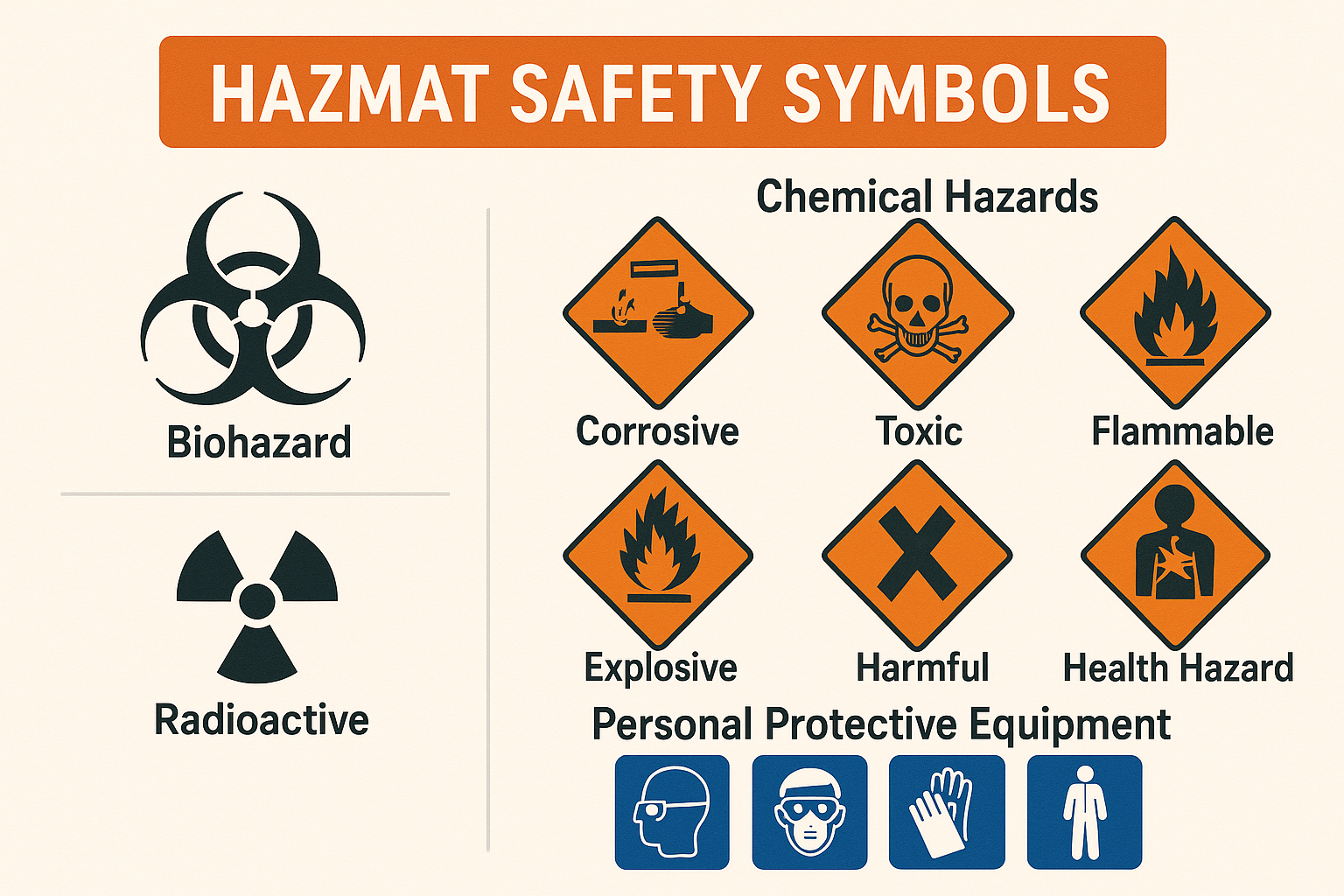
Essential HAZMAT safety symbols every nursing professional must recognize
What is HAZMAT?
HAZMAT stands for Hazardous Materials – substances that pose risks to health, safety, property, or the environment. In healthcare settings, nursing professionals encounter various HAZMAT scenarios daily, from chemical spills in laboratories to biological waste management. Understanding proper HAZMAT protocols is not just a regulatory requirement but a critical component of patient and staff safety.
Healthcare HAZMAT Categories
- Biological: Blood, bodily fluids, infectious agents
- Chemical: Disinfectants, pharmaceuticals, laboratory reagents
- Radioactive: Nuclear medicine materials, X-ray equipment
- Physical: Sharps, compressed gases, cryogenic materials
HAZMAT Exposure Statistics
- 78% of healthcare workers experience HAZMAT exposure annually
- 45% of incidents are preventable with proper protocols
- 23% involve chemical spills or splashes
- 67% reduction in incidents with proper training
Memory Aid: HAZMAT Recognition
H.A.Z.M.A.T
- Health risks present
- Assess the situation immediately
- Zone off the contaminated area
- Material Safety Data Sheet consultation
- Appropriate protective equipment
- Training protocols activation
Types of HAZMAT Spills in Healthcare
Healthcare facilities encounter diverse HAZMAT spill scenarios, each requiring specific response protocols. Understanding the characteristics of different spill types enables nursing professionals to respond appropriately and minimize potential harm. Proper classification of HAZMAT incidents is the foundation of effective emergency response.
Biological Spills
Biological spills represent the most common HAZMAT incidents in healthcare settings, involving potentially infectious materials that can pose serious health risks through direct contact or airborne transmission.
| Spill Type | Common Sources | Risk Level | Immediate Concerns |
|---|---|---|---|
| Blood/Body Fluids | IV accidents, surgical procedures, patient care | High | Bloodborne pathogen exposure |
| Laboratory Cultures | Microbiology labs, specimen handling | Medium-High | Airborne contamination |
| Urine/Feces | Patient care, specimen transport | Medium | Enteric pathogen exposure |
| Respiratory Secretions | Suctioning, respiratory therapy | High | Respiratory pathogen exposure |
Chemical Spills
Chemical spills in healthcare environments involve various substances used for cleaning, disinfection, laboratory analysis, and patient treatment. These HAZMAT incidents require careful assessment of chemical properties and appropriate neutralization techniques.
Corrosive Chemicals
- Concentrated acids (HCl, H₂SO₄)
- Strong bases (NaOH, KOH)
- Bleach solutions
- Disinfectant concentrates
Key Concern: Skin/eye burns, respiratory irritation
Toxic Chemicals
- Formaldehyde solutions
- Chemotherapy agents
- Laboratory solvents
- Mercury compounds
Key Concern: Systemic toxicity, carcinogenic effects
Radioactive Material Spills
Though less common, radioactive spills represent unique HAZMAT challenges in healthcare facilities with nuclear medicine departments, radiation therapy units, or research laboratories using radioactive tracers.
Common Radioactive Materials in Healthcare:
Technetium-99m
Diagnostic imaging
Iodine-131
Thyroid treatment
Fluorine-18
PET scanning
Memory Aid: B.C.R. Spill Classification
B
Biological
Blood, body fluids, cultures
C
Chemical
Acids, bases, solvents
R
Radioactive
Nuclear medicine materials
HAZMAT Spillage Management Protocols
Effective HAZMAT spillage management requires systematic approaches that prioritize safety while ensuring thorough decontamination. These protocols form the backbone of healthcare facility emergency response and directly impact patient and staff safety outcomes.
Immediate Response Protocol (First 60 Seconds)
STOP – Assess Immediate Danger
Halt all activities, evaluate personal risk, ensure no immediate threat to life
SECURE – Control the Area
Establish perimeter, restrict access, prevent spread of contamination
SIGNAL – Alert Response Team
Activate emergency protocols, notify supervisor, call HAZMAT team
Critical Decision Points:
- Is immediate evacuation necessary?
- Are others at risk of exposure?
- Can I safely contain the spill?
- Do I have proper PPE available?
HAZMAT Containment Strategies by Spill Type
Biological Spill Containment
Small Volume Spills (<10ml)
- 1Don disposable gloves and eye protection
- 2Cover spill with absorbent material soaked in disinfectant
- 3Allow 10-minute contact time for disinfection
- 4Clean from outside toward center
- 5Dispose in biohazard waste container
Large Volume Spills (>10ml)
- 1Evacuate immediate area, restrict access
- 2Don full PPE including gown and face shield
- 3Use spill kit with solidifying agent
- 4Work systematically from clean to contaminated areas
- 5Environmental services notification required
Chemical Spill Containment
| Chemical Type | Containment Method | Neutralization | Special Precautions |
|---|---|---|---|
| Acids | Dike with inert absorbent | Sodium bicarbonate solution | Avoid water dilution initially |
| Bases | Contain with sand or vermiculite | Weak acid solution | Monitor for heat generation |
| Solvents | Absorbent pads, eliminate ignition sources | Allow evaporation in ventilated area | Fire prevention critical |
| Mercury | Specialized mercury spill kit | Sulfur powder amalgamation | Ventilation essential |
HAZMAT Decontamination Procedures
Proper decontamination ensures complete elimination of HAZMAT residues and prevents secondary exposure incidents. The effectiveness of decontamination procedures directly correlates with adherence to established protocols.
Personal Decontamination
Surface Decontamination
Memory Aid: S.P.I.L.L Management
S
Stop & Secure
Halt activities, control area
P
Protect
Use appropriate PPE
I
Identify
Determine spill type
L
Limit
Contain spread
L
Liquidate
Clean and dispose
Material Safety Data Sheets (MSDS) in HAZMAT Management
Material Safety Data Sheets serve as the primary information source for HAZMAT handling, emergency response, and safety protocols. Understanding how to access, interpret, and apply MSDS information is fundamental to effective healthcare safety management.
Understanding MSDS Documentation
MSDS documents provide comprehensive information about chemical properties, health hazards, safety precautions, and emergency procedures. In healthcare settings, MSDS sheets are critical for managing pharmaceutical chemicals, cleaning agents, laboratory reagents, and medical gases.
Legal Requirements
- OSHA Hazard Communication Standard
- Workplace accessibility mandated
- 24/7 availability required
- Local language translation needed
Digital vs Physical MSDS
- Electronic databases preferred
- Physical backup copies maintained
- Quick search capabilities essential
- Mobile access for emergencies
The 16 Standard MSDS Sections
Identification (1-4)
Emergency (5-8)
Properties (9-12)
Disposal (13-16)
Priority MSDS Sections for Nursing Practice
Section 2: Hazard Identification
- Signal words (Danger/Warning)
- Hazard pictograms
- Precautionary statements
- Health hazard classification
Section 4: First Aid Measures
- Inhalation exposure treatment
- Skin contact procedures
- Eye exposure protocols
- Ingestion management
Section 8: Exposure Controls
- Occupational exposure limits
- Engineering controls needed
- Personal protective equipment
- Ventilation requirements
HAZMAT MSDS Interpretation Guide for Nurses
| MSDS Term | Definition | Nursing Significance | Action Required |
|---|---|---|---|
| LD50 | Lethal dose for 50% of test subjects | Indicates acute toxicity level | Lower values = more toxic = higher precautions |
| TWA | Time-weighted average exposure | 8-hour workday exposure limit | Monitor cumulative exposure duration |
| STEL | Short-term exposure limit | 15-minute maximum exposure | Critical for acute exposure incidents |
| Flash Point | Temperature for vapor ignition | Fire hazard assessment | Control ignition sources in vicinity |
| pH | Acidity/alkalinity measure | Corrosivity indicator | pH <2 or >12 requires enhanced PPE |
MSDS Access and Management Systems
Effective HAZMAT management requires organized MSDS access systems that support both routine operations and emergency response. Modern healthcare facilities integrate digital and physical MSDS management for optimal accessibility.
Digital MSDS Systems
- Cloud-based databases with 24/7 access
- Advanced search by product name or chemical
- Automatic updates from manufacturers
- Mobile app integration for field access
- Expiration alerts and compliance tracking
Physical MSDS Management
- Department-specific binders by location
- Alphabetical organization system
- Regular review and update schedule
- Strategic placement near work areas
- Emergency duplicate copies maintained
Memory Aid: M.S.D.S. Quick Reference
M
Material
What is the substance?
S
Safety
What are the hazards?
D
Data
What are the properties?
S
Sheet
Where to find information?
Personal Protective Equipment for HAZMAT Safety
Personal Protective Equipment represents the final barrier between healthcare workers and HAZMAT exposure. Proper selection, use, and maintenance of PPE are critical components of comprehensive safety protocols that protect nursing professionals during routine care and emergency situations.
HAZMAT PPE Selection Hierarchy
Level A
Fully encapsulated suit with supplied air
Maximum protection
Level B
Supplied air with chemical-resistant suit
High respiratory protection
Level C
Air-purifying respirator with protective clothing
Moderate protection
Level D
Standard work uniform with minimal PPE
Basic protection
Healthcare HAZMAT PPE Components
Respiratory Protection
| Protection Type | Applications | Protection Factor | Limitations |
|---|---|---|---|
| N95 Respirator | Tuberculosis, general bioaerosols | 10x ambient protection | Not oil-resistant, fit-testing required |
| P100 Respirator | Asbestos, lead particles | 50x ambient protection | Higher breathing resistance |
| Half-face APR | Chemical vapors, specific gases | 10x ambient protection | Eye protection separate |
| Full-face APR | Multiple chemical hazards | 50x ambient protection | Communication difficulty |
| SCBA | Unknown atmospheres, emergencies | 10,000x ambient protection | Limited air supply, heavy |
Chemical Protective Clothing
Material Types
- Tyvek: Particulate protection, breathable
- Saranex: Chemical splash protection
- Viton: Aggressive chemical resistance
- Neoprene: Oil and solvent resistance
- PVC: Acid and base protection
Selection Criteria
- Chemical compatibility matrix
- Temperature resistance range
- Breakthrough time data
- Permeation rate limits
- Durability and reusability
HAZMAT PPE Donning and Doffing Procedures
Proper donning and doffing procedures are critical for preventing contamination during PPE use. Incorrect procedures can result in exposure incidents that negate the protective benefits of PPE.
Donning Sequence (Clean to Dirty)
- 1Hand hygiene and inspection of PPE
- 2Inner gloves (if required)
- 3Protective suit or gown
- 4Boot covers or protective footwear
- 5Respiratory protection (fit check)
- 6Eye protection (if not integrated)
- 7Outer gloves with tape seal
- 8Final buddy check and communication test
Doffing Sequence (Dirty to Clean)
- 1Gross decontamination while wearing PPE
- 2Outer glove removal with tape
- 3Boot cover removal
- 4Suit removal (inside-out technique)
- 5Hand decontamination
- 6Respiratory protection removal
- 7Inner glove removal
- 8Final hand hygiene and medical evaluation
Memory Aid: P.P.E. Selection Guide
P
Protect
Assess hazard exposure routes
P
Prevent
Select appropriate barrier
E
Execute
Proper donning/doffing procedures
HAZMAT Emergency Response Procedures
Emergency response to HAZMAT incidents requires coordinated actions that prioritize life safety while minimizing environmental impact. Nursing professionals must understand their roles in emergency response and the critical decision points that determine patient and staff outcomes during HAZMAT emergencies.
HAZMAT Emergency Response Framework
Recognition
Identify HAZMAT emergency situations
Response
Implement immediate protective actions
Recovery
Decontamination and rehabilitation
Critical Success Factors:
- Rapid incident recognition and classification
- Immediate life safety prioritization
- Effective communication and coordination
- Appropriate resource deployment
HAZMAT Emergency Classifications
Level 1: Minor Incidents
Characteristics:
- Small volume spills (<1 liter)
- No immediate health threat
- Contained to immediate area
- Standard PPE adequate
Response Actions:
- Department-level response
- Use spill kits and standard procedures
- Document incident in departmental logs
- Notify supervisor within 24 hours
Level 2: Moderate Incidents
Characteristics:
- Larger volume spills (1-10 liters)
- Potential health impacts
- May affect multiple areas
- Enhanced PPE required
Response Actions:
- Activate facility HAZMAT team
- Establish isolation perimeter
- Implement decontamination procedures
- Immediate regulatory notification
Level 3: Major Incidents
Characteristics:
- Large volume releases (>10 liters)
- Immediate life safety threat
- Multiple building areas affected
- Potential evacuation required
Response Actions:
- Full emergency response activation
- External emergency services notification
- Implement evacuation procedures
- Media and public notification protocols
HAZMAT Evacuation Procedures
Evacuation during HAZMAT emergencies requires systematic approaches that account for contamination risks, patient acuity levels, and decontamination requirements. Proper evacuation procedures can prevent secondary exposures and save lives.
Patient Evacuation Priorities
Priority 1: Immediate Danger
Patients in direct contamination pathway
Priority 2: High Acuity
Critical care and vulnerable populations
Priority 3: Ambulatory
Self-evacuating patients and visitors
Priority 4: Stable
Non-critical patients in safe areas
Staff Evacuation Actions
- 1Don appropriate PPE before entering contaminated areas
- 2Establish clean and contaminated evacuation routes
- 3Implement buddy system for contaminated area entry
- 4Document all personnel entering contaminated zones
- 5Establish decontamination checkpoints
- 6Maintain communication with incident command
Emergency Decontamination Centers
Emergency decontamination centers serve as critical control points during HAZMAT incidents, preventing the spread of contamination while providing necessary medical care to exposed individuals.
| Decontamination Type | Target Population | Key Features | Staffing Requirements |
|---|---|---|---|
| Gross Decontamination | Heavily contaminated individuals | High-volume water rinse, removal of gross contamination | HAZMAT trained personnel with Level B/C PPE |
| Secondary Decontamination | Patients requiring medical care | Detailed cleaning, medical assessment capability | Medical personnel with appropriate PPE |
| Technical Decontamination | Emergency responders and equipment | Specialized cleaning agents, equipment processing | HAZMAT technicians and specialists |
| Mass Decontamination | Large numbers of exposed individuals | High-throughput systems, privacy considerations | Multi-agency response teams |
Memory Aid: E.M.E.R.G.E.N.C.Y Response
E
Evaluate
Assess situation
M
Mobilize
Activate response
E
Evacuate
Remove from danger
R
Rescue
Save lives first
G
Guard
Protect responders
E
Eliminate
Stop the source
N
Neutralize
Contain hazards
C
Clean
Decontaminate
Y
Yield
Return to normal
Global HAZMAT Safety Best Practices
Healthcare systems worldwide have developed innovative approaches to HAZMAT safety that offer valuable insights for improving nursing practice. These international best practices demonstrate how cultural, technological, and regulatory differences can lead to enhanced safety outcomes.
Japan: Technology-Integrated HAZMAT Management
Key Innovations:
- Robotic decontamination systems for high-risk areas
- QR code integration for instant MSDS access
- Wearable sensors for real-time exposure monitoring
- Augmented reality PPE training systems
Measurable Outcomes:
- 67% reduction in HAZMAT exposure incidents
- 45% faster emergency response times
- 89% improvement in staff training effectiveness
- 34% reduction in cleanup costs
Germany: Systematic Risk Assessment Approach
Key Innovations:
- Comprehensive hazard scoring matrices
- Multi-disciplinary safety committees
- Mandatory quarterly safety audits
- Standardized national HAZMAT protocols
Implementation Strategy:
- Tiered training programs by exposure risk
- Certification requirements for HAZMAT personnel
- National incident reporting database
- Industry-academia collaboration programs
Singapore: Integrated Digital HAZMAT Ecosystem
Key Innovations:
- IoT-enabled chemical monitoring systems
- AI-powered incident prediction algorithms
- Real-time facility-wide contamination mapping
- Automated PPE compliance monitoring
Smart Features:
- Predictive maintenance alerts for safety equipment
- Dynamic evacuation route optimization
- Multi-language emergency communication system
- Real-time safety performance dashboards
Canada: Community-Integrated HAZMAT Response
Key Innovations:
- Regional mutual aid agreements
- Public education and awareness programs
- 24/7 expert consultation hotlines
- Mobile decontamination units
Community Benefits:
- Enhanced regional response capabilities
- Improved public trust and cooperation
- Cost-effective resource sharing
- Reduced environmental impact