
Gastrointestinal Infections
Comprehensive Nursing Notes
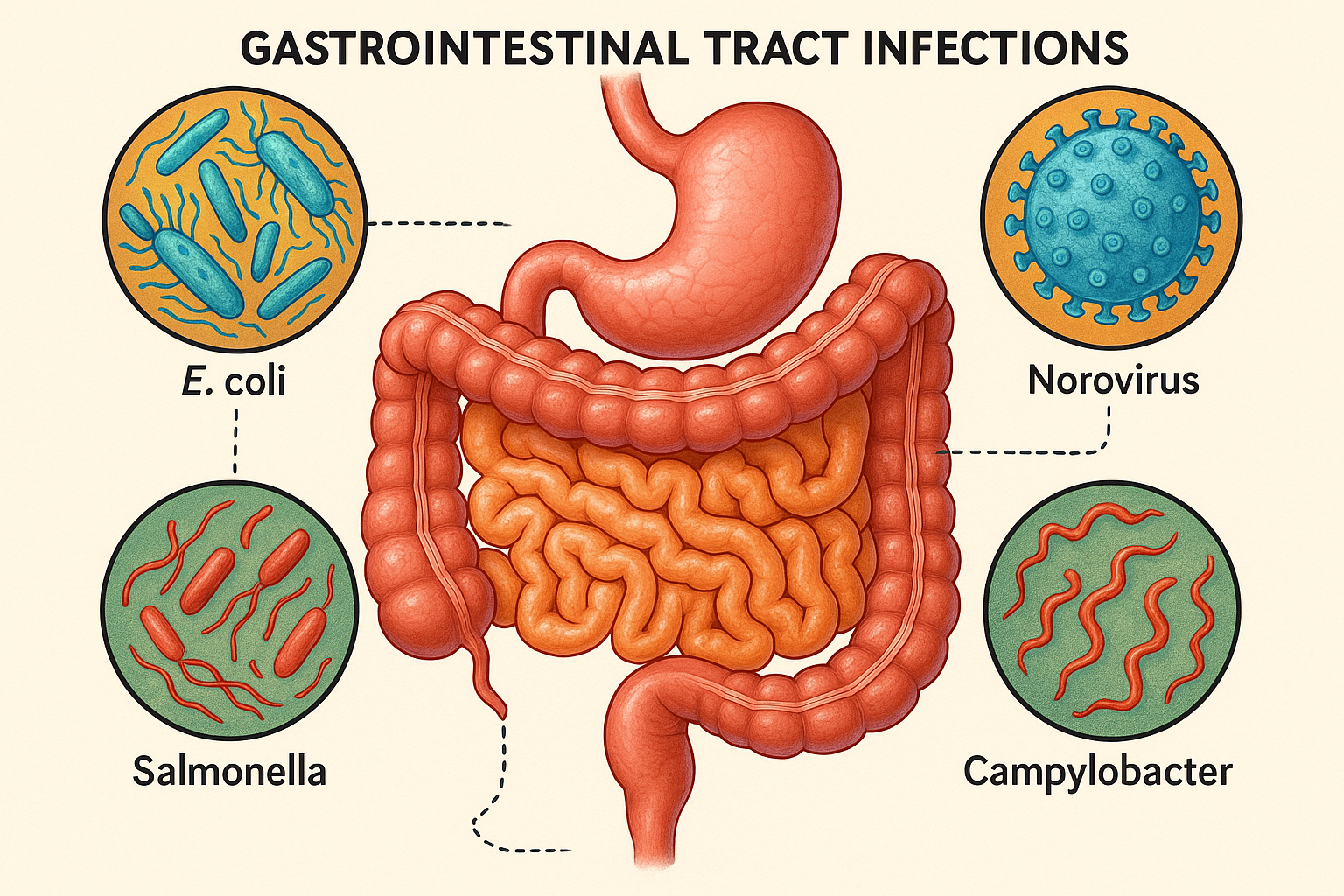
Comprehensive overview of gastrointestinal tract infections
Table of Contents
Introduction
Gastrointestinal infections represent one of the most common causes of morbidity worldwide, affecting millions of individuals annually. These infections can range from mild, self-limiting conditions to severe, life-threatening illnesses requiring immediate medical intervention. As nursing professionals, understanding the complex pathophysiology, diverse clinical presentations, and evidence-based management strategies is crucial for providing optimal patient care.
Key Statistics
- GI infections cause approximately 1.7 billion cases of diarrheal disease annually
- Second leading cause of death in children under 5 years globally
- Responsible for 525,000 deaths annually in children under 5
- Leading cause of malnutrition in developing countries
GI infections can be classified based on several factors including causative organism (bacterial, viral, parasitic, or fungal), anatomical location (gastritis, enteritis, colitis), duration (acute vs. chronic), and severity. The clinical spectrum ranges from asymptomatic carriers to fulminant disease with systemic complications.
Anatomy & Physiology Review
Gastrointestinal Defense Mechanisms
The gastrointestinal tract possesses multiple defense mechanisms that protect against pathogenic organisms:
Mnemonic: “ACID BARRIERS”
- Acid production (gastric pH 1.5-3.5)
- Commensal bacteria (normal flora)
- Immune system (GALT – Gut Associated Lymphoid Tissue)
- Digestive enzymes
- Bile salts
- Antibiotic peptides (defensins)
- Rapid transit time
- Regenerative epithelium
- Intestinal motility
- Epithelial barrier integrity
- Resident macrophages
- Secretory IgA
Normal Flora Distribution
Stomach
10² – 10³ CFU/mL
Mostly gram-positive
Small Intestine
10⁴ – 10⁷ CFU/mL
Lactobacilli, Enterococci
Large Intestine
10¹¹ – 10¹² CFU/g
Bacteroides, E. coli
Understanding normal GI physiology is essential because pathogenic organisms must overcome these sophisticated defense mechanisms to establish infection. When these barriers are compromised (through medications, immune suppression, or anatomical disruption), the risk of infection increases significantly.
Pathophysiology of GI Infections
Mechanisms of Pathogenesis
Infection Development Pathway
Primary Pathogenic Mechanisms
Toxin-Mediated Damage
- Enterotoxins: Cause secretory diarrhea without mucosal invasion (e.g., Cholera toxin, ETEC)
- Cytotoxins: Direct cellular damage and inflammation (e.g., Shiga toxin, C. difficile toxins)
- Neurotoxins: Affect neural function (e.g., Botulinum toxin)
Direct Invasion
- Mucosal invasion: Pathogens penetrate epithelial barrier (Shigella, EIEC)
- Systemic invasion: Organisms enter bloodstream (Salmonella Typhi)
- Tissue destruction: Direct cytopathic effects (rotavirus)
Immune-Mediated Inflammation
- Inflammatory response: Neutrophil recruitment and cytokine release
- Tissue damage: Collateral damage from immune response
- Post-infectious complications: Reactive arthritis, hemolytic uremic syndrome
Mnemonic: “TIP” for Pathogenic Mechanisms
- Toxin production
- Invasion of tissues
- Pathogenic inflammation
Bacterial Infections
Mnemonic: “SPACE” for Major Bacterial Pathogens
- Salmonella
- Pathogenic E. coli
- Actinobacter (less common)
- Campylobacter
- Enterotoxigenic bacteria
Salmonella Species
Non-typhoid Salmonella
- Incubation: 6-72 hours
- Source: Poultry, eggs, dairy products
- Symptoms: Acute gastroenteritis
- Duration: 4-7 days
- Complications: Bacteremia (5-10%)
Salmonella Typhi (Typhoid)
- Incubation: 7-21 days
- Source: Contaminated water/food
- Symptoms: Systemic illness, rose spots
- Duration: 3-4 weeks untreated
- Complications: Intestinal perforation
Escherichia coli Variants
ETEC
Enterotoxigenic
Traveler’s diarrhea
Heat-stable/labile toxins
EHEC
Enterohemorrhagic
Bloody diarrhea, HUS
Shiga-like toxin
EIEC
Enteroinvasive
Dysentery-like illness
Tissue invasion
EPEC
Enteropathogenic
Infant diarrhea
Adherence factors
Campylobacter jejuni
Most common bacterial cause of gastroenteritis in developed countries
Transmission
- • Undercooked poultry
- • Contaminated water
- • Raw milk
- • Cross-contamination
Clinical Features
- • Prodromal fever, malaise
- • Abdominal pain (may mimic appendicitis)
- • Watery then bloody diarrhea
- • Duration: 5-7 days
Complications
- • Guillain-Barré syndrome
- • Reactive arthritis
- • Bacteremia (rare)
- • Post-infectious irritable bowel
Clostridium difficile
Leading cause of healthcare-associated infections
Risk Factors: Antibiotic exposure, advanced age, hospitalization, PPI use, immunosuppression
Pathogenesis
1. Disruption of normal flora (antibiotics) → 2. C. difficile overgrowth → 3. Toxin production (Toxin A: enterotoxin, Toxin B: cytotoxin) → 4. Colonic inflammation and damage
Clinical Severity Spectrum
- • Asymptomatic carrier state
- • Mild-moderate colitis
- • Severe colitis
- • Fulminant colitis
- • Toxic megacolon
Diagnostic Criteria
- • Clinical symptoms
- • Positive stool toxin assay
- • Endoscopic findings
- • CT imaging changes
Parasitic Infections
Parasitic gastroenteritis, while less common in developed countries, remains a significant global health concern. These infections can be caused by protozoa, helminths, or other parasitic organisms, often resulting in chronic symptoms and long-term complications if untreated.
Protozoal Infections
Giardia lamblia
Most common parasitic cause of diarrhea in developed countries
Transmission & Risk Factors
- • Contaminated water (streams, wells)
- • Person-to-person (daycare centers)
- • Animal contact (camping, hiking)
- • Food contamination (rare)
- • Cyst survival in chlorinated water
Clinical Presentation
- • Incubation: 1-3 weeks
- • Chronic watery diarrhea
- • Steatorrhea (fatty stools)
- • Flatulence and bloating
- • Weight loss and malabsorption
Nursing Assessment Tip
Giardiasis often presents with characteristic “eggy” or sulfurous-smelling stools. Patients may report floating, greasy stools due to fat malabsorption.
Entamoeba histolytica
Causes amebic dysentery and liver abscesses
Disease Spectrum
- • Asymptomatic cyst passer (90%): No symptoms but can transmit
- • Intestinal amebiasis: Colitis with bloody diarrhea
- • Extraintestinal amebiasis: Liver abscess (most common), lung, brain
Clinical Features
- • Gradual onset over weeks
- • Bloody mucoid diarrhea
- • Lower abdominal pain
- • Tenesmus
- • Low-grade fever
- • Flask-shaped ulcers on colonoscopy
Complications
- • Liver abscess (hepatomegaly, RUQ pain)
- • Bowel perforation
- • Peritonitis
- • Ameboma (tumor-like mass)
- • Stricture formation
Cryptosporidium
Opportunistic pathogen, particularly severe in immunocompromised patients
Epidemiology
- • Waterborne outbreaks
- • Swimming pools, water parks
- • Animal contact (farms)
- • Resistant to chlorination
Clinical Presentation
- • Immunocompetent: self-limiting
- • Watery diarrhea (up to 15L/day)
- • Nausea, vomiting
- • Weight loss
HIV/AIDS Patients
- • Chronic, severe diarrhea
- • Malabsorption syndrome
- • Biliary tract involvement
- • Respiratory symptoms
Mnemonic: “GET CLEAN” for Parasitic Infection Prevention
- Good hand hygiene
- Eat properly cooked food
- Treat water when traveling
- Clean fruits and vegetables
- Limit raw/undercooked foods
- Environmental sanitation
- Avoid contaminated water sources
- Notify healthcare providers of travel history
Clinical Presentation
The clinical presentation of gastrointestinal infections varies significantly based on the causative organism, host factors, and anatomical location of infection. Understanding these patterns is crucial for accurate assessment and appropriate management.
Symptom Classification
GI Infection Symptom Flowchart
• High fever
• Severe cramping
• Tenesmus
• Minimal fever
• Periumbilical pain
• Large volume stools
Diarrhea Characteristics
Watery Diarrhea
- • Volume: >1L/day
- • No blood/mucus
- • Small bowel origin
- • Viral, ETEC, Cholera
Bloody Diarrhea
- • Blood and mucus present
- • Lower volume
- • Large bowel origin
- • Shigella, EHEC, C. diff
Fatty Diarrhea
- • Steatorrhea
- • Floating stools
- • Malabsorption
- • Giardia, chronic infections
Inflammatory Diarrhea
- • WBC in stool
- • Fever common
- • Systemic symptoms
- • Invasive bacteria
Associated Symptoms and Red Flags
Red Flag Symptoms Requiring Immediate Attention
Severe Dehydration Signs
- • Orthostatic hypotension
- • Tachycardia >100 bpm
- • Decreased skin turgor
- • Altered mental status
- • Oliguria (<0.5 mL/kg/hr)
Systemic Complications
- • Temperature >39°C (102.2°F)
- • Signs of sepsis
- • Severe abdominal pain
- • Profuse bloody diarrhea
- • Hemolytic uremic syndrome signs
Age-Specific Considerations
Pediatric Patients
High-Risk Features
- • Rapid dehydration (higher surface area:volume ratio)
- • Immature immune system
- • Limited glycogen stores
- • Hypoglycemia risk
Assessment Priorities
- • Fontanelle assessment (infants)
- • Diaper weight monitoring
- • Behavioral changes
- • Growth and development impact
Elderly Patients
Increased Vulnerability
- • Decreased gastric acid production
- • Slower GI motility
- • Comorbid conditions
- • Polypharmacy effects
Atypical Presentations
- • Minimal fever response
- • Confusion as primary symptom
- • Falls risk from dehydration
- • Medication interactions
Diagnostic Approach
Accurate diagnosis of gastrointestinal infections requires a systematic approach combining clinical assessment, appropriate laboratory testing, and sometimes imaging studies. The choice of diagnostic tests should be guided by clinical presentation, severity of illness, and epidemiological factors.
Diagnostic Decision Tree
Supportive care
No routine testing
Laboratory workup
Consider imaging
Laboratory Testing Indications
Mnemonic: “SHIP” for Testing Indications
- Severe dehydration or systemic illness
- Hospitalized or healthcare-associated
- Immunocompromised patients
- Persistent symptoms >7 days
Stool Studies
Routine Stool Tests
Stool Culture
- • Indications: Bloody diarrhea, fever, severe illness
- • Detects: Salmonella, Shigella, Campylobacter
- • Limitations: 48-72 hour delay, low yield
- • Collection: Fresh specimen, avoid delay
Stool Leukocytes/Lactoferrin
- • Purpose: Differentiate inflammatory vs. non-inflammatory
- • Positive: Invasive bacterial infections
- • Negative: Viral infections, toxin-mediated
- • Rapid result: Available within hours
Specialized Stool Tests
C. difficile Testing
- • GDH + toxin assay
- • PCR testing
- • Repeat testing not recommended
- • Test of cure not needed
Parasitology
- • Ova and parasites (O&P)
- • Three specimens on separate days
- • Giardia/Cryptosporidium antigen
- • PCR panels available
Viral Testing
- • Rotavirus antigen (children)
- • Norovirus PCR (outbreaks)
- • Adenovirus antigen
- • Multiplex PCR panels
Advanced Diagnostic Methods
Multiplex PCR Panels
Advantages: Rapid results, high sensitivity, multiple pathogens simultaneously
Limitations: Higher cost, may detect non-pathogenic organisms, doesn’t provide antibiotic susceptibility
Common Panel Components
- • Campylobacter
- • Salmonella
- • Shigella
- • EHEC
- • Norovirus
- • Rotavirus
- • Adenovirus
- • Sapovirus
- • Giardia
- • Cryptosporidium
- • E. histolytica
- • Cyclospora
Laboratory Monitoring
Basic Metabolic Panel
- • Electrolytes (Na, K, Cl, CO₂)
- • BUN/Creatinine
- • Glucose
- • Assess dehydration
Complete Blood Count
- • WBC elevation (bacterial)
- • Hematocrit (hemoconcentration)
- • Platelet count (HUS risk)
- • Hemoglobin (GI bleeding)
Additional Tests
- • Albumin (malnutrition)
- • Lactate (perfusion)
- • Blood cultures (if septic)
- • Urinalysis (dehydration)
Nursing Considerations for Specimen Collection
- • Collect specimens before antibiotic therapy when possible
- • Use appropriate collection containers (no preservatives for culture)
- • Transport specimens promptly to laboratory (within 2 hours)
- • Document antibiotic use and timing on requisition
- • Follow infection control precautions during collection
Treatment & Management
The management of gastrointestinal infections is primarily supportive, focusing on fluid and electrolyte replacement, symptom control, and prevention of complications. Antimicrobial therapy is reserved for specific situations and should be used judiciously to prevent resistance and adverse effects.
Fluid and Electrolyte Management
Rehydration Therapy – The Cornerstone of Treatment
The World Health Organization estimates that appropriate rehydration therapy can reduce mortality from acute diarrheal diseases by up to 95%.
Oral Rehydration Therapy (ORT)
First-line treatment for mild to moderate dehydration
WHO-ORS Formula
- • Sodium chloride: 2.6 g
- • Glucose: 13.5 g
- • Potassium chloride: 1.5 g
- • Trisodium citrate: 2.9 g
- • Water: 1 liter
Osmolarity: 245 mOsm/L
Administration Guidelines
- • Children: 75 mL/kg over 4 hours
- • Adults: 200-400 mL after each loose stool
- • Small, frequent sips
- • Room temperature
- • Continue until diarrhea stops
Intravenous Fluid Therapy
Indications: Severe dehydration, inability to tolerate oral intake, hemodynamic instability
Initial Resuscitation
- • Normal saline or Lactated Ringer’s
- • 20 mL/kg bolus (children)
- • 500-1000 mL bolus (adults)
- • Reassess frequently
Maintenance Therapy
- • Replace ongoing losses
- • Monitor electrolytes
- • Potassium replacement as needed
- • Transition to oral when tolerated
Monitoring Parameters
- • Urine output (>0.5 mL/kg/hr)
- • Blood pressure and heart rate
- • Serum electrolytes
- • Clinical signs of hydration
Antimicrobial Therapy
Mnemonic: “SPIT” for Antibiotic Indications
- Severe illness or sepsis
- Persistent symptoms >7 days
- Immunocompromised patients
- Typhoid fever or specific pathogens
Empirical Antibiotic Selection
First-Line Agents
- Ciprofloxacin: 500 mg PO BID × 3-5 days
- Levofloxacin: 500 mg PO daily × 3-5 days
- Azithromycin: 500 mg PO daily × 3 days
Special Considerations
- • Avoid fluoroquinolones in children
- • Azithromycin preferred for Campylobacter
- • Consider local resistance patterns
- • Duration typically 3-5 days
Antibiotic Contraindications
- EHEC infections: Antibiotics may increase risk of HUS
- Non-typhoid Salmonella: May prolong shedding in uncomplicated cases
- Viral gastroenteritis: No benefit, may disrupt normal flora
- C. difficile risk: Any antibiotic use increases risk
Symptomatic Treatment
Antidiarrheal Agents
- Loperamide: 4 mg initially, then 2 mg after each loose stool
- Contraindications: Bloody diarrhea, fever, C. diff
- Mechanism: Opioid receptor agonist
- Duration: Limit to 48 hours
Antiemetics
- Ondansetron: 4-8 mg PO/IV q8h
- Promethazine: 12.5-25 mg PO/PR/IM q6h
- Use when: Severe nausea impairs oral intake
- Caution: May mask underlying pathology
Probiotics
- Evidence: May reduce duration by 1 day
- Best studied: Lactobacillus GG, S. boulardii
- Safety: Generally safe in immunocompetent
- Timing: Early initiation preferred
Pathogen-Specific Treatment
Clostridium difficile Treatment
Mild-Moderate Disease
- First-line: Vancomycin 125 mg PO QID × 10 days
- Alternative: Fidaxomicin 200 mg PO BID × 10 days
- Avoid: Metronidazole (no longer first-line)
Severe/Fulminant Disease
- Vancomycin: 125 mg PO QID PLUS
- Metronidazole: 500 mg IV TID
- Consider: Vancomycin enemas if ileus
- Surgery: For toxic megacolon/perforation
Nursing Medication Administration Tips
- • Administer oral medications with small amounts of fluid
- • Monitor for drug-drug interactions (especially with antibiotics)
- • Assess for allergies before antibiotic administration
- • Document response to symptomatic treatments
- • Educate patients about completing antibiotic courses
Nursing Considerations
Nurses play a critical role in the assessment, management, and prevention of complications in patients with gastrointestinal infections. Comprehensive nursing care encompasses physical assessment, monitoring, patient education, and infection control measures.
Nursing Assessment Priorities
Mnemonic: “FLUID LOSS” for Assessment Focus
- Frequency and characteristics of stools
- Level of consciousness and mental status
- Urine output monitoring
- Intake and output balance
- Dehydration signs and symptoms
- Laboratory values (electrolytes, BUN/Cr)
- Orthostatic vital signs
- Skin turgor and mucous membranes
- Symptom severity and progression
Comprehensive Assessment Framework
Physical Assessment
- Cardiovascular: Heart rate, blood pressure, capillary refill
- Respiratory: Rate, depth, signs of metabolic acidosis
- Gastrointestinal: Bowel sounds, distension, tenderness
- Genitourinary: Urine output, color, specific gravity
- Neurological: Level of consciousness, confusion
- Integumentary: Skin turgor, temperature, diaphoresis
Functional Assessment
- Activities of daily living: Self-care abilities
- Mobility: Risk of falls from dehydration
- Nutrition: Ability to tolerate oral intake
- Communication: Understanding of condition
- Coping: Anxiety related to symptoms
- Social: Support systems and resources
Nursing Interventions
Fluid Management
- • Monitor I&O every 2-4 hours
- • Daily weights (same time, scale, clothing)
- • Encourage oral fluids as tolerated
- • IV fluid administration per orders
- • Assess for fluid overload
Symptom Management
- • Position for comfort during cramping
- • Provide frequent oral care
- • Apply topical barriers for perianal irritation
- • Administer medications as prescribed
- • Non-pharmacologic comfort measures
Safety Measures
- • Fall risk assessment and precautions
- • Assist with ambulation as needed
- • Bedside commode placement
- • Call light within reach
- • Environmental safety modifications
Infection Control
- • Contact precautions as indicated
- • Proper hand hygiene technique
- • Appropriate PPE use
- • Environmental disinfection
- • Specimen handling protocols
Monitoring and Documentation
Critical Monitoring Parameters
Hourly Assessments
- • Urine output (report <0.5 mL/kg/hr)
- • Mental status changes
- • Stool frequency and characteristics
- • Vital signs if unstable
Shift Assessments
- • Complete physical assessment
- • Intake and output totals
- • Laboratory result review
- • Response to interventions
Documentation Framework
Nursing Diagnoses
Priority Nursing Diagnoses
1. Deficient Fluid Volume
Related to: Excessive losses through diarrhea and vomiting
Goals: Patient will maintain adequate hydration as evidenced by stable vital signs, adequate urine output, and moist mucous membranes
2. Risk for Electrolyte Imbalance
Related to: Fluid losses and poor oral intake
Goals: Patient will maintain electrolytes within normal limits
3. Acute Pain
Related to: Intestinal inflammation and cramping
Goals: Patient will report pain level <4/10 using appropriate pain scale
Special Populations Nursing Considerations
Pediatric Patients
- • Use age-appropriate assessment tools
- • Monitor growth and development milestones
- • Involve parents/caregivers in care
- • Consider developmental stage in education
- • Watch for signs of failure to thrive
Elderly Patients
- • Assess for medication interactions
- • Monitor for confusion and falls
- • Consider comorbid conditions
- • Evaluate social support systems
- • Screen for malnutrition risk
Prevention Strategies
Prevention of gastrointestinal infections requires a comprehensive approach addressing personal hygiene, food safety, water sanitation, and public health measures. As healthcare providers, nurses play a crucial role in patient education and community health promotion.
Mnemonic: “CLEAN HANDS SAVE” for Prevention
- Cook food thoroughly
- Limit cross-contamination
- Eat hot, freshly cooked food
- Avoid raw or undercooked foods
- Never leave food at room temperature
- Hand hygiene consistently
- Animal contact precautions
- Notify authorities of outbreaks
- Disinfect surfaces regularly
- Safe water consumption
Food Safety Principles
WHO’s “Five Keys to Safer Food”
Keep Clean
- • Hand washing
- • Clean surfaces
- • Pest protection
Separate
- • Raw/cooked foods
- • Different cutting boards
- • Separate storage
Cook Thoroughly
- • 70°C (158°F)
- • Use thermometer
- • Reheat properly
Safe Temperature
- • <5°C or >60°C
- • Don’t leave out
- • Cool quickly
Safe Water
- • Clean water
- • Fresh ingredients
- • Check expiry dates
Hand Hygiene
The Single Most Important Prevention Measure
Proper hand hygiene can reduce the risk of diarrheal diseases by up to 40% according to CDC studies.
Effective Hand Hygiene Technique
Soap and Water Method
- 1. Wet hands with clean running water
- 2. Apply soap and lather for at least 20 seconds
- 3. Scrub all surfaces including between fingers
- 4. Rinse thoroughly under running water
- 5. Dry with clean towel or air dry
Critical Times for Hand Hygiene
- • Before eating or preparing food
- • After using the bathroom
- • After changing diapers
- • After contact with animals
- • After coughing, sneezing, or blowing nose
- • Before and after caring for sick person
Travel-Related Prevention
Water Safety
- • Drink bottled or boiled water
- • Avoid ice unless made from safe water
- • Use bottled water for tooth brushing
- • Avoid swimming in contaminated water
Food Precautions
- • Eat food that is cooked and hot
- • Avoid street vendor food
- • Peel fruits yourself
- • Avoid raw or undercooked seafood
Prophylaxis
- • Consider probiotics before travel
- • Bismuth subsalicylate for short-term
- • Antibiotics for high-risk travelers
- • Vaccination when available
Healthcare Setting Prevention
Infection Control Measures
Standard Precautions
- • Hand hygiene before and after patient contact
- • PPE based on anticipated exposure
- • Safe injection practices
- • Respiratory hygiene/cough etiquette
Contact Precautions
- • Private room or cohorting
- • Gown and gloves for all contact
- • Dedicated equipment when possible
- • Environmental cleaning with appropriate disinfectants
Environmental Controls
- • Sodium hypochlorite for C. diff and norovirus
- • EPA-registered disinfectants
- • Increased cleaning frequency
- • Terminal cleaning after discharge
Nursing Role in Outbreak Prevention
- • Early identification and reporting of cases
- • Implementation of appropriate precautions
- • Patient and family education
- • Surveillance for new cases
- • Collaboration with infection control team
- • Documentation and data collection
Patient Education
Comprehensive patient education is essential for promoting recovery, preventing complications, and reducing transmission of gastrointestinal infections. Effective education should be tailored to the patient’s age, literacy level, cultural background, and specific condition.
Core Educational Topics
Disease Understanding and Self-Care
What Patients Should Know
- • Nature of their infection (bacterial, viral, parasitic)
- • Expected course and duration of illness
- • Importance of completing prescribed treatments
- • When to seek additional medical care
- • How the infection spreads
Self-Care Instructions
- • Rest and activity modifications
- • Dietary recommendations and restrictions
- • Medication administration and side effects
- • Home monitoring techniques
- • When to return to work or school
Hydration and Nutrition Education
Hydration Management at Home
Teach patients and families to recognize signs of dehydration and implement appropriate oral rehydration strategies.
Fluid Replacement
- • ORS solution preparation and use
- • Alternative fluids: clear broths, diluted juices
- • Small, frequent sips
- • Avoid alcohol and caffeine
- • Monitor urine color and frequency
Dietary Progression
- • BRAT diet initially (bananas, rice, applesauce, toast)
- • Gradual reintroduction of regular foods
- • Avoid dairy during acute phase
- • Limit high-fiber and fatty foods
- • Small, frequent meals
Warning Signs
- • Persistent vomiting
- • Signs of severe dehydration
- • Blood in stools
- • High fever
- • Severe abdominal pain
Prevention Education
Teaching Tool: “WASH” Method
- Wash hands frequently and properly
- Avoid contaminated food and water
- Separate raw and cooked foods
- Heat food to safe temperatures
Family and Household Education
Transmission Prevention
- • Hand hygiene for all family members
- • Disinfection of surfaces and objects
- • Separate towels and eating utensils
- • Proper handling of contaminated laundry
- • Isolation period guidelines
Vulnerable Population Protection
- • Extra precautions around infants and elderly
- • Immunocompromised family member considerations
- • Pregnant women protection measures
- • Pet and animal contact guidelines
- • School and work return policies
Medication Education
Antibiotic Education (When Prescribed)
Critical Points to Emphasize
- Complete the entire course: Even if feeling better, finish all prescribed antibiotics
- Take as directed: Proper timing, with or without food as instructed
- Don’t share: Antibiotics are prescribed specifically for the individual
- Report side effects: Especially severe diarrhea, rash, or allergic reactions
- Avoid alcohol: May interact with certain antibiotics
Over-the-Counter Medications
- • When antidiarrheal agents are safe to use
- • Proper dosing and duration limits
- • Signs to stop medication and call provider
- • Drug interactions with prescriptions
Probiotics
- • Potential benefits during and after treatment
- • Recommended strains and products
- • Timing with antibiotic administration
- • Safety considerations for high-risk patients
Follow-up and Monitoring
Discharge Planning Checklist
Patient/Family Demonstrates
- ✓ Proper hand hygiene technique
- ✓ ORS preparation (if applicable)
- ✓ Recognition of warning signs
- ✓ Medication administration
- ✓ When to seek medical care
Resources Provided
- ✓ Written discharge instructions
- ✓ Emergency contact numbers
- ✓ Follow-up appointment scheduled
- ✓ Prescription medications obtained
- ✓ Community resource referrals
Patient Education Effectiveness Evaluation
Cultural Considerations in Patient Education
- Language barriers: Use certified interpreters, translated materials
- Health literacy: Assess understanding, use simple language
- Cultural beliefs: Respect traditional practices, integrate when safe
- Family dynamics: Identify decision-makers, include in education
- Socioeconomic factors: Consider resource limitations, provide alternatives
Summary and Key Takeaways
Gastrointestinal infections represent a significant global health burden requiring comprehensive understanding and evidence-based management. As nursing professionals, our role encompasses accurate assessment, supportive care, patient education, and infection prevention measures.
Essential Nursing Competencies
- • Comprehensive assessment of hydration status and symptom severity
- • Implementation of appropriate fluid and electrolyte management
- • Recognition of complications and need for escalation of care
- • Effective patient and family education for home management
- • Strict adherence to infection control measures
Quality Improvement Focus Areas
- • Early recognition and intervention for high-risk patients
- • Standardized assessment tools for dehydration
- • Evidence-based protocols for antibiotic stewardship
- • Enhanced discharge education programs
- • Community prevention education initiatives
Through evidence-based practice, compassionate care, and commitment to continuous learning, nurses play a vital role in improving outcomes for patients with gastrointestinal infections while protecting public health through prevention and education efforts.