
Safety Protocols in Nursing
Comprehensive Guide to 5S, Radiation Safety & Laser Safety
Essential Knowledge for Nursing Excellence
Table of Contents
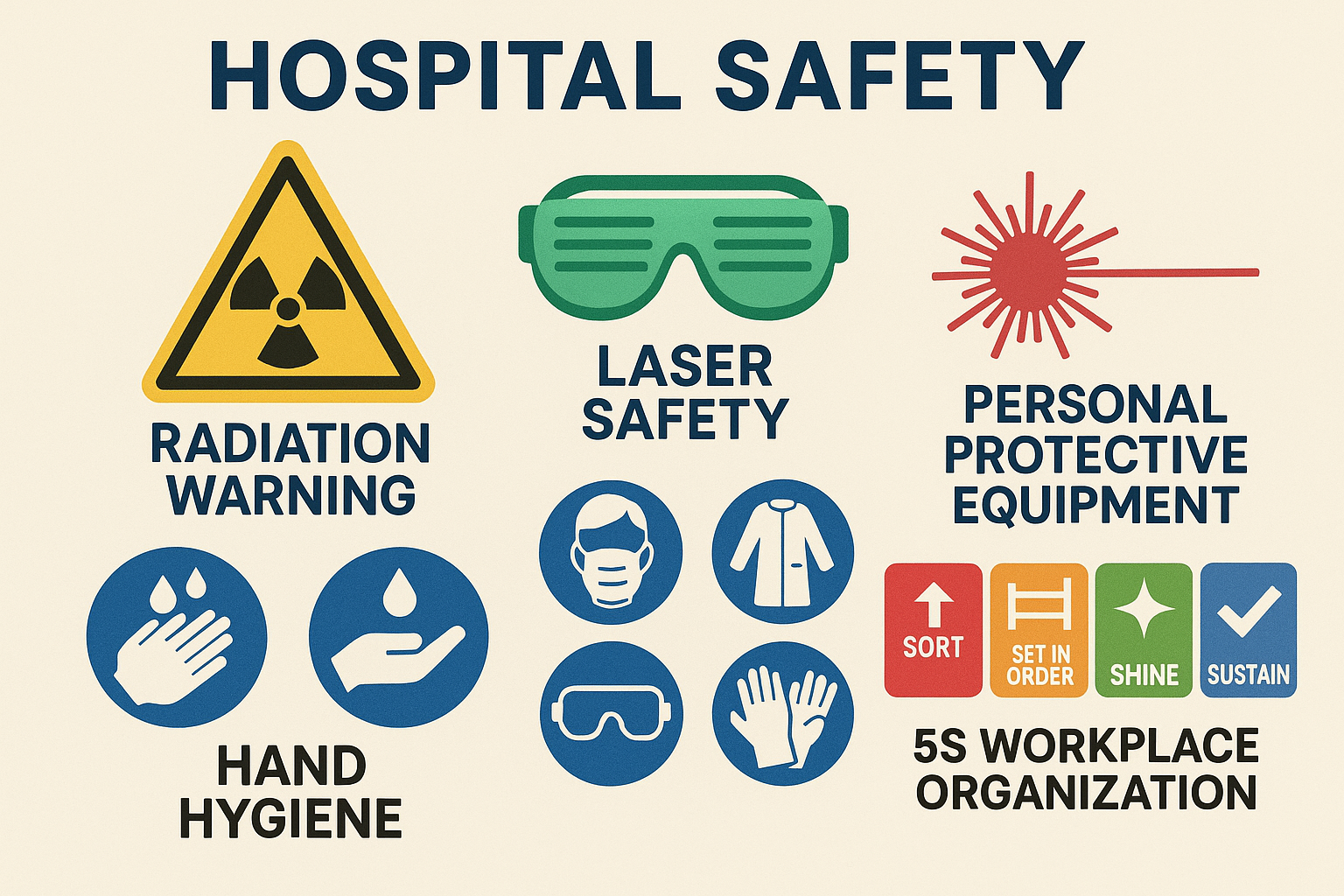
Comprehensive Safety Protocol Overview for Healthcare Settings
Introduction to Safety Protocols
Healthcare environments demand the highest standards of safety to protect patients, healthcare workers, and visitors. The implementation of comprehensive safety protocols forms the backbone of quality healthcare delivery. These protocols are systematic approaches designed to minimize risks, prevent accidents, and ensure optimal outcomes in clinical settings.
Why Safety Protocols Matter
- Prevent medical errors and adverse events
- Protect healthcare workers from occupational hazards
- Ensure regulatory compliance and accreditation
- Maintain public trust in healthcare institutions
- Reduce healthcare costs through prevention
This comprehensive guide focuses on three critical areas of healthcare safety: the 5S methodology for workplace organization, radiation safety measures, and laser safety procedures. Each protocol plays a vital role in creating a secure and efficient healthcare environment. Understanding and implementing these protocols is essential for every nursing professional, regardless of their specialization or experience level.
5S Methodology
Workplace organization and efficiency
Radiation Safety
Protection from ionizing radiation
Laser Safety
Prevention of laser-related injuries
5S Methodology in Healthcare
The 5S methodology is a workplace organization protocol that originated in Japan and has been successfully adapted for healthcare settings worldwide. This systematic approach creates organized, clean, and efficient work environments that directly contribute to patient safety and staff productivity. The 5S framework consists of five Japanese words that have been translated into English equivalents.
Sort (Seiri)
Remove unnecessary items from the workplace
Set in Order (Seiton)
Organize remaining items for easy access
Shine (Seiso)
Clean and maintain the work environment
Standardize (Seiketsu)
Establish standards and procedures
Sustain (Shitsuke)
Maintain discipline and continuous improvement
Memory Aid – “SMART Spaces”
Sort out what you need
Make everything have a place
Always keep it clean
Regularize the process
Teach and maintain the habit
| 5S Step | Healthcare Application | Benefits |
|---|---|---|
| Sort | Remove expired medications, broken equipment, unused supplies | Reduces clutter, prevents medication errors |
| Set in Order | Label storage areas, organize by frequency of use, create visual management | Faster retrieval, reduced search time |
| Shine | Daily cleaning routines, equipment maintenance schedules | Infection control, equipment longevity |
| Standardize | Create checklists, standard operating procedures, training programs | Consistency, quality assurance |
| Sustain | Regular audits, staff engagement, continuous education | Long-term success, culture change |
5S Implementation Success Factors
The success of 5S protocol implementation depends on several key factors that must be carefully managed throughout the process.
- Leadership Commitment: Management support and resource allocation
- Staff Training: Comprehensive education on 5S principles
- Continuous Monitoring: Regular assessments and improvements
- Team Engagement: Active participation from all staff levels
- Patience: Understanding that culture change takes time
- Recognition: Celebrating successes and milestones
Radiation Safety Protocols
Radiation safety is a critical protocol in healthcare settings where ionizing radiation is used for diagnostic and therapeutic purposes. Healthcare workers, particularly nurses working in radiology, nuclear medicine, and oncology departments, must understand and implement comprehensive radiation protection measures to minimize exposure risks for themselves, patients, and visitors.
ALARA Principle
As Low As Reasonably Achievable – The fundamental principle of radiation protection
Time
Minimize exposure duration
Distance
Maximize distance from source
Shielding
Use appropriate protective barriers
Types of Ionizing Radiation in Healthcare
X-rays
- Source: X-ray machines, CT scanners
- Penetration: Moderate
- Protection: Lead aprons, distance
- Applications: Diagnostic imaging, radiotherapy
Gamma Rays
- Source: Radioactive isotopes
- Penetration: High
- Protection: Lead shielding, concrete barriers
- Applications: Nuclear medicine, cancer treatment
Personal Protective Equipment (PPE) for Radiation
Lead Aprons
0.25-0.5mm lead equivalent
Lead Glasses
Eye protection from scatter radiation
Thyroid Collars
Protect thyroid gland
Lead Gloves
Hand protection during procedures
Radiation Monitoring and Dosimetry
| Monitoring Device | Purpose | Frequency | Action Level |
|---|---|---|---|
| Film Badge | Personal dose monitoring | Monthly replacement | 20 mSv/year occupational limit |
| TLD (Thermoluminescent Dosimeter) | Accurate dose measurement | Quarterly exchange | Investigation at 15 mSv/year |
| Electronic Dosimeter | Real-time dose tracking | Continuous monitoring | Immediate alarm at preset levels |
| Ring Badge | Extremity dose monitoring | Monthly replacement | 500 mSv/year extremity limit |
Radiation Emergency Response Protocol
Every healthcare facility using radiation must have established emergency procedures as part of their safety protocol.
Memory Aid – “TIME SHIELD”
Time – Keep exposure time minimal
Inverse square law – Distance reduces exposure
Monitoring – Use dosimetry badges
Emergency procedures – Know what to do
Shielding – Use protective equipment
Hazard signs – Recognize warning symbols
Information – Stay educated and trained
Evaluation – Regular safety assessments
Limits – Respect dose restrictions
Discipline – Follow protocols strictly
Laser Safety Protocols
Laser technology has revolutionized many medical procedures, from ophthalmology to dermatology and surgery. However, the concentrated energy of laser beams poses significant safety risks that require strict adherence to established safety protocols. Healthcare professionals must understand laser classifications, associated hazards, and appropriate safety measures to prevent injuries and ensure safe operation in clinical environments.
Laser Classification System
The laser safety protocol begins with understanding the classification system that categorizes lasers based on their potential for causing biological damage.
Class 1
Safe under normal conditions
Example: CD players
Class 2
Safe with normal aversion response
Example: Laser pointers
Class 3
Dangerous to eyes, some skin risk
Example: Therapeutic lasers
Class 4
Dangerous to eyes and skin
Example: Surgical lasers
Primary Laser Hazards
Ocular Hazards
- Corneal burns from infrared lasers
- Retinal damage from visible light lasers
- Cataract formation from chronic exposure
- Temporary or permanent vision loss
Skin Hazards
- Thermal burns from high-power lasers
- Photochemical reactions
- Pigmentation changes
- Accelerated aging of exposed skin
Essential Laser Safety Measures
Engineering Controls
- • Beam enclosures and barriers
- • Interlocked safety systems
- • Emergency stop switches
- • Beam delivery systems
- • Ventilation for laser plume
Administrative Controls
- • Standard operating procedures
- • Training and certification
- • Access control measures
- • Warning signs and labels
- • Medical surveillance programs
Personal Protective Equipment
- • Laser safety eyewear
- • Protective clothing and gloves
- • Non-reflective instruments
- • Respiratory protection
- • Flame-resistant materials
Laser Safety Officer (LSO) Responsibilities
The Laser Safety Officer plays a crucial role in implementing and maintaining laser safety protocols throughout the healthcare facility.
Primary Duties
- • Develop and implement safety policies
- • Conduct risk assessments
- • Provide staff training and education
- • Investigate laser incidents
- • Maintain safety documentation
Ongoing Responsibilities
- • Regular safety audits and inspections
- • Equipment maintenance oversight
- • Emergency response coordination
- • Regulatory compliance monitoring
- • Continuous improvement initiatives
Laser Room Safety Protocol Checklist
| Pre-Procedure | During Procedure | Post-Procedure |
|---|---|---|
|
|
|
Laser Emergency Response Protocol
Quick and appropriate response to laser accidents is critical for minimizing injury severity and ensuring proper medical care.
Eye Injury Response
- Immediately turn off laser
- Do not rub or touch eyes
- Seek immediate medical attention
- Document incident details
- Contact ophthalmologist
Skin Injury Response
- Remove from laser exposure
- Cool affected area with water
- Apply sterile dressing
- Provide pain management
- Arrange medical evaluation
Memory Aid – “LASER SAFE”
Lock out unauthorized access
Appropriate protective eyewear
Signs posted at entrances
Emergency procedures established
Reflective surfaces controlled
Safety officer designated
Administrative controls in place
Fire safety measures implemented
Education and training provided
Global Best Practices in Healthcare Safety
Healthcare organizations worldwide have developed innovative approaches to implementing safety protocols. Learning from these global best practices can help healthcare facilities improve their own safety protocol effectiveness and create safer environments for both patients and staff.
Japan – Kaizen and 5S Origins
Japanese healthcare facilities demonstrate exceptional implementation of 5S methodology through continuous improvement culture. Toyota Production System principles have been successfully adapted for healthcare settings.
- Daily team huddles for safety discussions
- Visual management systems throughout facilities
- Employee-driven improvement suggestions
- Standardized work processes with regular updates
United Kingdom – NHS Safety Culture
The National Health Service has developed comprehensive safety frameworks that emphasize learning from incidents and promoting open communication about safety concerns.
- National Incident Reporting and Learning System
- Safety thermometer for real-time monitoring
- Patient safety walkabouts by leadership
- Just culture approach to error reporting
Denmark – Technology Integration
Danish hospitals lead in integrating technology with traditional safety protocols, creating smart healthcare environments that automatically monitor and prevent safety risks.
- RFID tracking for equipment and medications
- Automated hand hygiene monitoring systems
- Smart environmental controls for radiation areas
- Digital safety checklists and reminders
Singapore – Integrated Safety Systems
Singapore’s healthcare system demonstrates excellence in creating integrated safety systems that connect all aspects of healthcare delivery under unified safety protocols.
- Centralized safety monitoring across facilities
- Multi-disciplinary safety teams
- Regular safety simulation exercises
- Patient and family involvement in safety processes
Key Lessons from Global Implementation
Success Factors
- Leadership commitment and visible support
- Culture of continuous learning and improvement
- Investment in staff training and development
- Technology integration where appropriate
- Regular measurement and feedback systems
Common Challenges
- Resistance to change from established practices
- Resource constraints and competing priorities
- Difficulty sustaining improvements over time
- Balancing standardization with flexibility
- Measuring and demonstrating ROI of safety investments
Recommendations for Implementation
Based on global best practices, healthcare organizations should consider these strategic approaches when implementing comprehensive safety protocols.
Begin with pilot programs in select departments before organization-wide implementation
Adapt global best practices to fit local regulations, culture, and resources
Establish clear metrics and regular assessment schedules to track progress
Include patients, families, and community partners in safety improvement efforts
Conclusion: Building a Culture of Safety Excellence
The implementation of comprehensive safety protocols in healthcare settings represents a fundamental commitment to protecting lives and promoting healing. Throughout this guide, we have explored three critical areas of healthcare safety: the 5S methodology for workplace organization, radiation safety measures, and laser safety procedures. Each protocol serves as a building block in creating an environment where safety is not just a requirement, but a core value embedded in every aspect of healthcare delivery.
Key Takeaways for Nursing Professionals
- Holistic Approach: Safety protocols work best when integrated across all departments and processes
- Continuous Learning: Stay updated with latest safety guidelines and best practices
- Personal Responsibility: Every healthcare worker plays a vital role in maintaining safety standards
- Team Collaboration: Effective safety requires coordination among all healthcare disciplines
- Patient-Centered Focus: All safety measures ultimately serve to protect and heal patients
- Global Perspective: Learn from international best practices and adapt them locally
The 5S methodology teaches us that organization and cleanliness are foundational to all other safety measures. When healthcare environments are properly organized, equipment is easily accessible, and workspaces are maintained to high standards, the risk of errors and accidents decreases significantly. This systematic approach creates a culture of discipline and attention to detail that extends beyond physical organization to encompass all aspects of patient care.
Radiation safety protocols remind us that technological advances in healthcare, while beneficial, require specialized knowledge and careful handling. The ALARA principle – As Low As Reasonably Achievable – should guide every interaction with radiation-producing equipment. Understanding the physics of radiation, proper use of protective equipment, and emergency response procedures are essential competencies for any healthcare professional working in environments where radiation is present.
Laser safety represents the cutting edge of medical technology safety. As laser applications in healthcare continue to expand, so does the need for comprehensive safety protocols. The classification system, hazard recognition, and appropriate protective measures form a framework that protects both healthcare workers and patients from the potentially serious consequences of laser exposure.
Remember: Safety is Everyone’s Responsibility
Every healthcare professional, regardless of role or experience level, has a responsibility to contribute to the safety culture. This includes:
- Speaking up when safety concerns are identified
- Following established protocols consistently
- Participating in safety training and education
- Contributing to safety improvement initiatives
- Modeling safe behaviors for colleagues and students
As nursing professionals, you are uniquely positioned to influence safety outcomes. Your direct patient contact, clinical expertise, and advocacy role make you essential partners in creating and maintaining safe healthcare environments. The protocols discussed in this guide provide the foundation, but your professional judgment, attention to detail, and commitment to excellence bring these protocols to life in daily practice.
Looking forward, healthcare safety will continue to evolve with advances in technology, changes in healthcare delivery models, and emerging evidence about best practices. Stay curious, stay engaged, and remain committed to lifelong learning in safety. The patients you serve, the colleagues you work with, and the profession you represent all benefit when safety becomes not just what you do, but who you are as a healthcare professional.
Your Safety Journey Begins Now
Take the knowledge from this guide and apply it in your practice. Every protocol you implement, every safety measure you take, and every colleague you educate contributes to a safer healthcare environment for all.