
Biomedical Waste Management & Infection Control
Comprehensive Nursing Study Notes
Essential Knowledge for Safe Healthcare Practice
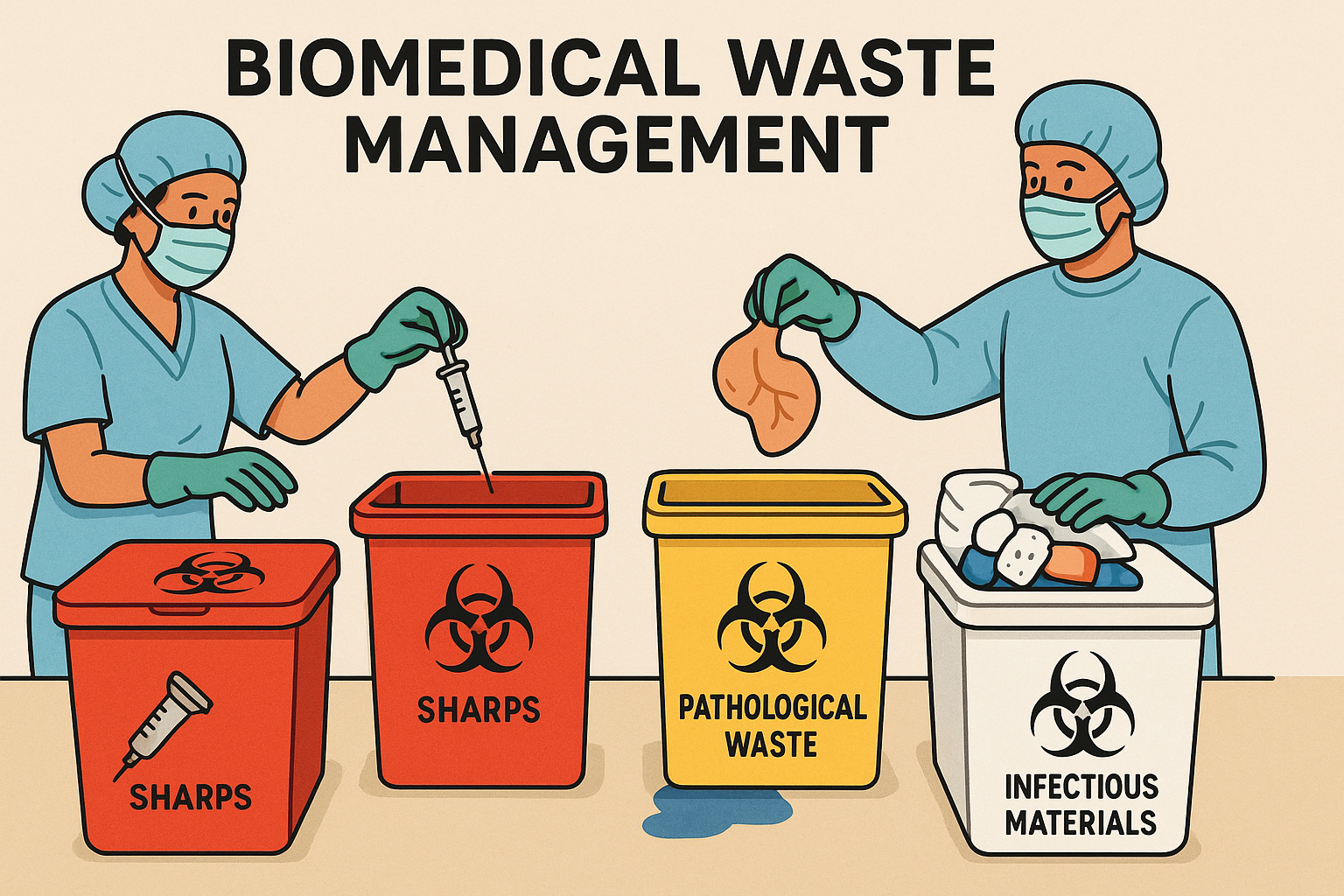
Color-coded waste segregation system in healthcare facilities
Table of Contents
Introduction to Biomedical Waste Management
Biomedical Waste Management (BMW) is a critical component of healthcare delivery that ensures the safe handling, treatment, and disposal of waste generated in healthcare facilities. As nursing professionals, understanding and implementing proper BMW protocols is essential for patient safety, staff protection, and environmental preservation.
Memory Aid: BMW Definition
Remember “SHIELD”:
- Safe handling of infectious materials
- Hazardous waste identification
- Infection prevention protocols
- Environmental protection measures
- Legal compliance requirements
- Disposal through authorized channels
Critical Importance
Improper biomedical waste management can lead to:
- Healthcare-associated infections (HAIs)
- Environmental contamination
- Legal penalties and regulatory violations
- Occupational exposure risks
- Community health hazards
Key Statistics
0.5-2.0 kg
Biomedical waste per bed per day in hospitals
85%
Non-hazardous waste in healthcare facilities
Legal Framework & BMW Guidelines 2017
Biomedical Waste Management Rules 2016 (Amended 2019)
The Central Pollution Control Board (CPCB) and Ministry of Environment, Forest and Climate Change govern biomedical waste management in India through comprehensive regulations.
Key Regulatory Bodies
- Central Pollution Control Board (CPCB)
- State Pollution Control Boards (SPCBs)
- Pollution Control Committees (PCCs)
- Ministry of Health & Family Welfare
Compliance Requirements
- Authorization from SPCB/PCC
- Annual returns submission
- Waste minimization plans
- Training and capacity building
Penalties for Non-Compliance
First Offense
Closure for 15 days + ₹1 lakh fine
Subsequent Offenses
Closure for 3 months + ₹5 lakh fine
Criminal Liability
Under Environment Protection Act 1986
Timeline Requirements
Waste Classification System
The BMW Rules 2016 classify biomedical waste into 10 distinct categories based on their characteristics, treatment requirements, and disposal methods.
Category 1: Human Anatomical Waste
Human tissues, organs, body parts, and recognizable human remains
Examples: Amputated limbs, surgical specimens, placentas
Category 2: Animal Anatomical Waste
Animal tissues, organs, body parts, and carcasses
Examples: Laboratory animal remains, veterinary waste
Category 3: Microbiology & Biotechnology Waste
Laboratory cultures, stocks, specimens of microorganisms
Examples: Culture dishes, infected cultures, toxins
Category 4: Waste Sharps
Needles, syringes, blades, broken glassware
Examples: Used needles, lancets, surgical blades
Category 5: Discarded Medicines
Expired, discarded, and contaminated drugs
Examples: Cytotoxic drugs, expired medications
Category 6: Soiled Waste
Items contaminated with blood and body fluids
Examples: Dressings, gauze, cotton with body fluids
Category 7: Solid Waste
Disposable items used in patient care
Examples: Disposable tubes, catheters, gloves
Category 8: Liquid Waste
Liquid waste from laboratories and washing
Examples: Laboratory reagents, dialysis waste
Category 9: Incineration Ash
Ash from incineration of biomedical waste
Examples: Incinerator bottom ash, fly ash
Category 10: Chemical Waste
Discarded chemicals used in production
Examples: Laboratory chemicals, formaldehyde
Memory Aid: “HAM SPILLS CD”
H
Human anatomical
A
Animal anatomical
M
Microbiology
S
Sharps
P
Pills (medicines)
I
Infected (soiled)
L
Liquid waste
L
Laboratory solid
S
Solid waste
CD
Chemical + Disposal ash
Color-Coded Waste Segregation System
The color-coding system is the backbone of effective biomedical waste segregation, ensuring appropriate treatment and disposal of different waste categories.
RED Container
Categories: 1, 2, 3, 6
Contains:
- Human anatomical waste
- Animal waste
- Microbiology waste
- Soiled waste (blood-contaminated)
Treatment: Incineration/Deep burial
Non-chlorinated plastic bags/containers
BLUE Container
Categories: 5, 10
Contains:
- Pharmaceutical waste
- Chemical waste
- Expired medicines
- Cytotoxic drugs
Treatment: Secure landfill
Cardboard boxes/containers
YELLOW Container
Categories: 1, 2, 3, 6, 7
Contains:
- Pathological waste
- Solid waste (non-sharp)
- Soiled items
- Expired materials
Treatment: Incineration/Autoclaving
Yellow plastic bags/containers
WHITE/TRANSLUCENT Container
Category: 4
Contains:
- Sharps (needles, blades)
- Broken glass
- Scalpels
- Lancets
Treatment: Autoclaving + shredding
Puncture-proof containers
Segregation Decision Flowchart
Blood contaminated?
↓ YES
RED
Sharp object?
↓ YES
WHITE
Medicine/Chemical?
↓ YES
BLUE
Other pathological?
↓ YES
YELLOW
Clinical Pearl: Common Segregation Errors
❌ Common Mistakes
- Mixing different categories
- Using wrong color containers
- Overfilling containers
- Not securing sharp containers
✅ Best Practices
- Segregate at point of generation
- Fill containers only 3/4 full
- Close containers immediately
- Label with date and department
Collection & Storage Protocols
Collection Schedule
Collection Routes
Storage Requirements
Physical Infrastructure
- Separate, covered area
- Easy to clean surfaces
- Adequate ventilation
- Pest control measures
- Unauthorized access prevention
Environmental Controls
- Temperature: < 50°C
- Humidity control
- No direct sunlight
- Away from food/water sources
Safety Measures
Critical Storage Time Limits
Categories 1, 2, 3
(Pathological, Microbiology)
Categories 4-10
(Sharps, Pharmaceuticals, Others)
Liquid Waste
(Category 8)
Memory Aid: Storage “SPACE”
S
Separate area
P
Protected access
A
Adequate ventilation
C
Clean surfaces
E
Environmental controls
Packaging & Labeling Standards
Container Specifications
Material Requirements
- Non-chlorinated plastic bags (thickness ≥ 50 microns)
- Puncture-resistant containers for sharps
- Leak-proof design for liquid waste
- Chemical-resistant materials
Size Standards
- Small: 60cm x 45cm (for low generation areas)
- Medium: 75cm x 60cm (general wards)
- Large: 90cm x 75cm (high-volume areas)
Labeling Requirements
Packaging Procedures
Pre-packaging Inspection
Check container integrity, proper color coding
Proper Filling
Fill only 3/4 capacity, avoid overpacking
Secure Sealing
Twist-tie bags, lock sharp containers
Complete Labeling
Apply all required labels and symbols
Prohibited Practices
Clinical Pearl: Label Design Standards
Font & Size Requirements
- Minimum 12-point font size
- Bold, legible typeface
- Contrasting colors (black on white)
- Waterproof/chemical resistant
Positioning Guidelines
- Visible from all angles
- Protected from wear/tear
- Not obstructed by handles
- Multiple labels if needed
Quality Check Flowchart
Inspect Container
Check Fill Level
Secure & Label
Infection Control & Prevention
Transmission Routes
Bloodborne Pathogens
HIV, HBV, HCV through blood exposure
Airborne Transmission
TB, influenza through respiratory droplets
Contact Transmission
MRSA, VRE through direct/indirect contact
Percutaneous Exposure
Needlestick injuries, sharp cuts
Hand Hygiene Protocol
WHO 5 Moments
- Before touching patient
- Before clean/aseptic procedures
- After body fluid exposure risk
- After touching patient
- After touching patient surroundings
Technique (40-60 seconds)
Personal Protective Equipment
Standard PPE Kit
Donning Sequence
Gown → Mask → Eye protection → Gloves
Doffing Sequence
Gloves → Eye protection → Gown → Mask
Exposure Management
Immediate Actions
- Stop the procedure immediately
- Remove contaminated PPE safely
- Wash exposed area thoroughly
- Report to infection control team
- Seek medical evaluation
Post-Exposure Protocol
- Document incident details
- Test source patient (if possible)
- Baseline testing for exposed worker
- Consider prophylaxis if indicated
- Follow-up testing schedule
High-Risk Procedures
Injections
Needlestick risk
Surgeries
Blood exposure
Lab Work
Specimen handling
Respiratory Care
Aerosol generation
Memory Aid: “STOP GERMS”
ST
Standard precautions
Transmission-based precautions
OP
Occupational safety
PPE compliance
GE
Glovesandhandwashing
Exposure management
RMS
Respiratory hygiene
Maintain safe environment
Surveillance and reporting
Laundry Management Process
Linen Classification
Category A: Non-infected Linen
Linen from general areas without contamination
Examples: Clean patient clothes, bed sheets from discharge
Category B: Infected Linen
Linen contaminated with body fluids, blood
Examples: Surgical drapes, blood-soiled sheets, isolation linens
Category C: Highly Infected
Linen from isolation units, infectious diseases
Examples: TB ward linens, COVID isolation materials
Washing Protocols
Temperature Requirements
Chemical Disinfection
- Sodium hypochlorite 150-200 ppm
- Hydrogen peroxide based compounds
- Quaternary ammonium compounds
- Enzymatic detergents for protein removal
Workflow Process
Collection & Segregation
Sort by category, handle with PPE
Pre-washing Treatment
Remove gross contamination, pre-rinse
Main Wash Cycle
Hot water, detergent, disinfectant
Rinse & Neutralization
Remove detergent residues, pH balance
Drying & Storage
Machine dry, proper storage conditions
Safety Measures
Clinical Pearl: Laundry Best Practices
✅ Do’s
- Handle soiled linen minimally
- Separate wet from dry items
- Use water-soluble bags for Category C
- Monitor washing machine cycles
- Implement traceability systems
- Regular equipment maintenance
❌ Don’ts
- Never shake soiled linens
- Don’t overload washing machines
- Avoid mixing different categories
- Don’t reuse single-use items
- Never store damp linens
- Don’t bypass quality checks
Memory Aid: “CLEAN WASH”
C
Collect safely
L
Label categories
E
Eliminate contamination
A
Appropriate temperature
N
Never mix categories
W
Wash thoroughly
A
Air dry properly
S
Store correctly
H
Hygiene standards
Transportation Protocols
Vehicle Requirements
Structural Specifications
- Leak-proof, covered compartment
- Easy to clean/disinfect surfaces
- Separate driver cabin
- Adequate ventilation system
- Temperature control if required
Safety Equipment
Personnel Requirements
Training Certification
- BMW handling and safety protocols
- Emergency response procedures
- Vehicle maintenance basics
- Documentation requirements
- Regular refresher training
Health Monitoring
- Annual health check-ups
- Hepatitis B vaccination
- Tetanus immunization
- Regular medical surveillance
Route Planning
Optimal Route Selection
- Shortest distance to treatment facility
- Avoid residential areas when possible
- Consider traffic patterns and timing
- Emergency route alternatives
- GPS tracking and monitoring
Schedule Optimization
Emergency Procedures
Accident Response
- Secure the accident site
- Assess personnel injuries
- Contact emergency services
- Notify pollution control board
- Begin containment measures
- Document incident details
Spill Management
- Isolate contaminated area
- Use appropriate cleanup materials
- Disinfect affected surfaces
- Proper disposal of cleanup waste
Transportation Workflow
Pre-trip Inspection
Load Waste
Transport
Weigh & Deliver
Document
Clean Vehicle
Documentation Requirements
Transportation Manifest
- Waste generator details
- Waste categories and quantities
- Vehicle and driver information
- Route and timing details
- Treatment facility destination
- Emergency contact numbers
Chain of Custody
- Generator signature and timestamp
- Transporter acceptance signature
- Interim handling records
- Final disposal facility receipt
- Any deviation/incident reports
- Compliance certification
Nursing Implementation in Practice
Nursing Role in BMW Management
Nurses are frontline healthcare professionals responsible for implementing BMW protocols at the point of care. Their role is critical in ensuring patient safety, staff protection, and regulatory compliance.
Daily Responsibilities
Point-of-Care Segregation
Immediate segregation of waste at bedside during procedures
Container Management
Monitor fill levels, replace when 3/4 full, secure properly
PPE Compliance
Appropriate PPE selection and proper usage techniques
Documentation
Maintain waste generation logs and incident reports
Patient Education
Educate patients and families about waste safety
Training & Competency
Core Training Modules
- BMW regulations and classification
- Color-coding system mastery
- Infection control principles
- Emergency response procedures
- Documentation requirements
Competency Assessment
Department-Specific Protocols
General Ward
- Routine bedside care waste management
- Medication administration safety
- Patient hygiene waste handling
ICU/CCU
- High-volume sharps management
- Multiple IV line waste
- Ventilator circuit disposal
Operating Room
- Surgical instrument waste
- Blood-soaked materials
- Anesthesia equipment disposal
Laboratory
- Specimen container handling
- Culture media disposal
- Chemical waste segregation
Common Nursing Errors
Clinical Pearls for Nursing Practice
💡 Time-Saving Tips
- Prepare waste containers before procedures
- Use bedside waste caddies
- Segregate during the procedure
- Keep sharps container within arm’s reach
🛡️ Safety First
- Never recap used needles
- Activate safety features immediately
- Report container damage immediately
- Use two-person lift for heavy containers
📋 Quality Assurance
- Double-check container colors
- Verify waste category matching
- Complete labeling before sealing
- Conduct peer checks when uncertain
Memory Aid: “NURSES CARE”
N
Never mix categories
U
Use correct containers
R
Report incidents
S
Segregate immediately
E
Educate patients
S
Safety protocols
C
Complete documentation
A
Always use PPE
R
Regular training
E
Environmental awareness
Nursing Decision Algorithm
Identify Waste Type
Select Color Container
Don Appropriate PPE
Dispose Safely
Hand Hygiene
Conclusion & Key Takeaways
Summary of Essential Points
Effective biomedical waste management is fundamental to healthcare safety and requires the coordinated efforts of all healthcare professionals, with nurses playing a pivotal role in frontline implementation.
Critical Success Factors
- Immediate point-of-care segregation
- Consistent PPE compliance
- Proper color-coding adherence
- Regular staff training updates
- Continuous quality monitoring
Quality Indicators
- Zero contamination incidents
- 100% regulatory compliance
- Reduced occupational exposures
- Efficient waste stream management
- Cost-effective operations
Environmental Impact
- Reduced environmental contamination
- Sustainable disposal practices
- Community health protection
- Resource conservation
- Carbon footprint reduction
Final Message for Nursing Students
As future nursing professionals, your commitment to proper biomedical waste management will protect patients, colleagues, communities, and the environment. Excellence in BMW management reflects your dedication to the highest standards of healthcare practice.