Prevention of Communication Errors
Comprehensive Nursing Study Notes
Evidence-Based Strategies for Safe Patient Care
Introduction to Communication Errors
Critical Statistics
Communication failures are responsible for 65% of sentinel events reported to The Joint Commission, making effective communication a cornerstone of patient safety in nursing practice.
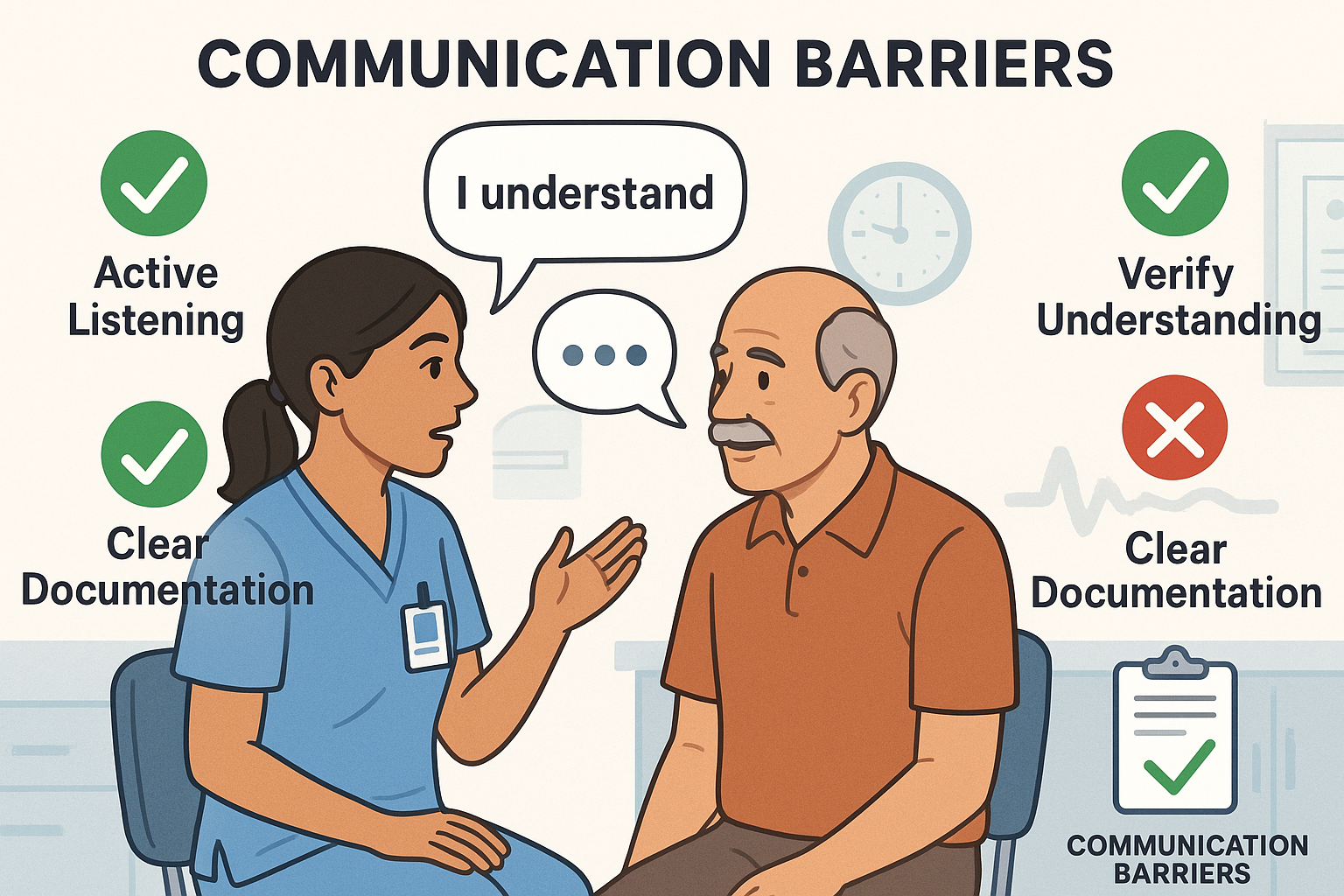
Communication errors in healthcare settings represent one of the most significant threats to patient safety and quality care delivery. As nursing professionals, understanding how to prevent these errors is essential for maintaining high standards of care and protecting both patients and healthcare teams from preventable harm.
Effective communication in nursing encompasses multiple dimensions including verbal exchanges, written documentation, non-verbal cues, and technological interfaces. When communication breaks down, the ripple effects can lead to medication errors, delayed treatments, patient dissatisfaction, and in severe cases, serious patient harm or death.
Key Learning Objectives
- Identify common types of communication errors in healthcare
- Understand root causes of communication breakdowns
- Implement evidence-based prevention strategies
- Master structured communication tools and protocols
- Develop skills for effective patient and team communication
Types of Communication Errors
Verbal Communication Errors
- Incomplete information transfer
- Misunderstood instructions
- Language barriers
- Interruptions during handoffs
Written Communication Errors
- Illegible handwriting
- Incomplete documentation
- Delayed documentation
- Inaccurate transcription
| Error Type | Common Examples | Potential Consequences | Prevention Priority |
|---|---|---|---|
| Medication Orders | Unclear dosages, sound-alike drugs | Overdose, underdose, adverse reactions | Critical |
| Shift Handoffs | Missing patient updates, incomplete SBAR | Delayed care, missed treatments | High |
| Lab Results | Delayed reporting, misinterpretation | Delayed diagnosis, inappropriate treatment | Medium |
| Patient Instructions | Unclear discharge plans, complex language | Non-compliance, readmissions | Medium |
Memory Aid: CLEAR Communication Errors
C – Confused messages and unclear instructions
L – Language barriers and literacy issues
E – Electronic system failures and documentation gaps
A – Assumptions made without verification
R – Rushed communication and incomplete handoffs
Root Causes Analysis
Understanding the underlying causes of communication errors is essential for developing effective prevention strategies. Research identifies several key factors that contribute to communication breakdowns in healthcare settings.
Human Factors
- • Fatigue and stress
- • Workload pressures
- • Lack of training
- • Personal assumptions
- • Communication style differences
System Factors
- • Inadequate policies
- • Poor technology integration
- • Insufficient staffing
- • Lack of standardization
- • Time constraints
Environmental Factors
- • Noise and distractions
- • Physical layout issues
- • Equipment limitations
- • Lighting conditions
- • Privacy constraints
High-Risk Situations for Communication Errors
Clinical Scenarios:
- • Emergency situations
- • End-of-shift handoffs
- • Patient transfers
- • Medication administration
Organizational Factors:
- • High patient acuity
- • Understaffing periods
- • Technology downtime
- • New staff orientation
Contributing Factors by Percentage
Evidence-Based Prevention Strategies
Implementing comprehensive prevention strategies requires a multi-faceted approach that addresses individual, team, and organizational factors. The following strategies have demonstrated effectiveness in reducing communication errors across healthcare settings.
Structured Communication
Use standardized communication frameworks
- • SBAR technique
- • ISBAR protocol
- • CUS methodology
- • Read-back verification
Education & Training
Continuous skill development programs
- • Communication workshops
- • Simulation training
- • Cultural competency
- • Team building exercises
Technology Integration
Leverage digital tools for accuracy
- • Electronic health records
- • Automated alerts
- • Mobile communication
- • Voice recognition
SBAR Communication Framework
Structure:
Example Application:
S: “Mrs. Johnson in room 302 is experiencing chest pain”
B: “She’s post-op day 2 from hip replacement, no cardiac history”
A: “Pain is 8/10, vital signs stable, ECG pending”
R: “Please evaluate for possible cardiac workup”
Verification Techniques
Read-Back Protocol:
- Sender provides clear, complete information
- Receiver repeats information back verbatim
- Sender confirms accuracy or corrects
- Both parties acknowledge understanding
- Documentation includes verification
Closed-Loop Communication:
- Message sent with clear intent
- Receiver acknowledges receipt
- Receiver demonstrates understanding
- Sender verifies correct interpretation
- Action completed and confirmed
Documentation and Handoff Protocols
Accurate documentation serves as the backbone of safe patient care and effective communication between healthcare team members. Proper documentation protocols ensure continuity of care and reduce the risk of communication errors during patient handoffs.
Essential Documentation Elements
- Patient identification verification
- Time-stamped entries
- Objective observations
- Intervention details
- Patient responses
- Provider identification
Documentation Errors to Avoid
- • Delayed or backdated entries
- • Vague or subjective language
- • Unapproved abbreviations
- • Incomplete medication records
- • Missing patient responses
- • Unsigned or unidentified entries
Handoff Communication Best Practices
PACE for Handoff Quality
P – Prepare information in advance
A – Ask questions for clarification
C – Confirm understanding with read-back
E – Ensure documentation is complete
| Handoff Type | Key Information | Time Required | Documentation |
|---|---|---|---|
| Shift Change | Current status, recent changes, pending tasks | 3-5 minutes per patient | Handoff checklist completed |
| Transfer to ICU | Diagnosis, treatments, family contacts, code status | 5-10 minutes | Transfer summary note |
| Discharge | Instructions, medications, follow-up appointments | 10-15 minutes | Discharge teaching record |
| Emergency Response | Immediate concerns, interventions attempted, response | 2-3 minutes | Event documentation |
Technology Solutions for Communication Enhancement
Modern healthcare technology offers powerful tools to reduce communication errors and improve information flow. Understanding how to effectively leverage these technologies is crucial for contemporary nursing practice.
Electronic Health Records
Centralized patient information systems
Mobile Communication
Secure messaging and notification systems
Voice Recognition
Speech-to-text documentation systems
Artificial Intelligence in Communication
Current Applications:
- • Natural language processing for documentation
- • Predictive alerts for patient deterioration
- • Medication interaction warnings
- • Risk stratification notifications
- • Pattern recognition in patient data
Future Possibilities:
- • Real-time translation services
- • Intelligent handoff summaries
- • Automated care plan updates
- • Voice-activated patient queries
- • Sentiment analysis for patient satisfaction
Technology Implementation Challenges
Common Barriers:
- • Staff resistance to change
- • Inadequate training programs
- • System integration issues
- • Cost and budget constraints
- • Privacy and security concerns
Success Strategies:
- • Comprehensive staff education
- • Phased implementation approach
- • Strong leadership support
- • Regular feedback collection
- • Continuous system optimization
Effective Team Communication Strategies
Strong team communication forms the foundation of safe, efficient patient care. Developing interprofessional communication skills and fostering collaborative relationships are essential components of nursing practice excellence.
Interprofessional Collaboration
With Physicians:
- • Use SBAR for patient updates
- • Present objective data clearly
- • Ask specific questions
- • Document all conversations
With Pharmacists:
- • Clarify medication questions
- • Report adverse reactions promptly
- • Discuss patient-specific concerns
- • Collaborate on medication reconciliation
With Allied Health:
- • Coordinate care timing
- • Share patient progress notes
- • Discuss discharge planning
- • Address mobility/safety concerns
Communication Techniques
AIDET Framework:
A – Acknowledge the person
I – Introduce yourself and role
D – Duration of interaction
E – Explanation of procedures
T – Thank you for cooperation
Active Listening Skills:
- • Maintain eye contact
- • Use reflective responses
- • Ask clarifying questions
- • Avoid interrupting
- • Summarize understanding
Handling Difficult Communication Situations
Conflict Resolution:
- Remain calm and professional
- Listen to all perspectives
- Focus on patient safety issues
- Seek common ground
- Escalate when necessary
- Document interactions
Assertive Communication:
- • Use “I” statements
- • State concerns clearly
- • Provide specific examples
- • Suggest solutions
- • Follow up appropriately
- • Maintain professional demeanor
| Communication Challenge | Effective Response | Avoid | Follow-up |
|---|---|---|---|
| Disagreement with physician order | Question respectfully, provide rationale | Being confrontational or ignoring | Document discussion and resolution |
| Unclear medication order | Clarify before administration | Making assumptions | Confirm with read-back method |
| Emergency situation stress | Use clear, concise communication | Shouting or panic responses | Debrief after event |
Patient and Family Communication Excellence
Effective patient communication is fundamental to providing patient-centered care and ensuring positive health outcomes. Clear, compassionate communication builds trust, improves compliance, and reduces the likelihood of misunderstandings that can lead to adverse events.
Patient-Centered Communication
Key Principles:
- • Respect patient autonomy and dignity
- • Use appropriate language level
- • Consider cultural and linguistic needs
- • Encourage questions and feedback
- • Validate patient concerns
RESPECT Framework:
R – Rapport building
E – Empathy and understanding
S – Support and reassurance
P – Partnership in care
E – Explanation of procedures
C – Cultural sensitivity
T – Trust and honesty
Health Literacy Considerations
Statistics to Remember:
- • 36% of adults have limited health literacy
- • Low literacy increases readmission rates by 50%
- • Clear communication reduces errors by 40%
Simplification Strategies:
- • Use plain language (5th-grade reading level)
- • Avoid medical jargon
- • Use visual aids and demonstrations
- • Chunk information into small pieces
- • Repeat key points
Cultural Communication Competency
Cultural Awareness:
- • Understand your own biases
- • Learn about patient cultures
- • Respect different perspectives
- • Ask about preferences
Language Support:
- • Use professional interpreters
- • Avoid family interpreters
- • Speak directly to patient
- • Allow extra time
Adaptation Strategies:
- • Modify communication style
- • Consider family dynamics
- • Respect religious practices
- • Address health beliefs
Difficult Conversations
Family Communication
Include Family When:
- • Patient gives consent
- • Legal guardianship exists
- • Emergency situations
- • Discharge planning
Privacy Considerations:
- • HIPAA compliance
- • Patient preferences
- • Confidentiality agreements
Quality Improvement and Communication Error Monitoring
Systematic monitoring and continuous improvement of communication processes are essential for maintaining high-quality, safe patient care. Quality improvement initiatives focus on identifying communication breakdowns, implementing evidence-based solutions, and measuring outcomes to ensure sustained improvements.
Error Identification Methods
Reporting Systems:
- • Incident reporting databases
- • Near-miss documentation
- • Patient safety events
- • Anonymous reporting options
Assessment Tools:
- • Communication audits
- • Patient satisfaction surveys
- • Staff feedback sessions
- • Root cause analysis
Observation Methods:
- • Direct observation studies
- • Communication rounds
- • Handoff assessments
- • Team collaboration evaluations
Improvement Methodologies
PDSA Cycle:
P – Plan: Identify improvement opportunity
D – Do: Implement small-scale test
S – Study: Analyze results and outcomes
A – Act: Standardize successful changes
Lean Six Sigma:
- • Waste elimination
- • Process standardization
- • Data-driven decisions
- • Continuous monitoring
Key Performance Indicators (KPIs)
Creating a Culture of Communication Safety
Leadership Actions:
- • Model effective communication
- • Support reporting without blame
- • Invest in training programs
- • Recognize improvement efforts
- • Share success stories
Staff Engagement:
- • Participate in improvement initiatives
- • Report communication concerns
- • Attend training sessions
- • Mentor new staff members
- • Share best practices
Global Best Practices in Communication Error Prevention
Healthcare organizations worldwide have implemented innovative communication strategies that have demonstrated significant improvements in patient safety and care quality. Learning from these international best practices can enhance communication effectiveness in any healthcare setting.
United Kingdom – NHS Improvements
SBARD Framework: Enhanced SBAR with Decision component
Safety Huddles: Daily 15-minute team communication sessions
REACH Model: Structured approach for difficult conversations
Results: 25% reduction in communication-related incidents
Australia – Clinical Handover Standards
ISBAR Protocol: Introduction, Situation, Background, Assessment, Recommendation
Bedside Handoffs: Patient involvement in shift communications
Electronic Handover Tools: Standardized digital templates
Results: 40% improvement in handoff completeness
Canada – Patient Safety Communication
TeamSTEPPS Integration: Comprehensive team training program
Call-Out System: Structured emergency communication
Patient Engagement: Including patients in safety conversations
Results: 30% decrease in preventable adverse events
Netherlands – Technology Integration
Smart Alerts: AI-powered communication notifications
Mobile Integration: Secure messaging across all devices
Voice Recognition: Automated documentation systems
Results: 50% reduction in documentation errors
Innovative Communication Solutions
Japan – Kaizen Approach
- • Continuous small improvements
- • Daily team problem-solving
- • Visual management systems
- • Error-proofing techniques
Germany – Structured Training
- • Mandatory communication courses
- • Simulation-based learning
- • Peer mentoring programs
- • Regular competency assessments
Singapore – Digital Health
- • Integrated health platforms
- • Real-time data sharing
- • Predictive analytics
- • Patient portal integration
Key Lessons from Global Success Stories
Implementation Strategies:
- • Start with pilot programs
- • Ensure leadership commitment
- • Provide comprehensive training
- • Measure and communicate results
- • Adapt to local culture and needs
Sustainability Factors:
- • Ongoing education programs
- • Regular system updates
- • Staff feedback integration
- • Performance monitoring
- • Celebration of successes
Conclusion and Key Takeaways
Prevention of communication errors in nursing practice requires a comprehensive, systematic approach that addresses individual competencies, team dynamics, organizational systems, and technological solutions. As future nursing professionals, mastering these communication skills is essential for delivering safe, effective patient care.
Essential Skills Developed
- • Structured communication frameworks
- • Active listening and verification techniques
- • Cultural competency in patient interactions
- • Technology-enhanced communication methods
- • Quality improvement and error prevention strategies
Professional Development
- • Enhanced patient safety awareness
- • Improved interprofessional collaboration
- • Advanced documentation skills
- • Leadership in communication excellence
- • Commitment to continuous improvement
Final Memory Aid: COMMUNICATE
C – Clarify information before acting
O – Organize thoughts using structured frameworks
M – Make time for complete communication
M – Monitor understanding through feedback
U – Use appropriate technology and tools
N – Never assume – always verify
I – Include patients and families appropriately
C – Consider cultural and linguistic needs
A – Always document communications thoroughly
T – Take responsibility for clear communication
E – Evaluate and improve communication practices
Remember: Effective Communication Saves Lives
Every interaction is an opportunity to prevent errors and improve patient outcomes through clear, compassionate, and professional communication.